


Helplessness and Classist Bombs
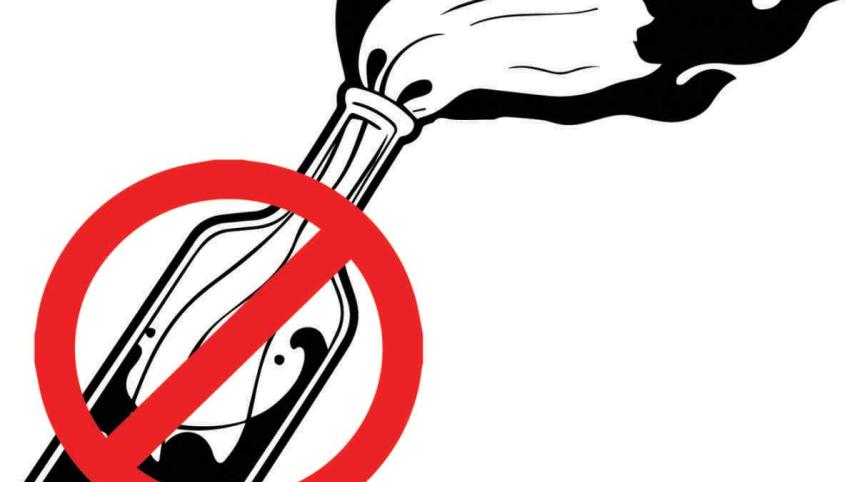
The TV plays out scenes: a burnt child covered in plaster, a crying mother close to insanity with pain, and a politician reading from the script in front of the cameras. They (insert political party) grieve with the mourning family, they believe in 'democracy' and the unity of the country, these are troubled times and they are proud to have our continuing support. You change the channel. You look away.
The helplessness that engulfs us is ever-growing. Not one of us can claim to be in control of our future as long as the country stands on the brink of destruction. We can try to ignore the news reels, the deaths and injuries but as someone who has seen a petrol bomb explode in front of them will tell you, you cannot escape the violence. Politics has become a deadly business.
t's odd but PETROL BOMBS ARE CLASSIST: a section of the elite, educated class don't fall within its range of fire. Truck drivers hauling in our rice and vegetables at three in the morning risk their lives for nothing more than a couple of thousand extra pay. Bokul Debnath, 35-year-old trucker, died at 7 am on the 27th of January, after critical burn injuries received from a petrol bomb a week ago. His life was worth more than a thousand bucks to his family. But we have created a system where it's possible to cocoon the elite – the politicians, the policy-makers, the intellectuals – from the effects of the decisions they take. Do our leaders think about Debnath when they sit down for a meal?
We should also by now realise that we are a large segment of that class, those of us who are privileged enough to read and write in English. We have safe homes and cautious families, perhaps even a private car that takes short detours to finish our work. And that is in no way wrong or the usual. But it is certainly not the exception. We've run from fire and explosions, but very few of us have felt the real horror of knowing our life is at risk and yet we must dodge bullets to make a living.

As such, we have a RESPONSIBILITY to speak up. Because we are relatively safer than the rest. Because we possess the capability to rally not only national media but international media. Because no political system is worth more than the two-and-a-half-year-old Safir trying to breathe through the plastered pain.
The role of the ordinary citizen is more important than ever, because it is the ordinary citizen who is at risk. So the question remains, what can be done in this standstill? What has been done?
We have started to PROTEST. On 24th of January, thousands of citizens from all walks of life – doctors, journalists, lawyers, actors, businessmen – came together to speak up against murder in the name of democracy. “Stop Barbarism-Thamao Shohingshota” rally started from the Press Club premises, passed the High Court and ended at Shahid Minar. Among the protestors were people whose family and friends were hurt or killed in the bomb blasts and cocktail explosions that continue to shock the nation. A Facebook event brought them together to speak for the common people – which only cements something we already know – social media can be powerful.
FACEBOOK has played an active role in not only gauging public sentiment and reaction but also reporting the ground level situations of volatile regions. It's still not safe to venture into the streets but that additional information can sometimes be vital, potentially life-saving. We'd like to pretend we don't live in a country where bomb blasts are an every-day concern but the goons have moved up in society: they have advanced from breaking windshields to burning people. It seems we've got to save our own and every single person who reads a 'what to do when a petrol bomb hits your bus' infographic is more equipped to survive. So it doesn't hurt to stay alert and spread the word.
It is easy to trample the voices of citizens because no one represents us completely. We are a myriad of people with different beliefs and wants and lifestyles, but the one thing that unites us today is the basest instinct of humankind: SURVIVAL. For the first time since they moved from just damaging public property to burning the public, we are one. We can choose to move ahead on whichever front – organise a human chain, carry out peaceful protests, write and report on every detail – but we have to move now.
If you should ever doubt or be afraid, remember Debnath. Remember Safir. Remember that we could've stopped it, should've stopped it and if we hurry now, we still can.
 For all latest news, follow The Daily Star's Google News channel.



Comments