


Where books come to life
Whether inked on crisp paperbacks or on our phones, today, we read books on different platforms, and of different genres. But what if these books came to life - sitting in front of us, reading to us the tales of their lives, willing to introduce us to their world of broken and mended dreams?
The Human Library is based on the idea of letting real people narrate their stories to an audience. These stories are ones that challenge prejudices, and aim to take on the world - one conversation at a time.
 For all latest news, follow The Daily Star's Google News channel.
 Human Library's overarching theme is "designed to build a positive framework for conversations that can challenge stereotypes and prejudices through dialogue"; the project was first initiated by Ronni Abergel in Denmark.
On July 29, a group of passionate university students set up the event "Human Library Dhaka" at the Gyantapas Abdur Razzak Bidyapeeth. The 4-hour long event was greeted by over 300 enthusiastic "readers". Like any other library, readers got to choose from a list of "books". Notice the use of quotation marks because at the Human Library, readers and books are humans. The library allowed a person to borrow someone's time - 20 minutes to be exact - and talk to them about a certain topic. So, you could be borrowing a homeless person, an atheist, a rights activist or a refugee and listen to them talk about the social prejudices they face, the struggles they overcome, etc. The readers were encouraged to ask any questions they might have had, so that the stereotypes could be questioned through dialogue.
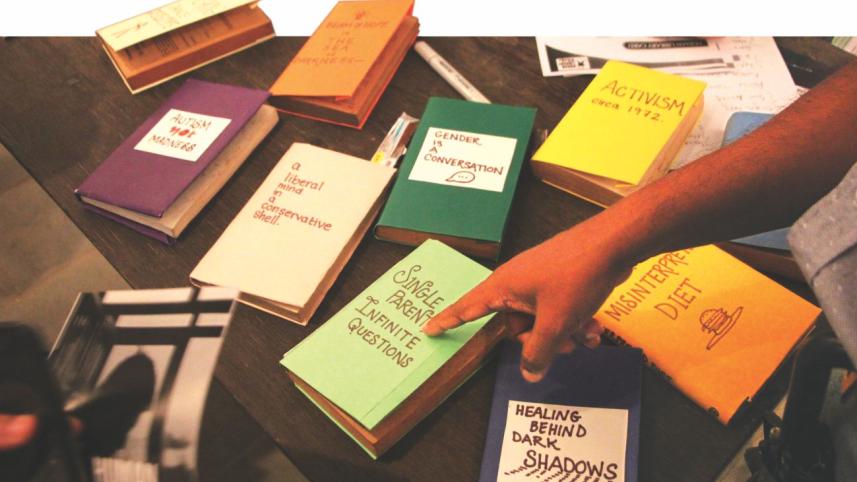
There were 10 human books in total at the event, each with their own titles, and challenging a different stereotype. A Beam of Hope in the Sea of Darkness, Activism circa 1972, A Liberal Mind in a Conservative Shell, Misinterpreted Diet - were some of the titles. It goes without saying that the topics were extremely diverse. Yet all the "books" were in common ground when it came to emotionally connecting with the hundreds of readers who had come to listen to them.
The room was bustling with people outside, waiting in queue to receive their library cards to issue their first ever human book.
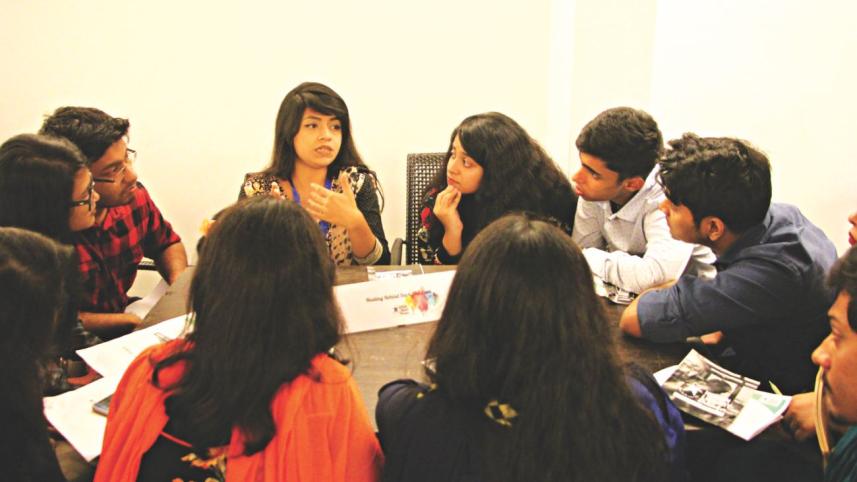
"At the end of one of the sessions, a reader got up and hugged the book trying to find solace. This just goes to show how much impact the tales of hardship of ordinary individuals affect the lives of others. During every session you could see the readers listening intently to their issued human books and the change of emotion was very apparent as the story progressed," said one of the volunteers at the event.
"We were sceptical about the response we would get from people before organising the first session, as we assumed that people won't be comfortable interacting with strangers. To our surprise, we had a huge response that has inspired us to come back again on September. Now that people have opened up, we have a responsibility to arrange more sessions like this in the hope that we live up to everyone's expectations," said Upoma Rashid, co-founder of Human Library Dhaka.
Opening up to people you know about a very personal journey takes up a lot of courage, let alone with strangers. Oddly enough, it seemed like everyone in the room knew each other when the conversations began. The books in particular were patient in answering every question that came across from the audience and bore the torch for the event's success.
"As I waited to be 'borrowed' by a reader, the other 'books' around me began conversing with their readers - mostly in groups of five. It was only a matter of time before my librarian informed me that I had a group of readers waiting for me as well," said a human book titled Single Parent, Infinite Questions. "Once introductions were done with, I began my story, talking about my experiences as the daughter of a single parent. I have to admit - I expected a lot of scrunched eyebrows but to my surprise, the readers were genuinely interested to listen to me; they were open to discussing the prejudices that are faced by divorced parents, asking thoughtful questions that ignited a more meaningful conversation on the said topic," she described.
"I wasn't quite sure what to expect at Human Library. Although the concept seemed pretty straightforward, the interaction with people from all walks of life, opening themselves up to us, recounting their stories of hardships, and how they persevered - was truly eye opening. You hear all these stories on the newspapers and social media, but getting to know some in person makes all the difference. You know how they say you had to be there? Well, you just had to," said Zaef Abrar Sikder, one of the readers present at the event.
Ahana Raihan Orchi, another human book who went by the title Gender is a Conversation added, "It was amazing to have readers relate to my story. The event served as an interesting outlet for me to get in touch with my performer side too. I loved that the readers challenged me and gave me strength, as I did them. And while we got along really well for the most part, part of the magic was in the possibility of never seeing the other person ever again."
The Human Library is perhaps the perfect manifestation of not judging a book by its cover.
Comments