


Stars & Us

All the iron available on the Earth, according to science, was formed in the cores of stars millions of years ago. When these stars grew so hefty, being incapable of carrying their own weight, they exploded, in events termed as Supernovae. During which, a star can shine so brightly that its intensity can equate to that of 10 billion burning Suns. Over millions years, bits of these iron and many other elements conjoined together, thanks to gravitational forces, to form the relatively tiny planet which we call home, Earth.
In another process which similarly spanned over millions of years, as the Earth cooled and warmed, life began evolving ultimately to give rise to living beings capable of questioning and conjecturing the whole process which led up it, human beings, made from the very same star matter. Perhaps that renders an explanation of humanity's obsession with these heavenly bodies, not merely just a craving to explore the unknown and the distant, but also a yearning for the source from where our existence stems from. Poets and astronomers have devoted their entire lives admiring their grandeur, spending hours staring off in the distance, trying to work out how exactly far away they are from us and what makes them. Now that raises the question that since we're all made of star stuff, does that mean we appear equally majestic to other beings? Perhaps. Or may not. Who knows?

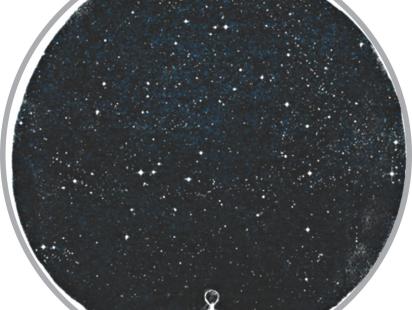
Our connection with the Stars does not only end with the iron coursing through our veins. Even until just around two hundred years ago, they still played an essential role in our survival as cluster of stars which, to many, appeared to paint pictures of various objects in the sky, were used in navigations by sailors and travelers. For example, the Ursa Major and the Ursa Minor were used to locate the North Star which can was used to work out the direction of Earth's geological Northern hemisphere. Imagine how disconnected and different the world would've been today if Columbus and his crew, did not discover North America or Vasco da Gama never made it from the shores of Lisbon to Calicut in India if these constellations weren't there to lead the way in the all-consuming darkness of the nights.
In our modern times though we mostly do not need the stars to guide the way, GPRS maps do a decent job and admittedly, in our busy, hectic lives in the hustle and bustle of Dhaka, stopping for a while to take a deep breath may even give us a the notion, that we're wasting our time which can be used to accomplish something useful. It's not as if the hours waiting for the traffic signal to turn from red to green does not already eat away a significant amount of time, who has the time to spend thinking about... stars? Furthermore, if someone does even make the time to go out in the middle of the night, there's a high probability they'll be blinded by all the lights emanating from the windows or in a more extreme scenario, get mugged, considering how unsafe the streets are these days, rather than actually spot a star. However, that's not nearly sufficient to stop the enthusiasts and the ones still infatuated due to the charms of these massive heavenly forms. Who knows you might as well become one of them as well? And I assure you it's quite a beautiful compulsion. So if you ever find yourself with nothing of interest to do, away from the city lights and dins, do seize your chance to gaze upon these exquisite and twinkling objects of the cosmos, there's a chance they'll make your soul feel at ease even if just for a few minutes.
Khadiza Karim Chowdhury is a part time science junkie and a part time sports enthusiast who anxiously swings from one to another and never walks alone, occasionally transitions into a Panda or a Cat. Hear her ramblings at rodellachowdhury@gmail.com
 For all latest news, follow The Daily Star's Google News channel.


Comments