Bangladesh is still trapped in a cycle of injustice
During the Hasina government, one of the biggest sources of public anger was the widespread abuse and repression faced by ordinary people at every level of society, from university campuses to roadside hawkers. Alongside this were countless incidents of enforced disappearance, extrajudicial killings, arbitrary detention, and the use of state power to suppress dissent. The judiciary was effectively brought under political control, leaving courts largely dysfunctional. Many people were detained without trial, while injustice and repression became deeply entrenched.
Public outrage against these abuses eventually erupted through the 2024 mass uprising. One of the central expectations of that movement was that such injustice would no longer continue. People hoped that minimum human rights would be ensured, citizens would feel secure in their lives, criminals would face justice, and innocent people would no longer become victims of state repression.
However, after the political transition and the arrival of the interim government, some of those expectations went largely unfulfilled. Instead, many people witnessed a continuation of injustice. Mob violence spread, while shrines, temples, cultural events, Baul gatherings, sculptures, and Liberation War murals came under repeated attack. Yet, the administration repeatedly failed to prevent these incidents. Even after attacks on institutions such as Prothom Alo, The Daily Star, Chhayanaut, and Udichi, no meaningful action was taken against those who incited or organised the violence.
There have been instances where draconian or vaguely-worded laws such as the Anti-Terrorism Act have been used to justify arbitrary arrests and detentions of individuals involved in democratic and political activism.
In February 2026, an elected government came to power. People expected this government to totally break this cycle of injustice. But the early signs so far haven’t been very encouraging. There have been instances where draconian or vaguely-worded laws such as the Anti-Terrorism Act have been used to justify arbitrary arrests and detentions of individuals involved in democratic and political activism. Early in March, three university students were arrested under the Anti-Terrorism Act simply for using their democratic rights to honour a historic event. Although they were assaulted by other students for playing the March 7 speech on loudspeakers, they were accused under anti-terror laws. One of them was released on bail a few days ago, while others remain in detention.
The situation is similar for more than 50 Bawm community members, including women and children, who have been detained during the Awami League regime. Many see this prolonged detention—more than two years now—as an attempt to criminalise an entire ethnic group. Even the non-political interim government did not carry out any proper investigation or present any explanation for their detention. There has been no meaningful progress in these cases even under the new government. In other words, arbitrary detention without due process and arrests under false and fabricated cases continue to occur.
Several widely discussed murder and rape cases from the Hasina era also remain unresolved. One of them was the killing of teenager Twaki, who was abducted, brutally tortured, and murdered. The family of the then MP Shamim Osman was accused in the case. Although the trial had progressed significantly, it reportedly stalled after intervention by then-prime minister Sheikh Hasina. During the interim government, the case did not move forward, and even now, there is little visible effort to revive it. Similarly, the case of the murder of journalist couple Sagar and Runi, which happened more than a decade ago, continues to drag on through repeated delays, turning the judicial process into what many describe as a farce.
Another highly discussed case involved the rape and death of a young woman named Munia. There, too, no progress is evident that would ensure justice. Despite the prominence of these cases from the Hasina era, neither the interim administration nor the current government has taken substantial steps to ensure accountability. Apart from limited developments in the case of Tonu, another victim, the others remain largely stagnant.
Ensuring citizens’ rights, including freedom of expression, the right to work, and personal security, sits at the core of democracy. Yet a culture of fear still lingers; cyberbullying and threats of mob violence are being used to suppress critical voices.
At the same time, there seems to have been a rise in violent crimes and murders. Violence against women and children has also risen sharply, particularly child abuse. A number of incidents of sexual violence in educational institutions, including madrasas, have been reported in recent weeks, yet there has been little visible effort to ensure accountability or to make anti-sexual harassment policies mandatory in such institutions.
During the interim government’s rule, Liberation War murals and sculptures were vandalised in many places. Although identifying those responsible for the vandalism would not be difficult, no effective action has been taken against them. There has also been little effort to restore the damaged murals and sculptures.
Ensuring citizens’ rights, including freedom of expression, the right to work, and personal security, sits at the core of democracy. Yet a culture of fear still lingers; cyberbullying and threats of mob violence are being used to suppress critical voices. Lack of transparency and weak accountability in different institutions continue to surface. Land grabbing, deforestation, river encroachment, and extortion also continue. In many of these cases, people still do not receive justice.
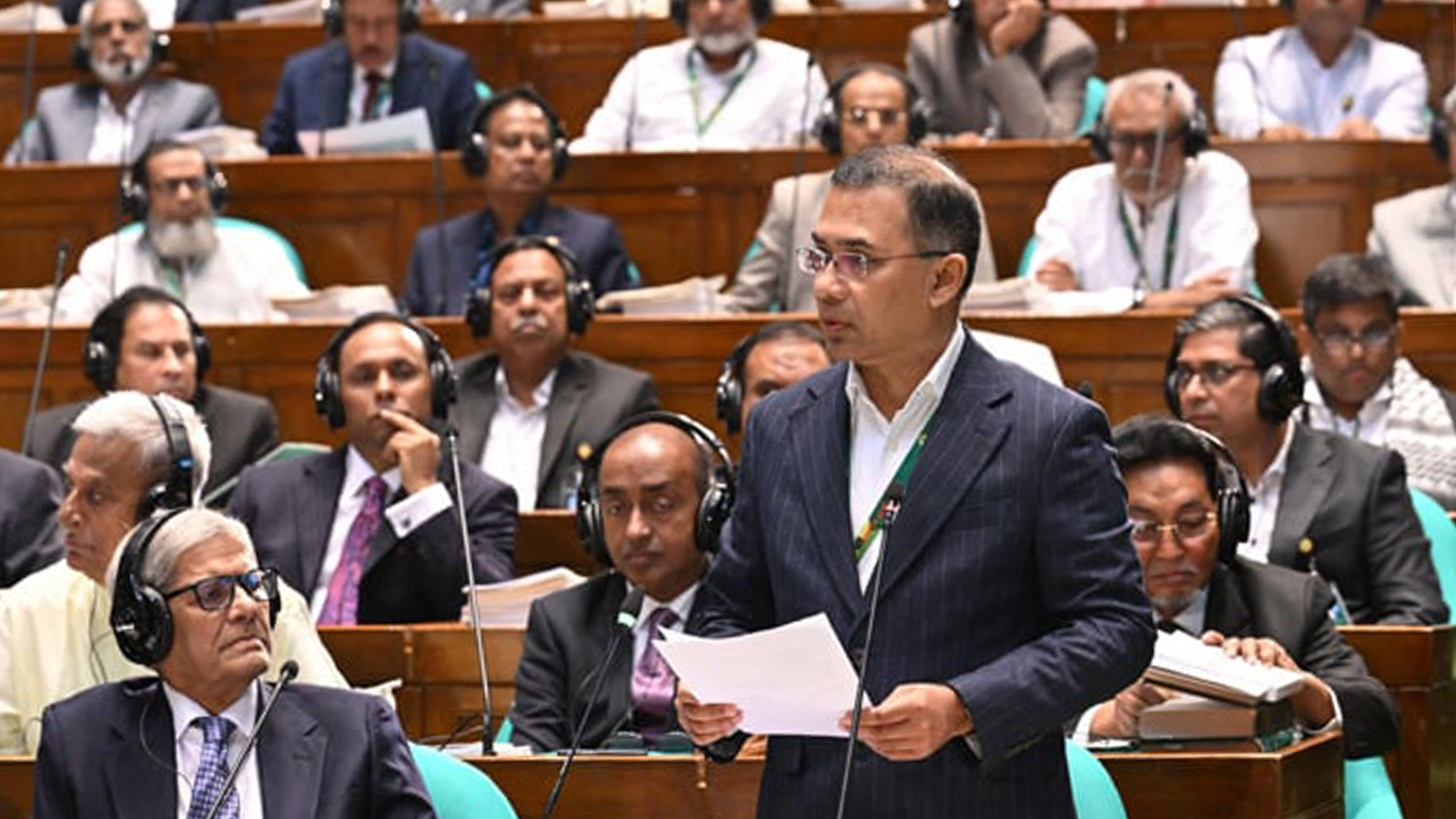
Parliament has debated many issues in recent months, but urgent matters such as insecurity, judicial reform, resolving long-pending cases, ensuring safety and discipline in educational institutions, and establishing responsible leadership have not received adequate attention.
There are also concerns about Bangladesh’s position in international trade and strategic issues. There is strong evidence to believe that the US trade agreement signed by the interim government—without public consultation, and just three days before the February election—puts the country’s economy under serious risk and threatens the employment of millions. Also, the agreement restricts Bangladesh’s economic and political independence, giving excessive leverage to the Trump administration over the country’s sovereign decisions. If not significantly changed, this agreement is going to be a major source of injustice for millions of farmers, poultry and fisheries entrepreneurs, pharmaceuticals, IT workers and so on. The lack of engagement of all parties in parliament on this issue is a serious matter of concern.
Another major issue is border killings. India is not only depriving Bangladesh of its water rights, but it also continues to carry out border killings. Early on May 14, one Bangladeshi, Khademul Haque, was shot dead by India’s Border Security Force (BSF) at the Amjhol border in Hatibandha upazila of Lalmonirhat, while two others were killed along the Pathariadwar border in Kasba upazila of Brahmanbaria on May 8. Previous governments were often criticised for not raising this issue with India strongly. It is expected that BNP would take a stronger position to ensure the safety of our citizens. So far, however, that strength has not been visible yet.
The expectation from the incumbent government, having emerged from an uprising, is naturally greater. Fundamental human rights, sovereign authority over national policy decisions, political freedom, freedom of expression, security of life, and access to justice must all be ensured. It is the responsibility of the administration to be adequately responsive to public concerns related to these. We do not want to witness continuing failures of citizens’ rights and the cycle of injustice.
Anu Muhammad is former professor of economics at Jahangirnagar University.
Send your articles for Slow Reads to slowreads@thedailystar.net. Check out our submission guidelines for details.
Dhaka accidentally built the city planners now want. Can we make it liveable?
Can Bangladesh produce its own knowledge?
How we are killing Dhaka
Can Bangladesh afford not to invest in Bhola’s gas?
Bangladesh’s renewable policy: Still too little but not too late
Prabhat Patnaik speaks / Why the Global South must rethink export-led growth
Bhotekoshi flood: Another warning from the Himalayas. Are we listening?
Renewing the Ganges Water Sharing Treaty: What should Bangladesh do?
What it really costs to live in Dhaka