Polythene ban fiasco: Are we heading towards an anthropogenic catastrophe?
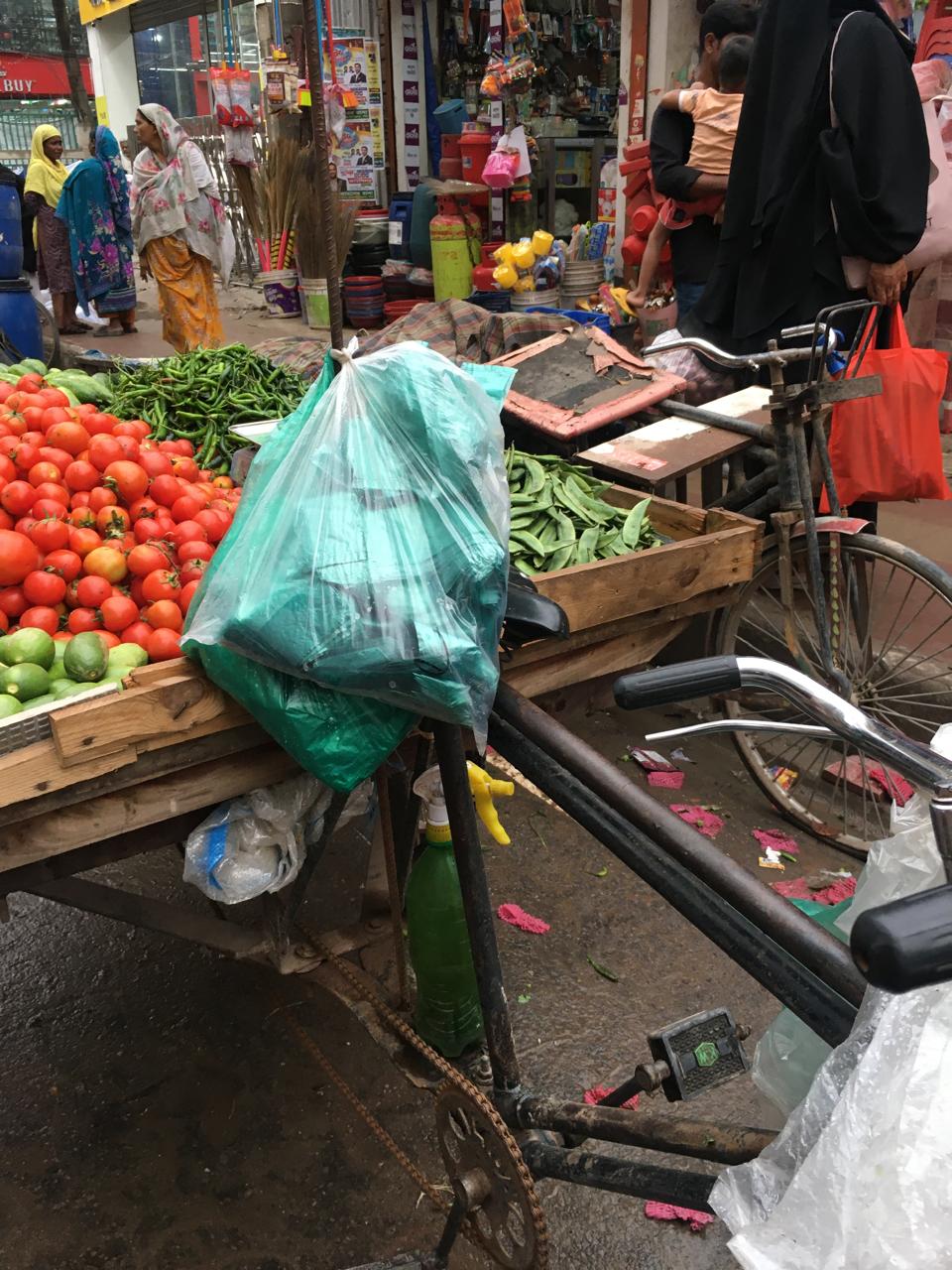
In a rapidly growing yet underdeveloped pocket of Mohammadpur, the 2002 ban feels like a fairy tale we used to read before going to sleep at night in our childhood. The disconnect between policy and practice is lucidly visible almost everywhere. Rubel (pseudonym), a local grocer, reacted vehemently when asked why he continued to pack groceries in polythene bags rather than in Sonali or net bags. Even when asked whether he would use paper, jute, or net bags if they were provided, he showed clear reluctance. He insisted, "People want polythene, even if we offer alternatives, they refuse them." While his response sounded more like a convenient excuse than a factual account (because he had never tried to give customers anything else so far), his assistant was even blunter. Standing nearby, his assistant confidently claimed that polythene usage in Bangladesh "can never be stopped." He dismissed the idea of jute-made Sonali bags, claiming they are "only for clothing stores, and not for grocery shops (mudi dokan)."
Meanwhile, other neighbouring shopkeepers who were unwilling to give their names offered a comparatively polite, if resigned, perspective. Acknowledging the peril, one pointed to the low cost of thin polythene bags compared to eco-friendly bags as the deciding factor. He went on to say that 1 kg poly bags cost Tk 200 to 240, depending on their quality or resistance, but he never inquired about the price of alternatives. Another grocery shopkeeper said they use polythene bags because they are readily available to them. This grassroots defiance stands in sharp contrast to nearby brand outlets like Shwapno, Best Buy, Meena Bazar, and Tasty Treat, where net and eco-friendly bags are standard choices, leaving local sellers and vendors feeling they lack the same access to a sustainable supply chain.
A few yards away, a responsive van-vendor selling vegetables echoed this economic reality. He explained that customers are unwilling to pay an extra Tk 2-3 for a reusable bag, having grown accustomed to receiving polythene bags for free with every purchase. This is the prevailing scenario across many places in Dhaka. Conversely, shoppers noted that they use these bags only because polythene has become the default packaging for every item on the market. As buyers walk away with armfuls of plastic, the visual evidence in these areas makes it almost impossible to believe that a national ban on polythene has been in effect for over two decades. Looking at the sheer volume of poly bags in circulation here, the law exists only on paper, while the streets remain governed by the convenience of 'free' polythene.
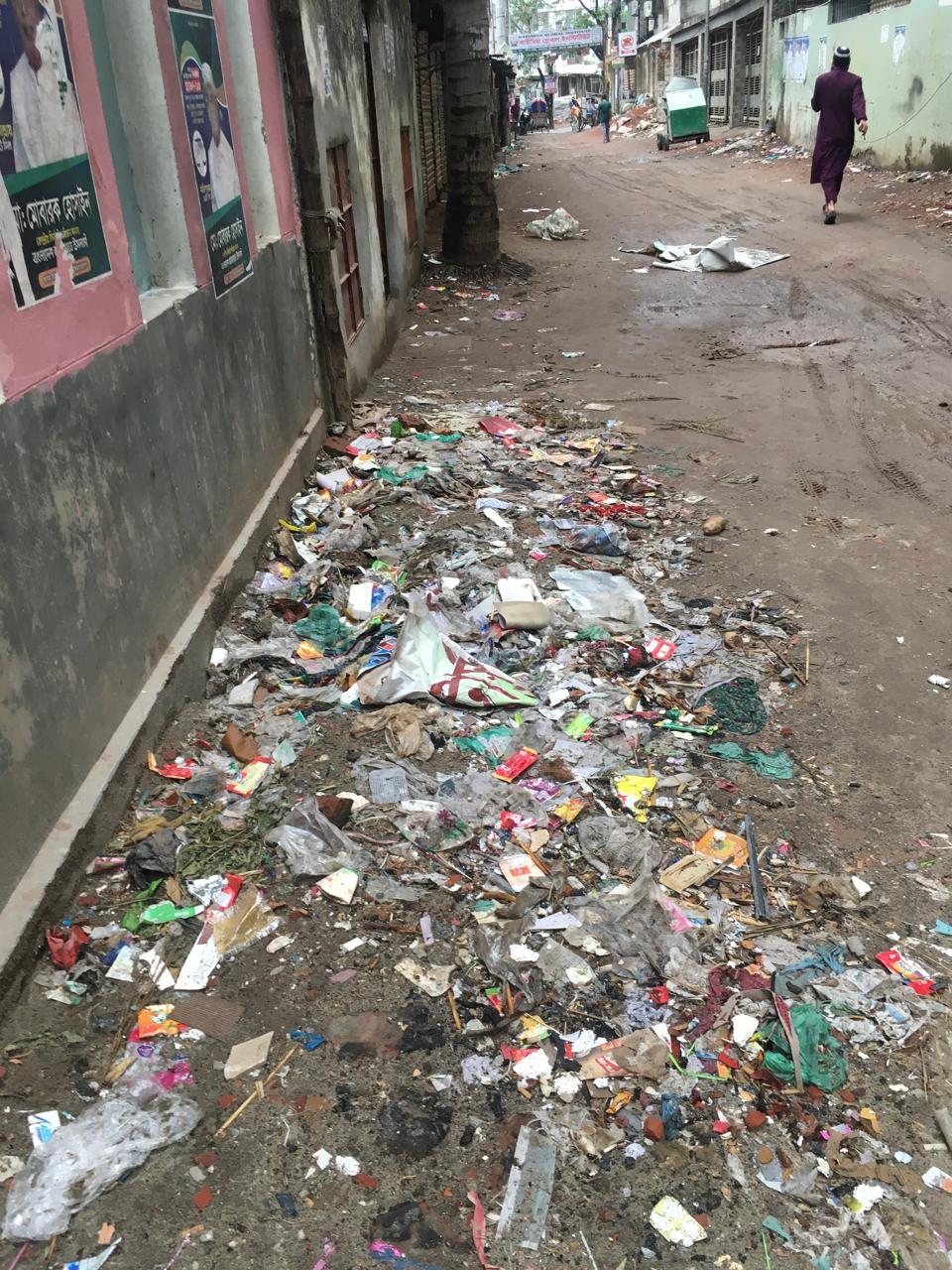
Bangladesh was the first country in the world to ban the production, use, and marketing of polythene bags thinner than 20 microns on 1 January 2002, due to their detrimental effects on the environment. Polythene, also known as polyethylene, is not biodegradable under natural conditions. Polyethylene is a synthetic polymer made from petrochemicals. Crude oil and natural gas are the primary feedstocks used to create them. While biotic material or natural carbon-based compounds decompose through microbial activity, polyethylene's synthetic composition makes it almost impossible for fungi or bacteria to degrade. For this reason, once discarded, polythene remains unchanged in the environment for decades and often centuries, contributing to long-term plastic pollution, water-clogging in rivers and canals, and the aridification of fertile lands.
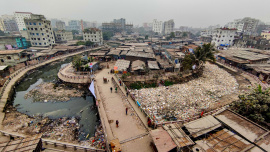
The historic decision was an emergency measure, driven by concerns beyond littering. It became a national priority in the wake of the catastrophic floods of 1988 and 1998. The flood of 1988 engulfed about 82,000 square kilometres of land and 60 percent of the country's area. Dhaka was adversely affected because of its high population density. And in 1998, more than 67 percent of the country's total area was inundated, submerging half of the megacity of Dhaka. Years later, in 2015, researchers discovered that discarded polythene bags had completely blocked the city's underground drainage pipes. In some areas of Dhaka, layers of plastic were found 10 feet (3 metres) deep in the riverbeds.
The Department of Environment (DoE) has sounded the alarm over the scale of the plastic crisis, revealing that Bangladesh now generates over 821,000 tonnes of plastic waste annually. The DoE notes that a majority of this material escapes formal collection. A March 2025 study published in Springer Nature’s international journal Water, Air, & Soil Pollution, titled “Bangladesh Plastic Consumption Trend: Current Scenario”, presents a troubling forecast. Its authors, Shama Emy Haque and Nafisa Nawrin Chowdhury of North South University, warn that under the RCP 4.5 rainfall scenario, Bangladesh is likely to face a greater risk of heavy monsoon rainfall in 2040 and 2060, which could further aggravate the country’s plastic pollution crisis. Created by the Intergovernmental Panel on Climate Change (IPCC), the RCP 4.5 is a standardised global pathway for "what if" regarding world carbon levels.
Researchers discovered that discarded polythene bags had completely blocked the city's underground drainage pipes. In some areas of Dhaka, layers of plastic were found 10 feet (3 metres) deep in the riverbeds.
The threat of plastic pollution in Bangladesh is no longer confined to a city-centric waste management crisis. Rather, under the impact of climate change, it is leading towards a dire natural catastrophe. We have already witnessed climate-induced floods. These flooding events have worsened the plastic crisis by mobilising mismanaged waste from relief materials. This was most evident during the flash floods in Feni, Cumilla and Noakhali in August 2024, and again during the severe inundation of the Sylhet and Sunamganj regions in May-June 2025. In addition to existing waste challenges, flash flooding has intensified the spread of plastic pollutants. While one might wish for a more optimistic outlook, the current situation presents a far grimmer, more alarming picture.
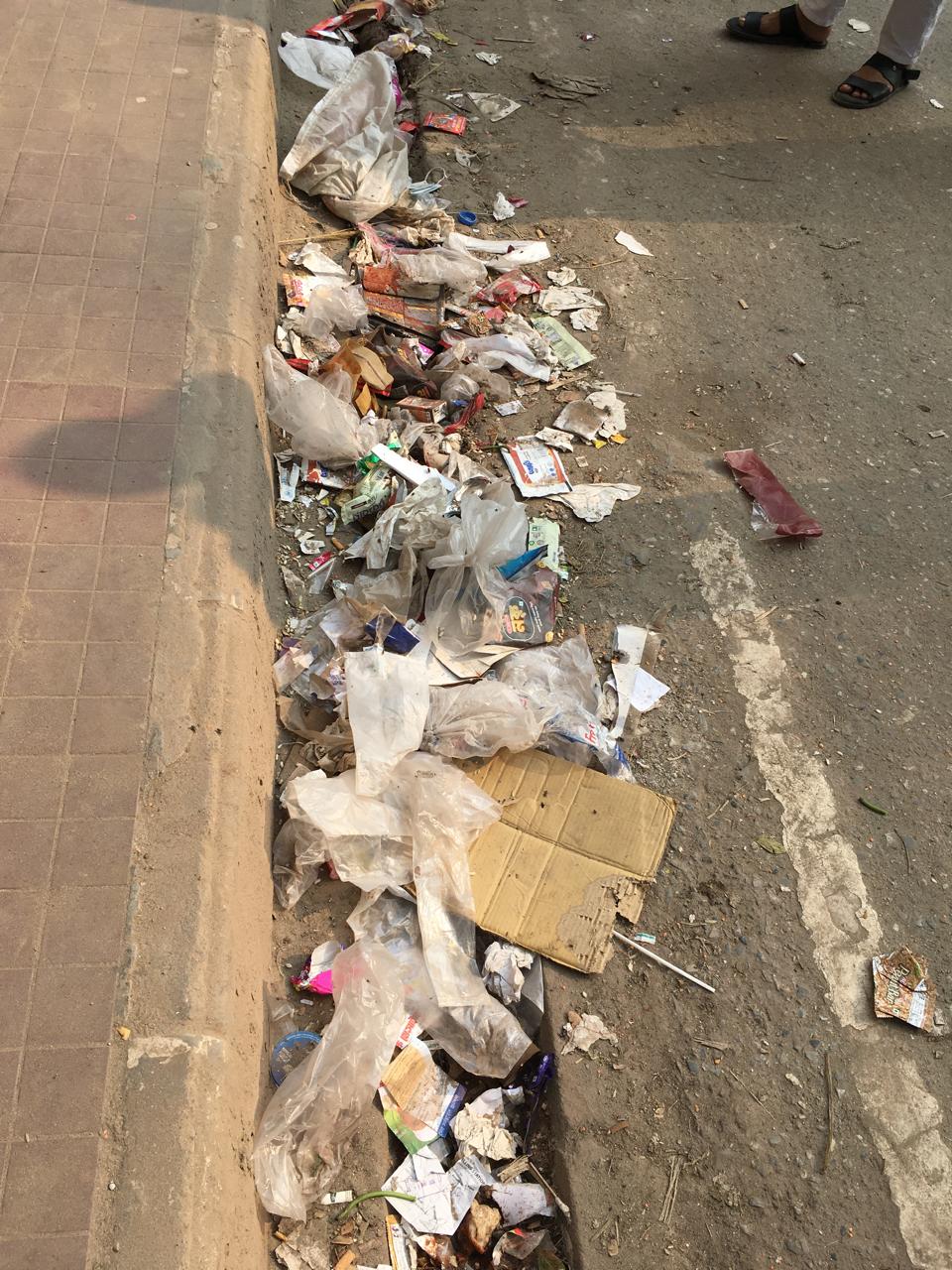
At the end of 2021, the World Bank Group revealed a stark reality: annual plastic use in Bangladesh's cities tripled to 9.0 kg in 2020 from 3.0 kg in 2005. Dhaka tops the list of per capita plastic consumption. The annual per capita plastic consumption in Dhaka stands at 22.25 kg, which is three times the country's average. This survey says, "About 646 tons of plastic waste is collected daily in Dhaka, which is 10 per cent of all wastes generated in Bangladesh". However, how much of this waste is recycled in Dhaka? The answer to this is quite shocking, as it is only 37.2 per cent. The remaining 48 percent ends up in landfills, 11.8 percent in water bodies, 3 percent in drains, acting as primary drivers of urban waterlogging.
On average, a single family in Dhaka uses 5 polythene bags per day. Approximately 25 million single-use polythene bags are thrown away in Dhaka city every day. This leads us to the simplest yet most urgent question: where exactly does this 821,250-tonne-per-annum trail of polythene eventually end up? The World Population Review's 2026 survey on "Plastic Pollution by Country" indicates that Bangladesh, with neighbouring countries India and Pakistan, remains at the forefront of the global crisis. The country recorded a high mismanaged waste rate of 83.48 percent in 2025, placing Bangladeshis on "red alert".
The government must take strategic, long-term initiatives and enforce the law rigorously to solve the problem. For the first 6-12 months of 2002, enforcement was so effective that polythene almost disappeared from Dhaka. People shifted to using "thonga" (paper bags) and jute sacks. Historical records show that demand for jute fibre rose from 577 million kg in 2002 to 624 million kg in 2003, as people sought alternatives. The Ministry of Environment launched daily raids led by judicial magistrates. News headlines from early 2002 often featured photos of "special task force" and "joint raids" confiscating truckloads of plastics from Old Dhaka.
Despite the rigorous enforcement measures introduced by the interim government in October 2025, the deeply rooted polythene habit remains a formidable challenge. Climate projections for 2040 and 2060 under the rainfall RCP 4.5 pathway indicate an increased frequency of flooding events. In the face of torrential rain, the present drainage systems of our country may prove inadequate, and are likely to accelerate the flood threat by sweeping more polythene into waterbodies from left-out garbage.
However, the research has also highlighted policy recommendations. For her own sake, Bangladesh must transition to a circular economy by boosting plastic recycling rates while simultaneously supporting local innovations like the Sonali bag for widespread use in local markets. Our urban drainage system should be safeguarded through digital monitoring and strict enforcement to maintain plastic-free water canals during extreme rainfall. Besides, disaster management protocols must be modernised to mandate biodegradable packaging in all relief operations. By implementing these climate-resilient strategies today, we can ensure that the aid of the present does not become the environmental disaster of tomorrow.
Immediate intervention is required to avert this environmental calamity. If the newly elected government works strenuously to curb the circulation of plastic without hindrance, the masses will be bound to stop using polythene, and the threat of an anthropogenic flood can be successfully mitigated.
Fatema-Tuz-Zohora is a teacher and writer by training and passion, whose writings explore the healing of nature and the wisdom of literature.
Send your articles for Slow Reads to slowreads@thedailystar.net. Check out our submission guidelines for details.
Can Bangladesh make its plastic waste policy work?
Dhaka accidentally built the city planners now want. Can we make it liveable?
Can Bangladesh produce its own knowledge?
How we are killing Dhaka
Can Bangladesh afford not to invest in Bhola’s gas?
Bangladesh’s renewable policy: Still too little but not too late
Prabhat Patnaik speaks / Why the Global South must rethink export-led growth
Bhotekoshi flood: Another warning from the Himalayas. Are we listening?
Renewing the Ganges Water Sharing Treaty: What should Bangladesh do?