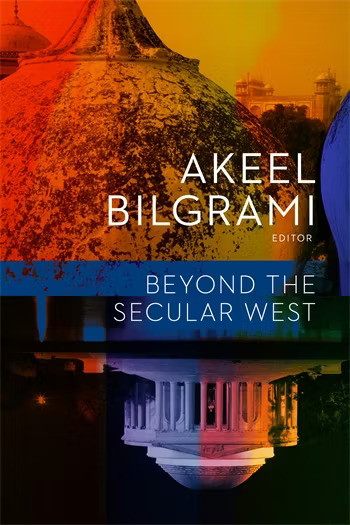
Rethinking secularism in South Asia today

The Daily Star (TDS): We have discussed secularism in the pre-independence period. How did it evolve in independent India?
Akeel Bilgrami (AB): In post-independence India, secularism surfaced initially, primarily in the legal sphere of the reform of religious law—in the formulation, for instance, of the Hindu Code Bill. It has become a commonplace to say (Radhakrishnan said it first, then Amartya Sen has also said it, and now troops of academics have started saying it, and indeed, in some of the case law, even confused judges have been saying it) that Indian secularism is different from the secularism of the West. I think this tendency is due to a confusion in some of the metaphors and slogans that have become commonplace in characterising secularism in the West—such as the ‘wall of separation’ between church (more generally, religion) and the state. There is no way for secularism to be implemented anywhere without the state perforating this so-called ‘wall’ that separates it from religion.
You cannot, in general, constrain religion in the political sphere unless the state breaches the wall. As it happened, in independent India, this occurred in the project of reforming religious law. So, the right way to characterise the notion of secularism (whether in Western nations or in India), where liberal constitutions have been adopted, is to say something like this:
Secularism is characterised by three commitments:
1. A commitment to freedom in the practice of religion,
2. A commitment to certain constitutional principles (just to give one example, freedom of speech), which neither mention religion nor opposition to religion,
3. A higher-order commitment which says that if there is a clash between 1) and 2), then 1) must get priority.
Once you eschew misleading slogans and metaphors to characterise it, this is the secularism that was, by and large, adopted by liberal democratic societies in the West (though, as I said earlier to you, countries like Turkey and France went further and adopted state-enforced secularisation, but these are exceptions). It is also the secularism that India adopted, and it is what was implemented in the reform of Hindu law. Practices sanctioned by particular religious laws clashed with 2), so 3) kicked in and permitted the reform of those laws.
So, when Radhakrishnan and Sen say secularism in India is different, that it is ‘the state’s principled neutrality and even-handedness between religions’ (this is sometimes captured in the phrase ‘sarva dharma, sama bhava’), I think they are getting it quite wrong. Certainly, this rhetoric of ‘principled neutrality and even-handedness between religions’ surfaced often in India, but it was never intended as an alternative definition of secularism. Rather, it was intended as a constraint on the implementation of the only definition of secularism that was adopted in India, i.e., the three-clause definition I have outlined. In other words, in the implementation of 3), when 2) and 1) clash, one must do it even-handedly; one must not apply it to one religion while failing to apply it to another, if the clash occurs with both religions.
Of course, as it turned out, as is well known, this constraint was not applied to the reform of religious law. Reform was not even-handedly implemented because Hindu personal law was reformed and Muslim personal law—despite extensively clashing with 2)—was not. But, as is also well known, there were reasons given for this asymmetry, reasons regarding a minority community having suffered great losses during Partition, so they should at least be allowed their personal laws until such time as they gained the psychological confidence, as a community, to accept the state’s reform of it.
Secularism, of course, surfaces in relevance outside the reform of law as well, but until the 1980s, it was mostly wielded in this sphere. Ever since the 1980s, secularism became a very urgent issue in many other spheres because India began to mimic the European form of nationalism that we discussed earlier, the damaging consequences of which, as I said, had prompted secularism as a damage-repair doctrine in the first place.
TDS: When secularism appears to fail or falter, many have said that multiculturalism or pluralism offers a better framework for the subcontinent. What is the difference between secularism and multiculturalism, and where do you stand on this matter?
AB: Multiculturalism, like secularism, also originated in Europe, but some centuries later, in the last quarter of the 20th century. As a result of the Second World War, there was a loss of manpower in Western European nations. They, therefore, allowed (indeed, initially even sought) migration from their erstwhile colonies to pick up the slack (in the case of Germany, it was not from a former colony, but, by various treaty-like arrangements, from Turkey). Over the next few decades, these migrants, displaced from their own cultures and religious settings, found themselves suffering under racist, xenophobic attitudes of the host populations, and therefore began to seek a sense of dignity and autonomy in the comfort zone of their own religions and cultures, and so began to demand that they be allowed to live more in accord with these than secularism—given its exercise of clause 3) in my definition—would allow. That is the origin of multiculturalism as a doctrine, which then spread with a lively intensity to such places as Canada and Australia, pushed not just by immigrants but also by advocates for indigenous communities long suffering from racism in those countries.
It is, in many ways, a more democratic doctrine than secularism, especially in countries with large and diverse religious populations, as in our part of the world and, as a result of migration, increasingly in the West too. But, alas, I think it is a fantasy to think that, in a country like India today, so completely dominated as it is by a Hindutva majoritarian party in power, Muslims could effectively make demands for a multiculturalist polity. That might have been possible from the 1980s to around 2014, when Hindutva was only laying down roots but was not in full-fledged power; but in the last decade or more, it has seemed very unlikely that multiculturalist demands can get anywhere.
The Partition emerged as an outcome of leaders and their negotiations (and failures of negotiation), not a mass movement of any kind. And in Bengal, the Muslim masses, as I said, were wielding Islamic ideas for solidarity in a class struggle, not for a struggle to establish a Muslim Zion. The idea of an Islamic nationalism as underlying the creation of Pakistan is not a plausible reading of the events of the late 1930s and mid-40s.
Even the remarkable Shaheen Bagh movement a few winters ago, which spread to many small towns in India, was not demanding multiculturalism. It was demanding, on behalf of Muslims, that the secularist commitment of the Constitution should curb the power of Hindu majoritarianism that was seeking to undermine the notions of citizenship that the Constitution had enshrined. (It is actually rather fascinating that the campaigns of that movement extensively and brilliantly used multicultural rhetoric and slogans—poetry, songs, art from diverse cultures—but what these were demanding was a proper implementation of a set of secular commitments already present in the Constitution.)
More recently, a constitutional path to multiculturalism is being indirectly proposed by political theorists in a demand for a much greater federalist de-centring of the polity (echoing the provincial autonomy themes we talked about earlier). Since different regions and states have different cultures, more autonomy for the states in a federated system would, in effect, be a kind of multiculturalism. This demand is not surprising because the only opposition to the Hindutva majoritarianism in power is to be found in the regions.
At the centre, there is virtually no serious opposition due to the abject failures of the Congress party. But the BJP-led alliance’s victories in Maharashtra, Haryana, and Bihar state elections are disheartening for this strategy. Bengal and some of the southern states are still holding out in opposition, but the BJP is now beginning to adjust its Hindi-culture Hinduism and seeking to find a path to accommodate southern Hinduism in its understanding of Hinduism. If it succeeds in that, and if Bengal too finds itself loosening its local culture to accommodate Hindi-oriented cultural elements, as it has begun to do in the last decade, then this entire federalist strategy will not amount to much.
Should that turn out to be so, secularism may remain the only plausible discourse to revive, since it is already there in various constitutional commitments. However, I say all this with the utmost tentativeness—it is not really possible to have any certain opinions in this matter. It remains an open question.
TDS: Finally, how do you understand these issues of nationalism, secularism, Muslim politics, and so on that we have been talking about in the context of the political and social transformations in East Bengal, East Pakistan, and Bangladesh over the last century or more?
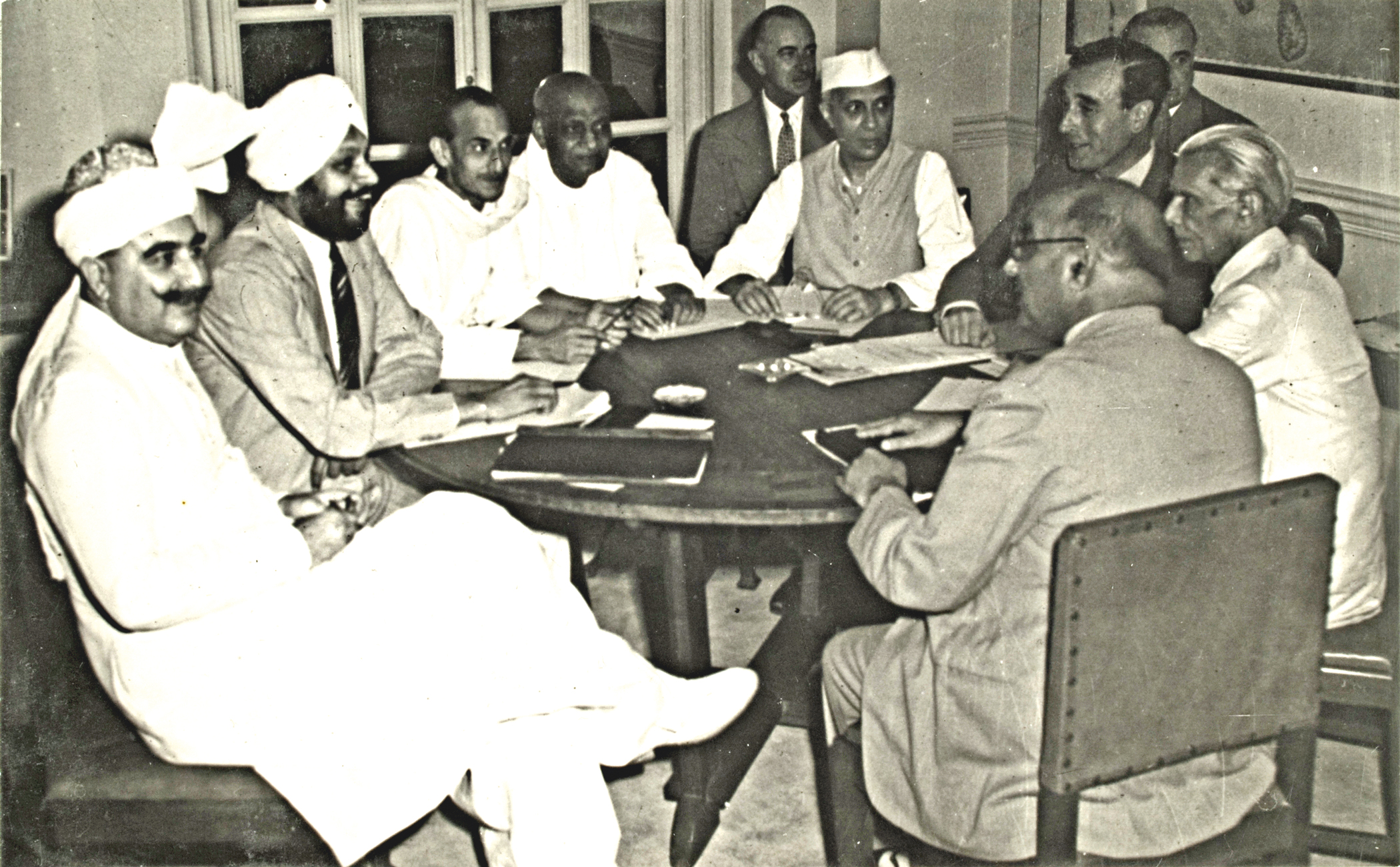
AB: Muslim participation in Indian nationalism in the first half of the twentieth century took different forms as the freedom movement evolved. As I said in response to one of your earlier questions, the Gandhi–Nehru-led Congress party did try to mobilise Muslims, specifically under the name of ‘Muslim’, in two mass movements—the Khilafat movement and the Muslim Mass Contact Programme. And in the Khilafat period especially, Bengali Muslims were very much affected, and you can see this in the range of outcomes around the C.R. Das Pact that brought Hindus and Muslims together, and the Swarajist Party’s intervention in the legislative councils in the first half of the 1920s.
Just to give you one example, Muslim representatives in the provincial assembly voted for the women’s suffrage bill even though they had refused to do so just a few years earlier on the ground that, unlike Hindu women, Muslim women, due to the custom of purdah, would not come out and vote if they had the franchise. The only thing that intervened between the first vote and the second vote was the Khilafat movement’s impact on Bengal. This shift is a clear instance of the progressive effects of the movement. By the late 1920s, this kind of impact of ‘Hindu–Muslim’ unity in democratic politics had dissipated, thanks mostly to the strenuous efforts to undermine it by upper-caste Bengali Hindu politicians.
But you see, you cannot just see that as a shift from progressive nationalism to communal nationalism. I repeat what I said earlier—the shift is as much to do with the contrast between Muslim involvement in mass politics and their involvement in a quite different ‘representative’ politics forced on the freedom movement by the Crown’s constitutional concessions.
I have to say that this entire period is not very well understood. Many even see the Khilafat movement as a communalisation of Muslim nationalist politics. I think that is a serious misunderstanding. Even so interesting and thoughtful a scholar of that period as the Pakistani leftist Hamza Alavi (for that matter, even Eqbal Ahmad, another astute political analyst) gives a very distorted picture of the movement, calling it a forerunner of communal Muslim politics. It was not that. In fact, I do not believe the more class-based mobilisations of the 1930s—on which the Congress leadership did not always have control—would have been possible without the remarkable progressive impact of the earlier Khilafat movement and its follow-up in the non-cooperation movement immediately after.
Now, of course, Khilafat involved Muslims much more widely than just Bengali Muslims, though it had particularly dynamic effects on Bengali Muslims, and your question is just about the latter. If you focus just on Bengali Muslims in East Bengal, then what is conspicuous is that their class composition was predominantly of petty producers in a large agrarian economy, who were caught up in an economic struggle often made particularly acute due to the hardships forced on them by remote economic events elsewhere on the globe because of the regional economy’s reliance on jute, a cash crop in demand elsewhere and, therefore, subject to shifts in the global market.
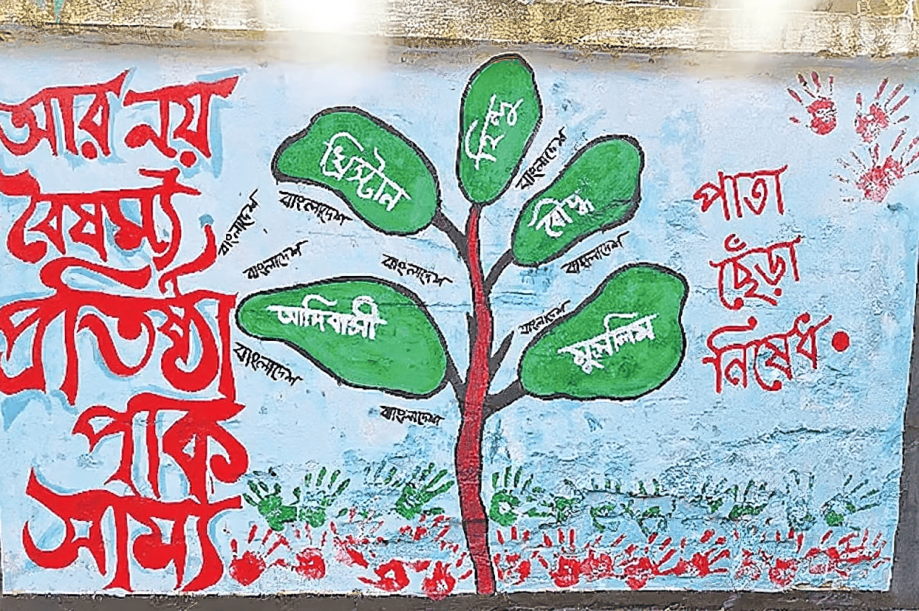
This economic struggle surfaced with much intensity and with some passing successes, both of the KPP in the late 1930s and of the Muslim League’s radical wing under Abul Hashim’s leadership some five or six years later. The struggle is often presented by left historians as a purely class struggle (nothing to do with Bengali Muslims being Muslims), but it is not obvious that that is an entirely or exclusively right description of it. The cohesiveness that Islamic egalitarian ideals might have provided to bring together peasants in this struggle is worth studying and exploring as an overlay on the class dimension of the struggle.
Nothing like this sort of struggle existed in the Muslim-majority areas of the north. In Punjab, for instance, the Unionist Party represented the well-off landlord class. Sikandar Hayat, its leader, was deeply committed to provincial autonomy (even more so than Jinnah) and only allied his party with the Muslim League partly because he was, in some ways, outmanoeuvred by Jinnah, but also partly because he was anxious for the future of the class he represented in the wake of the threatening rhetoric of impending land reform that the Congress party had taken up under Nehru’s leadership.
As we know, in East Bengal, the class struggle was not, in the end, successful because the Dhaka Nawab, representing the Ashraf Muslim aristocratic class, lined up with Jinnah and the national-level Muslim political agenda of the Muslim League. And that level of Muslim politics was, as we discussed earlier, caught up with issues of regional autonomy around the Cabinet Mission, and the impasse around those issues is what led to Partition.
So, in answering the part of your question about Muslims and nationalism in the colonial period leading up to Partition, all of this shows that what recent historians like Dhulipala have been arguing, viz., that Pakistan was created by an evolving momentum for a modern Muslim state, and even Devji (who speaks of Muslims seeking a state as an exilic community like the Jews in Europe), are quite off-beam.
The Partition was primarily a result of the failure of ideas regarding provincial autonomy (that motivated Jinnah) to carry the day with the Congress leadership. The Partition emerged as an outcome of leaders and their negotiations (and failures of negotiation), not a mass movement of any kind. And in Bengal, the Muslim masses, as I said, were wielding Islamic ideas for solidarity in a class struggle, not for a struggle to establish a Muslim Zion. The idea of an Islamic nationalism as underlying the creation of Pakistan is not a plausible reading of the events of the late 1930s and mid-40s.
As is well known and oft told, after the creation of Pakistan, Bengali nationalism within the nation emerged in the Bengali language movements in the early 1950s against an increasingly dominant West Pakistan. That movement shattered the myth of religion as a binding force for the creation and sustenance of the new nation, and it simmered for almost two decades until the violence that led to the break-up of the nation; and one might say that that break-up echoed the proper understanding of what lay behind the events that led to Partition in the first place: the drive for regional autonomy as a way of protecting a people and its culture and language.
The Bangladesh that emerged, however, ended up—just as in India under the Congress—standing for a kind of hegemonic nationalist ideal, seeking to bring together, in a consensus, the various different communities in what might rightly be called—again echoing India after independence—a bourgeois democratic polity and political economy.
What followed Sheikh Mujib’s assassination in 1975 was a slow falling apart of this hegemonic consensual nationalism, first under military rule and then with the rise of the BNP and the Jamaat’s greater centrality in politics than it had ever possessed, culminating in the spectacular events that led to the fall of Sheikh Hasina.
The neoliberal cast of the political economy that Bangladesh has embraced in recent decades, consolidated in a number of decisions made by Dr Yunus’s interim government, may well have the effect of intensifying the Islamist presence both in the electoral field and on the streets, as it has in India since 1991. For all the BNP’s current claims to eschewing that presence in its own government, the fact is that, in the neoliberal period, political leaders in power do tend to work on two fronts: a free-market, open political economy, fully given to globalisation, offering the promise of growth and opportunity to the middle classes to gain their support, and, at the same time, a politics invoking more primordial sentiments—around religion—to extend that gain of support to other classes, who will certainly not reap any of the fruits of such growth.
Though I just mentioned India in passing, I am not at all suggesting that anything like the scenario that exists in India will emerge in Bangladesh. The contexts are very different. Hindu nationalists in India have effectively manipulated the apparatus of the modern state to undermine minorities, and that sort of exercise of power is not always replicable in other nations with rather different histories and different institutional structures in place. I am only suggesting that we should not leave out matters of political economy in seeking to understand the increasing presence of religion in the politics of countries like India and Bangladesh.
The interview was taken by Priyam Paul.
Send your articles for Slow Reads to slowreads@thedailystar.net. Check out our submission guidelines for details.
Dhaka accidentally built the city planners now want. Can we make it liveable?
Can Bangladesh produce its own knowledge?
How we are killing Dhaka

Can Bangladesh afford not to invest in Bhola’s gas?

Bangladesh’s renewable policy: Still too little but not too late
Prabhat Patnaik speaks / Why the Global South must rethink export-led growth

Bhotekoshi flood: Another warning from the Himalayas. Are we listening?
Renewing the Ganges Water Sharing Treaty: What should Bangladesh do?

What it really costs to live in Dhaka