The long transformation of rural Bangladesh

Rabindranath once said, “The relationship between the village and the city should be like that between the inner house and the outer house of a home. All external activities will take place in the outer house, but after work one must return to the inner house for rest and peace.” A similar idea is reflected when he described the village as a “shaded, tranquil nest.” In Rabindranath’s statements, there is a somewhat dreamlike vision of the relationship between village and city. Yet it cannot be denied that they also contain an awareness of the character of Bengal’s rural life and the nature of its village-city relationship.
At the same time, it should be remembered that this relationship has changed over time. One of the major aspects of that change is the transformation of rural society. This transformation has many dimensions, for example, changes in rural social structures, evolution in the mind and outlook of rural communities, improvements in social services in rural areas, the political context of rural life, and shifts in the cultural landscape of rural settlements. Such transformation has been driven by the internal dynamics of rural society, but also by external factors influenced by globalisation and the digital revolution.
How has this change occurred – has it been good or bad? The first question demands a descriptive explanation, while the second question demands a normative answer. The question can be pinpointed further too: where exactly have these changes taken place? If we review the fifty years since the emergence of Bangladesh, it becomes clear that the trends and changes in rural social transformation must be understood within a historical context. This is because the rural transformation of Bangladesh has a historical continuity.
In the distant past, the “self-sufficient village” was a key feature of the rural economic structure of Bangladesh. In that system, different groups in the village performed different tasks according to their caste status and skills. Collectively, these groups met the needs of the entire community. For example, the weaver community produced clothing for villagers, while potters supplied earthen pots and utensils. Through a system of barter and exchange, the mutual needs of the villagers were met, and a self-contained economic cycle sustained the self-reliant rural economy. Socially, different groups lived in separate neighbourhoods of the village, such as the blacksmiths’ quarter, the weavers’ corner, and so on. Beyond business transactions, there were interactions among different groups, but each group maintained its social and economic identity.
Poverty, deprivation, and inequality certainly existed in that system. Sometimes there were natural disasters, food shortages, and famines too. Yet above all, humane relationships among people allowed harmony, solidarity, and peaceful coexistence to flourish. Even when there were religious differences, participation in the social activities of different religious festivals and cultural events was widespread and shared by all. Relationships among people themselves were the strongest form of social security and cohesion.
The first crack in this self-sufficient economy appeared when the barter system was replaced by a monetised market structure, with the increasing use of money in economic transactions. The emergence of the market economy weakened the traditional system of barter and mutual exchange of goods and services. Money changed hands in exchange for goods and services. Machines and the large-scale mass production of goods and commodities destroyed the community-based production activities of rural Bangladesh. However, a major shock to the rural social structure of our country came with the famine of 1943 and, particularly, the Partition of 1947. The movement and migration of Muslims to become part of the newly created religion-based Pakistan weakened the social fabric. Communal harmony was shattered; riots forced thousands of people to abandon their homes and become refugees; and the rural economy weakened.

Since most people lived in villages, the first major attempt to expand and consolidate political power by injecting large amounts of money into the rural economy, and by creating a politically loyal class there, was undertaken by Ayub Khan, the military dictator of Pakistan, in the 1960s. His widespread infrastructure programmes, the introduction of the system of “Basic Democracy,” and the slogan of the “Decade of Development” were all directed towards two goals: first, making rural society and the economy serve urban interests; and second, allowing the rural administration to enjoy the political and economic patronage of the central government, so that local government would become the custodian of the political interests of the party in power at the centre and an extended arm of the central government. In the name of development, many institutional structures of rural society were destroyed, many values eroded, and widespread corruption emerged under Pakistan’s strongman, Ayub Khan.
In the 1960s, an important change in rural life came with the arrival of the transistor radio. On one hand, it provided rural people with a new form of entertainment; on the other, it broadcast educational programmes on agriculture and cottage industries that helped reshape rural ideas and outlooks. It was not only a means of entertainment for rural communities, but also became a medium for information and knowledge. The transistor radio also connected villagers to the outside world. Listening to Bengali broadcasts from the BBC or the Voice of America became a cultural habit in rural areas. This connection proved beneficial during Bangladesh’s Liberation War.
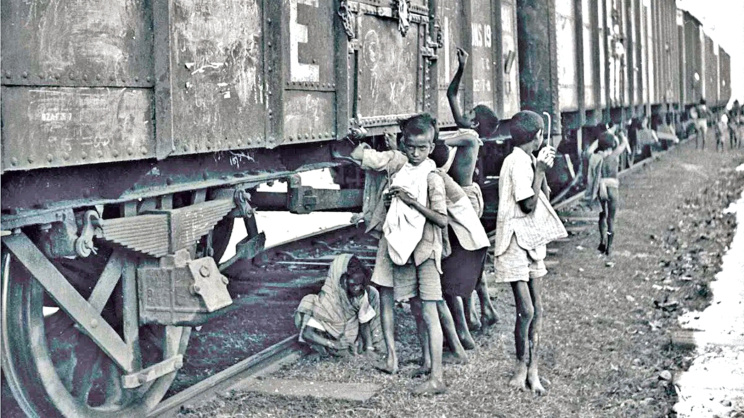
Fifty years ago, Bangladesh’s War of Independence was unique in several respects. Three aspects deserve attention. First, villages became refuges for people fleeing from cities, and the care and protection given by rural people to urban refugees were extraordinary. Second, villages and villagers were among the principal bases from which the Liberation War was fought and where freedom fighters found shelter. Third, rural areas were among the primary targets of the brutality and atrocities committed by Pakistani forces. It is noteworthy that while rural communities were deeply involved in the independence movement, later political movements in Bangladesh, such as the mass uprising of the 1990s, were largely urban-centred.
During the Liberation War, the villages of Bangladesh were reduced to ruins. Agriculture suffered extensive losses, public life was disrupted, and physical infrastructure was devastated. Rehabilitation and reconstruction became the top priorities of rural Bengal. With this goal in mind, Bangabandhu emphasised the introduction of cooperative systems in agriculture and took steps to rebuild damaged infrastructure.
Alongside government initiatives, donor groups and non-governmental organisations played a supportive role in rural rehabilitation and reconstruction. Their contributions were especially important in providing social services such as education, healthcare, and drinking water. As a result, a social service infrastructure began to develop in rural areas, which later played a major role in Bangladesh’s rural development. In the 1980s, two major transformations in rural Bengal brought about revolutionary changes in rural life and in the country’s development.
First, large numbers of unskilled workers from villages migrated to the Middle East. This produced three outcomes. One, there was a rush among villagers to go to the Middle East by any means possible instead of working locally. Two, remittances sent by these workers created a division within rural society between families with members abroad and those without. Three, a wide range of businesses developed around this migration process, stimulating rural economic activity. But at the same time, the process created a division between aided villages (those that were receiving remittances) and non-aided villages (those that were not receiving remittances). In fact, that scenario mirrored what was happening within a village. Households that had family members working in the Middle East gradually became better off compared to other households in the neighbourhood. It created tensions within a village, which for centuries had enjoyed peaceful coexistence.
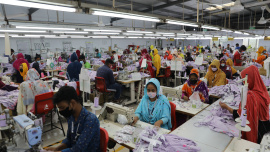
Second, there was the rise and expansion of Bangladesh’s export-oriented, female-based garment industry. Thousands of women moved from villages to cities to work in garment factories and began earning incomes. This brought three structural transformations in rural society: first, women emerged as a significant driving force of rural income; second, women’s contributions to the national economy gained new recognition; and third, increased female employment had a positive effect on reducing fertility rates.
From the 1980s onward, women’s empowerment in rural Bangladesh expanded significantly. The garment industry was one reason, but another major factor was the spread of microcredit programmes aimed largely at rural women. In addition, the introduction of mobile phones in rural areas led to the emergence of many women entrepreneurs. A third factor was the remarkable expansion of girls’ education. At the same time, some women also began migrating to the Middle East as unskilled workers.
Towards the end of the 1980s, improvements in rural roads and other physical infrastructure connected villages more closely with cities. This created new dynamism in the rural economy and made movement easier for people. It also contributed to increased female education in rural areas. But at the same time, day after day, the agricultural sector suffered greatly because of government neglect in terms of investment, input support, agricultural extension services, assistance with the marketing of agricultural products, and ensuring fair prices. Furthermore, rural institutions such as cooperatives, which once were a dynamic force for agricultural development in Bangladesh, slowly decayed.
However, by the late 1990s, several significant transformations had taken place in rural society. Positive government policies improved agriculture and food availability, leading to higher rural incomes. Alongside this, appropriate policies and investments in social infrastructure gradually improved Bangladesh’s social indicators. As a result, by the second decade of this century, rural economic growth had accelerated and rural poverty had declined significantly. In many social indicators, such as life expectancy and child mortality, Bangladesh has moved ahead of neighbours like India and Pakistan.
However, these transformations are not limited to economic sectors; they have also spread into social and cultural spheres. The rise of mobile phones, the internet, and social media has connected rural society not only with the broader national context but also with the global community. This has produced several structural changes in rural society.
First, the boundary between village and city has become much less distinct; villages have almost caught up with cities. Second, rural youth increasingly aspire to migrate to urban areas, attracted by city life and broader economic opportunities. Third, the spread of new information technology has brought urban, and even global, culture into villages. As a result, traditional rural cultural activities such as jatra (folk theatre), boat races, and the game of ha-du-du have declined. Meanwhile, technologies such as mobile financial services like bKash have added new dynamism to the rural economy.
Nevertheless, in considering fifty years of transformation in rural society, several crises must also be remembered. First, despite many positive measures, Bangladesh’s policies often remain biased towards urban areas. As a result, rural priorities are frequently neglected. The lack of adequate data on the rural economy and society is part of this broader issue.
Second, many values and social norms of rural society that are necessary for positive transformation receive little attention. As a result, practices like child marriage continue. Violence against women also persists, and women’s economic independence alone has not changed this reality. Furthermore, the penetration of mobile phones and the internet for all purposes has connected rural areas of Bangladesh with imported entertainment and culture. Consequently, some traditional rural festivals are no longer there.
Third, the dominance of religious education and religious leaders in rural society has often prevented the strengthening of free thinking and scientific attitudes. Instead, religious conservatism, communalism, and attacks against women have increased. In this context, rural madrasas sometimes reinforce religious conservatism and may even contribute to extremism, posing a barrier to positive transformation.
Fourth, decentralisation has often been discussed as a means of rural development. Yet in many cases, problems have been decentralised while solutions remain centralised. The decentralised investment in financial and human resources necessary to energise rural change has largely not taken place. Thus, effective administrative decentralisation with economic and financial autonomy is essential for the dynamic revival of rural society.
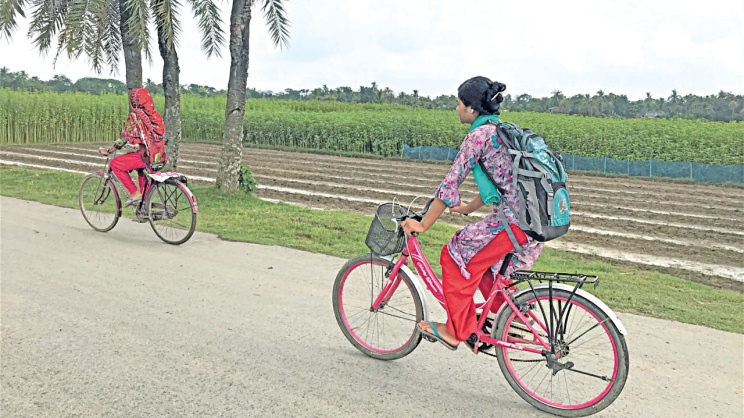
Fifth, nowadays, there is a strong pull factor from the urban centres of Bangladesh, particularly from Dhaka, with all kinds of attractions associated with the capital city. And it is not always the attraction of economic opportunities; the dazzling lifestyle of the city also attracts many young people from rural Bangladesh. People want to be part of all the urban excitement and, therefore, rural-urban migration is quite high in the country. Yet the rural roots of Bangladeshis can easily be seen when, during the Eid holidays, millions of people leave Dhaka to celebrate the festivals with their kith and kin in the villages.
To conclude: over the course of time, many transformations have occurred in the society of rural Bengal, some positive, some not. This has certainly been true over the past fifty years. The traditional rural Bengal we once knew may never return. But that does not mean that, guided by present realities and future aspirations, we cannot rebuild rural Bengal anew with fresh determination and a clear vision for the future.
Dr Selim Jahan is the former director of the Human Development Report Office under the United Nations Development Programme and lead author of the Human Development Report.
Send your articles for Slow Reads to slowreads@thedailystar.net. Check out our submission guidelines for details.
Can Bangladesh make its plastic waste policy work?
Dhaka accidentally built the city planners now want. Can we make it liveable?
Can Bangladesh produce its own knowledge?
How we are killing Dhaka

Can Bangladesh afford not to invest in Bhola’s gas?
Bangladesh’s renewable policy: Still too little but not too late
Prabhat Patnaik speaks / Why the Global South must rethink export-led growth
Bhotekoshi flood: Another warning from the Himalayas. Are we listening?
Renewing the Ganges Water Sharing Treaty: What should Bangladesh do?