Why Bangladesh must start rehearsing for the next earthquake
Bangladesh knows how to run from a cyclone. It does not know how to run from an earthquake, and last November, that gap in muscle memory became painfully clear.
At 10:38 in the morning on November 21 last year, the ground shook for 26 seconds. The epicentre was near Madhabdi in Narsingdi, not far outside Dhaka. By the day’s end, at least ten people were dead and hundreds were injured. A railing collapsed onto pedestrians buying meat in Old Dhaka. A wall came down on a mother and her newborn in Narayanganj. University dormitories cracked. Panicked students jumped from residence halls. Power stations shut down. It was, by most measures, the deadliest earthquake to strike Bangladesh in more than two decades and, by regional standards, it was still considered moderate.
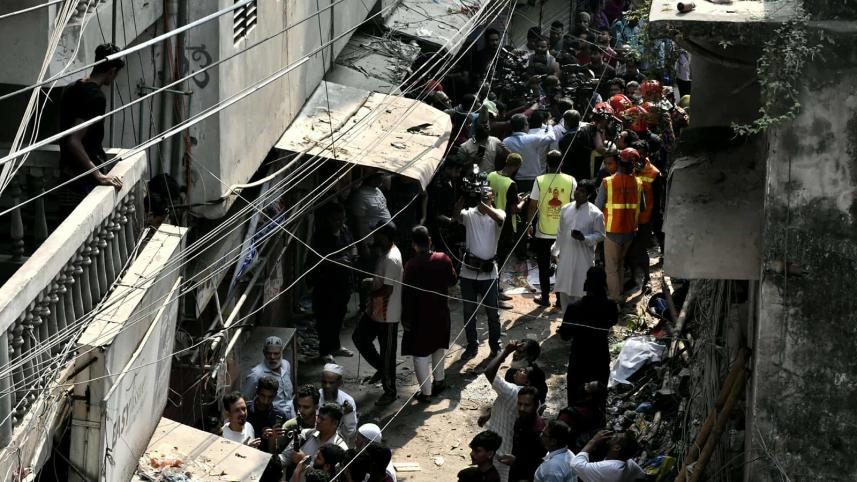
That distinction matters more than it sounds as though it should. Engineers who examined the aftermath did not call it a warning that had passed. They called it a possible foreshock, one of the smaller tremors that sometimes precede something larger. The region has not produced a magnitude-7 earthquake since 1930. Historical recurrence patterns suggest one is due roughly every century to a century and a quarter. By that arithmetic, Bangladesh is not early. It is late.
I think about this often, because late is not how Bangladesh plans for disaster. We plan for what we have already rehearsed.
Ask any coastal family what a cyclone signal means and they will tell you, almost instinctively, when to move, what to carry, and which shelter to walk to. That instinct was not born from a training manual. It was built the hard way, over a century of cyclones, floods, and storm surges that returned every season, sometimes every year, until preparation became reflex. A cyclone gives you a signal number and a day or two. A flood gives you a rising river and roughly a week. Bangladesh has learned to use that time well because it has had a century of practice using it.
An earthquake gave the country 26 seconds. No signal number, no rising water, no window to rehearse a response before it arrived. Everything that anticipatory planning depends on—a forecast, a threshold, time to act—simply does not exist for this hazard. What can still be rehearsed, though, is not the warning. It is the response: what a child does with their hands and knees in the first three seconds of shaking, before anyone has had time to think.
This is where the comparison becomes uncomfortable. In Japan, primary schools hold earthquake drills as routinely as fire drills, sometimes several times a year: children drop under their desks, head first, hold the legs until the shaking stops, then file out for a roll call, some rotating through simulation rooms that recreate real tremors until the response becomes physical memory rather than instruction. The share of Japanese school buildings rated earthquake-safe rose from under half in 2002 to nearly all of them today, retrofit by retrofit, after the 1995 Kobe earthquake destroyed thousands of schools and made the case impossible to ignore. In California, the Great ShakeOut has grown into the largest earthquake drill in the world, with students practising Drop, Cover, and Hold On at least once a year until it needs no announcement to trigger. In the Philippines, on the Pacific Ring of Fire, school drills are conducted with the same seriousness as fire drills: routes are posted in every classroom, roll call is completed within minutes, and calm is treated as a skill to be practised rather than hoped for.
Bangladesh knows how to run from a cyclone. It does not know how to run from an earthquake, and last November, that gap in muscle memory became painfully clear.
A recent scenario study of rural primary schools across Bangladesh’s seismic zones found something quite different. Teachers and students had detailed, rehearsed plans for floods and cyclones, but no structured framework at all for earthquakes: no standard drill, no routine practice, and little training on what to actually do in the first thirty seconds. In the weeks after November’s quake, a handful of schools received a one-off safety briefing. A single afternoon session is not a drill. A drill is something a body remembers without being told.

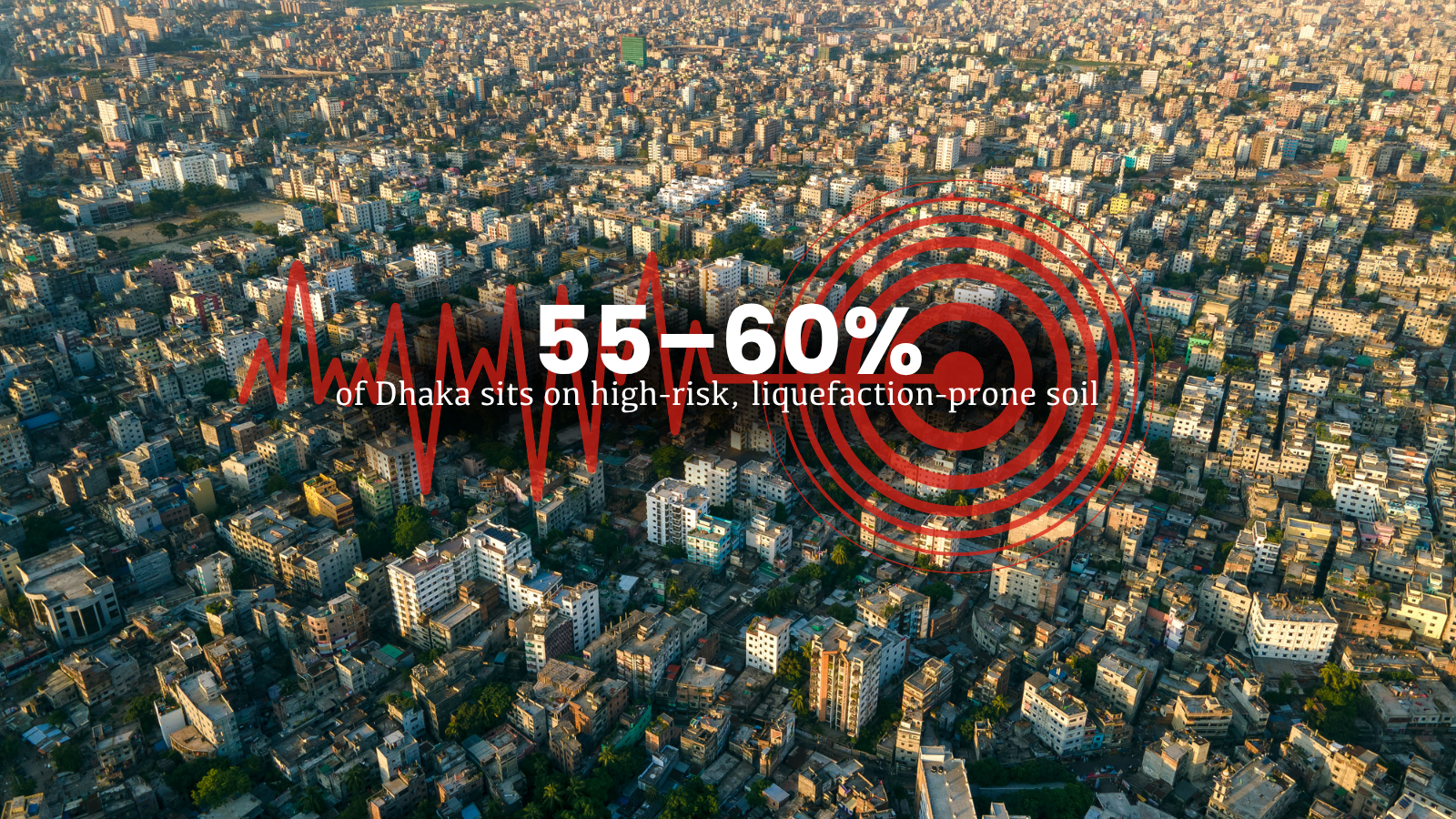
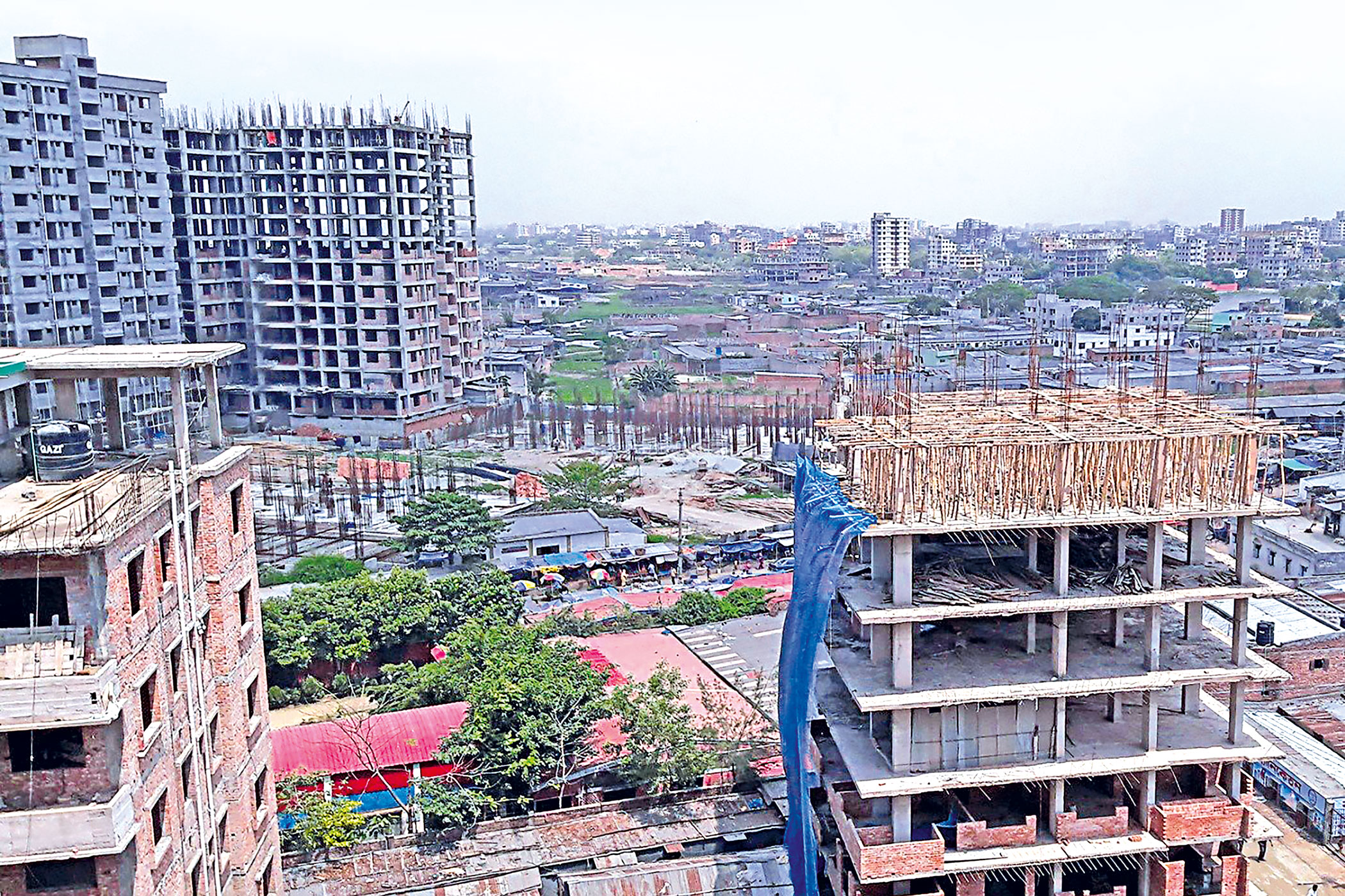
On the ground itself, the outlook is no steadier. Soil surveys of Dhaka show well over half the city sitting on land rated as highly susceptible to liquefaction: soft, waterlogged, often artificially filled ground that can briefly behave like liquid under strong shaking, much of it reclaimed from wetlands and ponds within living memory. Add to that the thousands of buildings raised with open, unsupported ground floors for parking, many without the piling the national building code requires. One recent structural assessment estimated that a magnitude-6.9 earthquake in Dhaka could collapse more than 860,000 buildings. After November’s quake, engineers called for urgent structural checks across the capital’s roughly 2.1 million buildings, a task that has barely begun.
None of this is unknown; it has been mapped, modelled, and, since November, publicly demonstrated. What is still missing is the rehearsal itself: not a single briefing, but the kind of repetition that turned cyclone response into instinct: a duck-and-cover drill run every term until no child has to think about it, alongside the retrofitting that makes the building they are ducking inside less likely to come down on them. Neither carries the urgency of a storm signal, because neither answers a threat that most people alive today have lived through more than once.
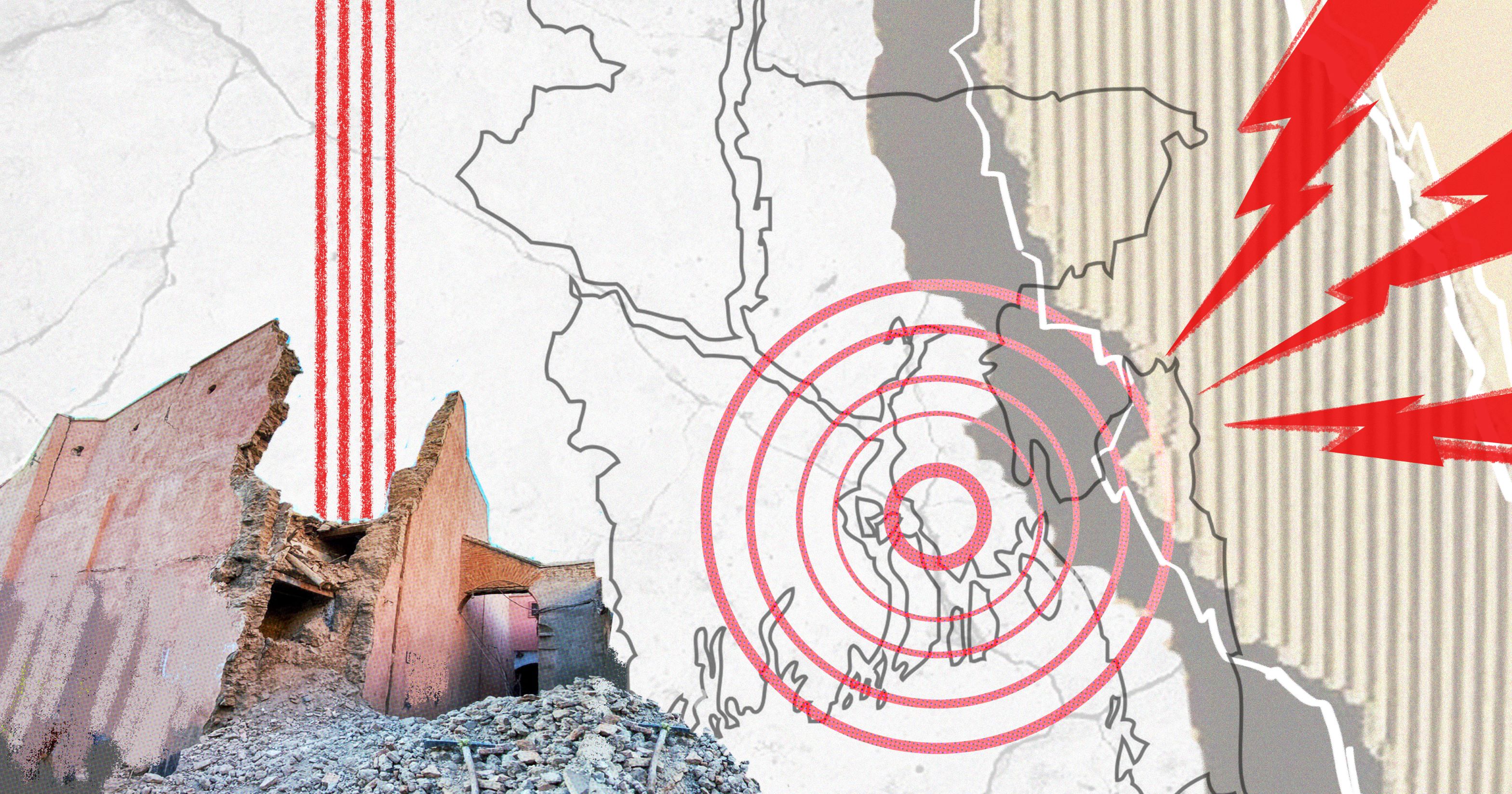
It is also, increasingly, not a hypothetical ask. This summer, major earthquakes in Japan and Venezuela, within a day of each other, put seismic risk back on front pages worldwide, with one country’s decades of drilled, retrofitted preparedness limiting the damage and the other left far more exposed. Bangladesh does not get to choose which outcome it inherits after the fact. That choice is being made now, in whether a school runs an earthquake drill this term or waits for the next quake to force the question.
A hazard does not have to be familiar to be rehearsed. Bangladesh spent a century turning cyclones and floods into disasters people know how to survive, not through luck, but through repetition. Last November was the country's first real rehearsal for the next major earthquake, and it cost ten lives in just 26 seconds. The next rehearsal should be a drill, not another disaster.
Masuma Moriom is a Climate and Disaster Risk Reduction Specialist with experience in climate resilience, anticipatory action, disaster risk reduction, and strategic communication across Bangladesh and South Asia. She can be reached at masumamoriom.du@gmail.com.
Send your articles for Slow Reads to slowreads@thedailystar.net. Check out our submission guidelines for details.
What six South Asian economists taught the world about development
Can Dhaka’s Pink Bus break a four-decade pattern?
Kazi Khalid Ashraf & Adnan Zillur Morshed on Dhaka's Future / What kind of city do we really want?
Is Bangladesh’s garment industry ready for the next shock?
Can pink buses make travels safer for women?

Chained majesties: The plight of captive elephants in Bangladesh

Why Bangladesh needs mandatory warning labels on packaged foods

Is Bangladesh going the wrong way on AI?
Bangladesh and the question of indigenous peoples