Barisal, beyond, and the making of Bengali literary modernity

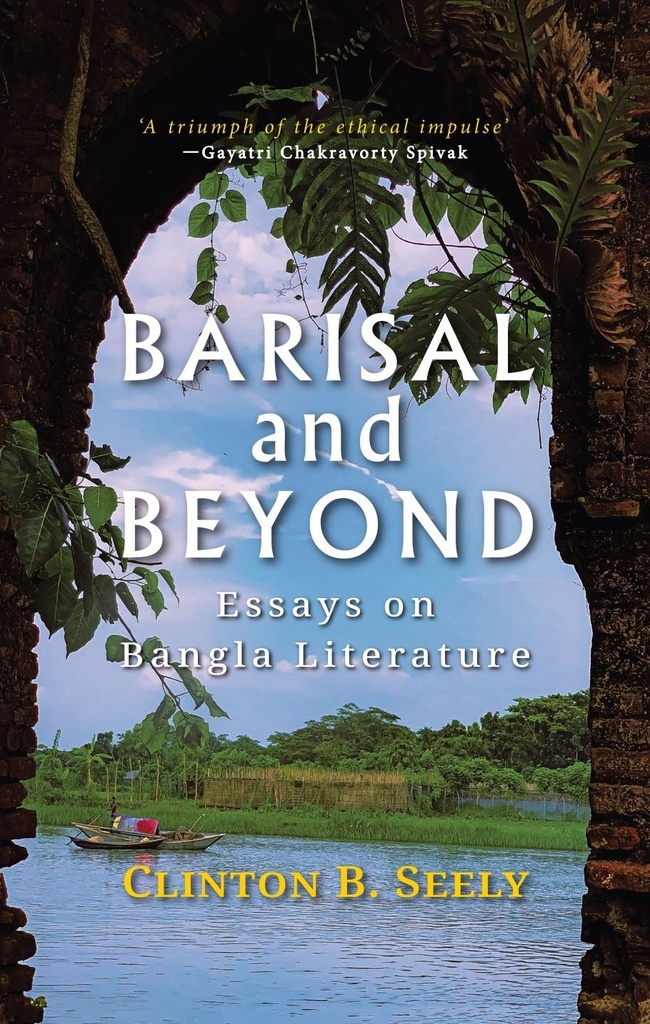
In conversation with Clinton B Seely, emeritus professor of South Asian Languages and Civilisations at the University of Chicago. A leading scholar of Bengali literature, he has authored a seminal biography of Jibanananda Das, translated Michael Madhusudan Dutt’s Meghanad-badh kabya, and written influential essays on modern Bengali literary history. Recently, the University Press Limited (UPL) republished his book Barisal and Beyond. This conversation is centred on the book.

The Daily Star (TDS): The title Barisal and Beyond suggests both rootedness and transcendence. How do you interpret Jibanananda Das’s regional imagination? Does Barisal function more as a remembered homeland or as a metaphorical space of longing and exile?
Clinton Booth Seely (CBS): Barisal is where I started out in Bengal. Barisal is where Jibanananda started out. Both of us went elsewhere. Both of us went beyond. Rupasi Bangla is how Jibanananda, in part, remembered Barisal; Barisal and Beyond is how I, in part, remember Barisal.
Though I was not “called back to Bengal”, Jibanananda was, and it was definitely not a metaphorical space of exile for him. If he ever felt exiled, it was when he accepted a teaching job in Delhi at the very end of 1929, leaving that post in early 1930, and then again later, after 1946, when he took up residency in Kolkata, never to return to live permanently in Barisal. He felt exiled from Barisal, not in Barisal, I think we can safely say that.
I consider one of his most haunting lyrics to be the one in which he is “called back to Bengal”. It is a poetic apostrophe, first published in Kavita in 1937. Just to be certain, there is no confusion about what constitutes a poetic apostrophe, let me assure my readers that it has nothing to do with the punctuation mark, as in the apostrophe “’s”. A poetic apostrophe is a figure of speech in which a speaker directly addresses someone or something that is not present or capable of responding. Shakta devotee and poet Ramprasad Sen made good use of the apostrophe when addressing his chosen deity, the mother goddess. The poem “Come Back” (phire eso), though not devotional in a religious sense, is just such a lyric, poetically employing the apostrophe. The addressee, I argue in the prologue to Barisal and Beyond, is Jibanananda himself, summoning himself back to Barisal.
Come back to the sea’s shore,
Come back to paths through fallow fields,
To where the train stops
At a world of mango, nim, and jhau trees,
Come back. Once you wove an egg of blue.
Still today stars lie silent in the dewdrops.
When will you turn into a waterfall of birds
And be aware of me?
An even more emotional lyric of his, in which he identifies with Barisal, is the poem where he has a personified tree address humans:
Said the ashvattha slowly: “Which way are you headed—
Where do you wish to go?
We’ve all been neighbours so long, so very, very close.
Your sun-stained straw huts, they’re standing yet.
And here you go forsaking home and lands,
Heading where, what path—I have no idea.
You’ve wrapped up your belongings, even the broken bowls, that leaky pot.
Now where are you set on going?
Not fifty years have passed, why, it seems just yesterday
Your grandfathers, fathers, uncles
—yes, I remember them well.
Here on the edge of these very fields they bought land, built their straw huts
And in this land, on these paths with all this grass and paddy, and trees of nim and jamrul,
They paid off their debt of sorrow with life’s hopes, hunger, and exhaustion.
Standing here I watched it all—it seems like just the other day.
You won’t stay any longer? Which way are you headed?
I suppose there’s greater peace somewhere else—more hope?
A deeper sense of life, I guess?
And that’s why you’ll go there to build your huts of hope.
But, no matter where you go, life itself does not change.
No matter where you build your hope-filled huts, a tale of hunger, dreams—
A tale of pain and separation shall show itself in graying hair.
So said that ashvattha tree, trembling in the darkness overhead.”
It was the ashvattha tree who—and the human pronoun makes sense here—was referenced in the poem about a suicide eight years earlier, questioning whether it/he did not protest that grievous act. Why would anyone deprive himself of Bengal, of Barisal!
TDS: What personal or intellectual motivations led you to focus so deeply on Jibanananda Das? Did your identity as a non-Bengali scholar affect how you were received in Bengali literary circles?
CBS: It was Jyotirmoy Datta, who, after his tenure at the Iowa Writers’ Workshop, relocated to the University of Chicago and became one of my professors, along with Edward C. Dimock Jr. It was Jyoti who encouraged me to consider undertaking a biographical and literary study of this unique and challenging Bengali poet, fairly recently deceased at the time. My non-Bengali identity actually made access to his literary world easier. Jibanananda was everybody’s favourite poet (after Rabindranath Tagore, of course), and all were more than willing to share with me, a non-Bengali, their reflections on Jibanananda and his poetry.
TDS: Has your understanding of Jibanananda Das’s work evolved over the decades since you first encountered it? If so, what critical or emotional shifts have shaped the way you now read and interpret Banalata Sen?
CBS: I have a complete chapter in Barisal and Beyond on my rereading of “Banalata Sen.” I always thought it odd, even awkward, that the speaker in that poem went from the South Asian subcontinent to the Malay archipelago and went nowhere else outside the South Asian subcontinent in the entire poem. Late in my career, I came to realise that “malay sagar” is really a misreading—by all of us, Jibanananda possibly included—of the sagar, or body of water, off the Malabar Coast.
TDS: How do you view Bharatcandra Ray’s Annada Mangal in terms of poetic transition? Despite being situated at a literary crossroads, how did he so masterfully employ older medieval literary motifs in his poetry?
CBS: The Annada Mangal is, in my opinion, the apex of the mangal kavya literary tradition, both in terms of being a perfect mangal kavya structurally, and in terms of being the most highly ornate literary composition of that genre. I argue these points more extensively in the second half of the first chapter of Barisal and Beyond.
For our purposes here, let me take up the second of my claims first. Most narrative texts of the pre-modern period rely upon two metres, payar and tripadi. Payar has been deemed the more prosaic of the two, used extensively to advance the action of the narrative. Tripadi is often reserved for ornamental elaborations, though both metres can be used for both purposes. Bharatcandra employs a far, far greater variety of metres than just these two.
My second claim, that the Annada Mangal is structurally a perfect mangal kavya, is diametrically opposed to what Professor Sukumar Sen has written. For Professor Sen, Bharatcandra’s text is actually three separate texts: one a mangal kavya per se, one a romantic or erotic tale, and one a historical narrative.
I view complete mangal kavyas as having three distinct segments. The first takes place in divya loka, or the home of the divines and heavenly folk. The second takes place in the mortal world, the realm of humans. The third starts out in Bengal, where a Bengali, usually a merchant, sets out to do business elsewhere in the world. This third segment I call the Dhanapati paradigm, Dhanapati being the name of a Bengali merchant who, in one mangal kavya, goes to Ceylon to engage in trade. The king there misidentifies the merchant as a thief, imprisons him, and plans to execute him. The goddess, whose mangal kavya it is, has to intervene to humble the king and free the wrongly imprisoned Bengali merchant.
Bharatcandra’s Annada Mangal has precisely these three narrative sections. The first section takes place in heaven. Unfortunately, two of the heavenly characters are caught making love when they should have been worshipping the goddess. Those two beings are condemned to spend some time out of heaven and down among humans in the mortal world. Their names, we come to know, are Vidya and Sundar—he from South India and she a resident of Bengal. Their courtship constitutes the second segment of Bharatcandra’s tripartite mangal. Vidya’s father condemns Sundar to death for violating his daughter, until the goddess steps in and convinces the father that a legitimate marriage had taken place, a so-called rakshasa marriage, thereby exonerating Sundar, and at the same time convincing everyone of the supremacy of that particular goddess.
The third segment consists of the conquest of Bengal, specifically the Jessore region, by an army of the Mughal emperor Jahangir. That Mughal army is assisted by a Bengali gentleman from the household of a Hindu zamindar from Krishnanagar. In appreciation for the needed assistance, the Mughal general promises the Bengali gentleman a reward to be bestowed by Jahangir.
In a perfect “Dhanapati paradigm”, the Mughal general and the Bengali gentleman proceed from Bengal to the Mughal capital in northern India. Once there, Jahangir disbelieves his general and decides, wrongly, that the Bengali gentleman is a liar. He imprisons the Bengali and threatens execution. The goddess Annada intercedes, punishing Jahangir and effecting the Bengali gentleman’s release, after which he is rewarded by Jahangir and sent on his merry way back to Bengal—the culmination of the perfectly structured tripartite mangal kavya.
TDS: You have written extensively on Tagore’s engagement with mangal kavya. What is the significance of his reading of this genre? Did it shape any critical approaches that later influenced modern Bengali literary criticism?
CBS: I can’t say that Tagore’s understanding of mangal kavya literature, which he obviously knew well, influenced modern Bangla literary criticism. I would say, however, that his understanding of the structure of the mangal kavya—a ubiquitous narrative genre among Hindu Bengalis in premodern Bengal—and the power of that mangal kavya to argue for the supremacy of one goddess or god over all others, made it possible for Tagore to argue against restrictive, conservative societal rules and caste regulations— his niyam—and to argue in favour of progressive, liberal, modernising spontaneity—his icche—in the symbolic and delightful drama Taser Desh, or Land of the Cards.
TDS: What, in your view, is truly ‘modern’ about Ravana as portrayed in Michael Madhusudan Dutt’s work? How would you evaluate Michael’s retelling of the Ramayana—does it reflect a European spirit shaped by Occidental ideas, or is it influenced more by South Indian Dravidian interpretations that challenge Orientalist readings?
CBS: The most oft-quoted line by Michael is not from any of his literary writings. It comes from one of his letters, where he wrote: “I despise Ram and his rabble, but the idea of Ravan elevates and kindles my imagination; he was a grand fellow.”
Your question as to whether his retelling of the Ramayana is more reflective of European classics or more influenced by the Dravidian recasting of the tale: I go to great lengths in Barisal and Beyond to show that the characters in Michael’s epic do not deviate from those same characters in either the Sanskritic Ramayana by Valmiki or the standard Bangla Ramayana by Krittivasa. That, over the years, so many critical readers have seen deviations between Michael’s main characters and those same characters in the older Ramayanas can be attributed to what I have called in Barisal and Beyond “subversive similes”. Michael makes the reader think that he has fundamentally altered the characters of Rama and Ravana through the use of those “subversive similes”.
Let me step back from Michael’s quoted sentence from his letter above. It might be concluded that he is focusing on Ravana; he is not. His epic is not titled Ravanavadha. It is Meghanad-badh , the slaying of Meghanada. It is Ravana’s first and foremost son, Meghanada, who is the focus of this epic. It is really Meghanada who “elevates and kindles” Michael’s imagination. It is Meghanada whom Michael valorises, even idolises. It is Meghanada, I submit, to whom Michael compares himself and finds himself wanting. Let me quote from my own published writings, from the introduction to my translation of Meghanadavadha, to show you what I mean:
Datta tells us in one of his letters how it pained him to kill off Meghanada. “It was a struggle whether Meghanad will finish me or I finish him. Thank Heaven. I have triumphed. He is dead, that is to say, I have finished VI Book in about 750 lines. It cost me many a tear to kill him.” Meghanada, after all, represents the ideal son, the son that Datta himself had failed to be. Rather than honouring his father’s wishes and marry, he had rebelled, going so far as to leave his father’s cultural community and become a Christian. Rather than come to the aid of his father when his father’s fortunes had taken a turn for the worse, Datta had fled Calcutta for Madras, returning briefly once following his mother’s death and then coming back permanently—abandoning his wife and four children in Madras—to claim his patrimony only after his father had passed away. Meghanada gave his all for his father. Even Ghatotkaca sacrificed himself for the sake of his father. Rama, though faithful to his father, had in fact left him and gone south into self-imposed exile, thereby causing Dasharatha’s premature death. It is Meghanada, not Rama, who served his father best. It is for Meghanada and, I submit, for himself as a failed Meghanada-like son that Datta is grieving, a cathartic sort of grieving.
Meghanada gave his life for his father. Rama did not. Michael did not. It is Meghanada whom Michael respects the most. It is Meghanada’s death that brought him to tears.
TDS: How do you assess Mir Mosharraf Hossain’s place as the first major prose writer in modern Bengali literature, particularly in light of the ongoing debate about whether Bishad Sindhu qualifies as a novel? How do you interpret his personal trajectory—from a non-communal thinker to a more conservative figure later in life?
CBS: Mir Mosharraf Hossain, like Michael Madhusudan Datta, was a linguistic phenomenon. Both men completely mastered language idioms other than those they spoke. Both men took literary texts and tales utterly revered in their own cultural traditions and re-created them in a more contemporary idiom. Both men somewhat lost their youthful perspective and creative impulse later in life. But both men left us incredible literary art, part and parcel of the world literary canon.
The question of whether Bishad Sindhu qualifies as a novel reminds me of Tagore’s early negative criticism of Michael’s Meghanad-badh as not being an epic at all. We know that Tagore later retracted that early opinion of Michael’s classic, attributing his initial view to what he saw as juvenile brash exuberance. I take up the issue of genre when it comes to Mir Mosharraf Hossain’s impressive work, and I do address the notion of “genre criticism” generally in Barisal and Beyond—the notion that the quality of a work of literature somehow depends upon how well it conforms to predetermined features of a particular genre.
I must admit that at times I have wondered whether Jibanananda was reluctant to publish his Rupasi Bangla sonnets due to the possibility that they would be judged more on whether they conformed to one or another European sonnet structure than on whether the emotional content was compelling. The sonnet, as we know, has been a very productive genre in Bangla ever since Michael. Jibanananda need not have been diffident about how emotionally compelling his sonnets were, given their reception during the 1971 war of independence.
TDS: When you encountered Tagore’s work through Satyajit Ray’s films, did it change the way you understood the original texts? How did that experience shape your thinking about how literature and cinema speak to, resist, or transform one another?
CBS: Satyajit Ray’s direction, as well as Madhabi Mukherjee’s and Soumitra Chatterjee’s acting interpretations of Charu/Kadambari and Amal/Rabindranath, make Tagore’s novella come ever more alive for me. It has been my experience that with cinema and literature, whichever I see or read first becomes my preferred standard. If I see the film first, the novel proves somehow inadequate. If I read the book first, the film usually fails to meet my standards. In the case of Nasta Nir and Charulata, neither takes second place to the other. Both impress me equally and overwhelmingly.
As I note in the preface to the UPL edition of Barisal and Beyond, my reading of this tale of a marriage under strain conforms to Satyajit Ray’s dramatisation of Tagore’s work. Furthermore, I note in that preface that Satyajit’s understanding of the narrative—and mine as well—is not acceptable to all contemporary Bengali readers and viewers. There are those who vigorously reject the notion that the character Amal is in any way autobiographical, or that Charu is, for all intents and purposes, the actual Kadambari Devi. Those who hold that opinion are, of course, strongly implying that Satyajit Babu and I have tarnished the good name of Rabindranath and Kadambari. I reiterate here what I write in the preface:
[N]either Satyajit Babu nor I were besmirching the name of either Tagore or Kadambari Devi. Nor was Tagore, with his moving and obviously heartfelt depiction of his wonderfully talented bouthan, his sister-in-law, being disrespectful of her.
TDS: You describe Raja Pratapaditya as a “problematic” hero. What led you to that assessment? Was he an exception among the Bara Bhuiyans, or do similar ambiguities appear in the portrayal of other figures? How did later currents of Hindu nationalism, and the pull between regional Bengali identity and pan-Indian heroic imagery, shape the way his legacy came to be remembered?
CBS: My chapter on the “problematic” Bengali hero, Raja Pratapaditya, should explain to readers why I consider him problematic. Tagore questioned Pratapaditya’s status as a hero during the Swadeshi period and specifically challenged his niece Sarala Devi Chaudhurani’s lionisation of him. Based on the literary evidence I have seen, including the Ram Ram Basu biography, I stand with Tagore’s opinion, as opposed to his niece’s, of this pre-modern Bengali warlord from Jessore.
TDS: How do you situate Rizia Rahman within the landscape of post-independence Bengali fiction?
CBS: Rizia Rahman can easily be placed within a literary lineage of Bengali women writers beginning with Begum Rokeya. However, I consider Rizia Rahman from the perspective of Bengali writers in general, not only women writers. Her attempt to make sense of individual identity within a particularly heterogeneous population, such as that found in modern-day Bangladesh, strikes me as thoughtful and provocative.
The interview was taken by Priyam Paul.
Send your articles for Slow Reads to slowreads@thedailystar.net. Check out our submission guidelines for details.
APO 433: Dhaka’s forgotten post office of World War II
Dadabhai Naoroji: The man who exposed the economics of British colonialism

Untold stories of 1971 through private letters
The extraordinary journey of Atish Dipankar Srigyan
Forgotten story of Jeanette Van Tassel, the American woman who flew over Dhaka in 1892
Beyond 1947 / A personal essay
Abul Mansur Ahmad / A global quest in search of a nation

Chand Bibi and the forgotten history of Muslim women’s political resistance
Women’s voices in Nazrul’s Dhumketu