A life so full: Remembering Ahmed Sofa

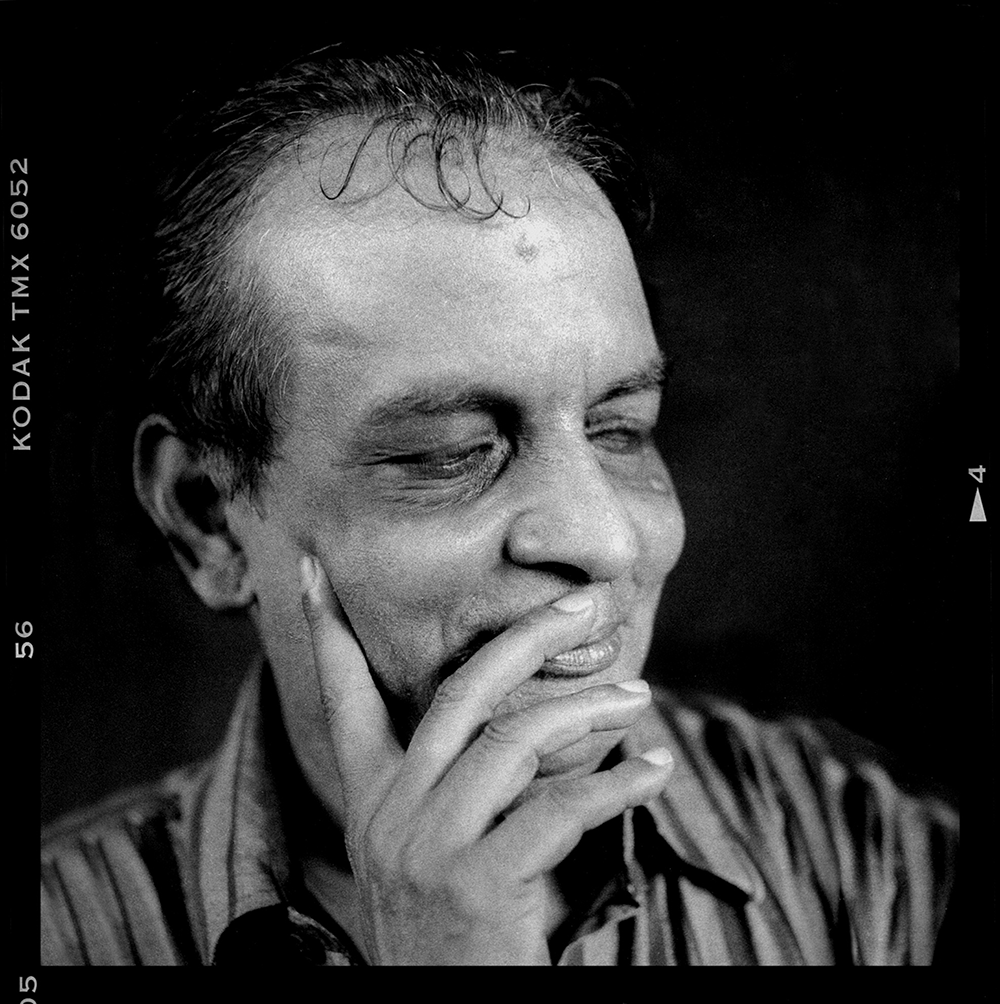
When I talk about Ahmed Sofa, I usually begin with the story of his apple tree. Sofa consisted of stories: those he experienced himself, those he wrote and told, and those that were told about him. Revolutionary, lover (of women, books, children, Goethe), mystic, humanist, dreamer, poet – a person who was all that and more cannot be described; one can only tell stories about him.
Everybody has stories about Sofa. My favourite is the one about his apple tree. He often told it to me and finally also wrote it down in his most beautiful book. That was something about him: one could listen to him telling the same story again and again. Probably this is a feature of great storytellers: what is interesting is not only what is new in their story. Rather, in the process of telling the story, something else is transmitted: the listener is captivated by what moves the storyteller, and one listens, fascinated and grateful.
An apple tree is something rare in Bangladesh. It does not grow naturally there. Sofa found a sapling at a nursery and planted it in his garden. Every evening he spoke to it and touched it gently. When it had grown a little, he often sat beside it in the evening, reading or working. And after some time, the little tree began to touch Sofa's shoulder. Yes, indeed, without the influence of the wind, a branch of the tree regularly touched Sofa on the shoulder. I did not believe it when I first heard it. I said to myself, here is one of those borders between truth and invention that Sofa often transgresses when he tells a story – not in the sense of telling an untruth but, on the contrary, in the service of a higher truth. With numbers this was always very obvious. Within one sentence, a number could, for example, increase from one hundred to ten thousand. He would first correct himself from one hundred to one thousand, then feel that even that number was insufficient to convey what he wanted to express, and so he would increase it further to ten thousand. There was nothing false in this. If it was an overstatement, then it was only in order to serve a truth that was important to him: it was much, or very much, or too much.
Something like this, I thought, was going on when he talked about the apple tree touching him. Certainly it was true that the tree loved its caretaker, and whether the touching of the branch was a literal or poetic expression of that was not important. But then I heard the story to the end and thought that everything might yet be literally true. That was Sofa: the most improbable things could be true. Later, when I knew him better, I made it a habit first to believe literally what he said – except the numbers. One day – perhaps I should write: Once upon a time… – Sofa had to travel to Calcutta. Before leaving, he thought he would do something good for the tree. So he bought some fertiliser and applied it to the tree. Then, while in Calcutta, he dreamt that his apple tree was crying: tears dropped from all its leaves, which had turned yellow and looked burnt. Greatly distressed, he cut short his stay in Calcutta, changed his ticket to the next flight, and returned to Dhaka to look after his apple tree. He found it exactly as he had seen it in the dream. All the leaves were yellow and dry; the little tree looked dead. He had applied the wrong kind of fertiliser. He dug it up, washed its roots, and replanted it in another spot. It recovered. But it did not touch him for a year.
Stories of Flowers, Plants and Birds (Pushpo, Brikkho ebong Bihongo Puran) is the title of the little book that contains this story. A translation into English is in preparation; sadly, he did not live to see it. Birds he loved as much as plants. On his desk there was always a bowl of rice from which he fed the birds throughout the day, throwing it through the open door onto his terrace. They would wake him at five o'clock in the morning to demand their breakfast. Then he would get up and meditate for an hour.
But I see that I must quickly correct the image of an unworldly nature guru that might come to mind from my sketches of Sofa so far. The best way to do that may be to tell next about his women – and I do not know at all whether he would have agreed that I mention them only after the birds and plants. He was never married and never lived together with a woman – and one had to agree with him on that; it was unimaginable, given his lifestyle – but he was a great lover of women and a person with a great capacity for love. Until his death, he was besieged by admiring women. That was something hard to understand – I am speaking as a man who asked himself, with envy, what it was about him that had such an effect on women. He had almost no teeth, was rather ugly, sickly, and could hardly climb the stairs to the third floor of his apartment. But when his eyes shone, one could sense why women became blind to everything else.
Old photographs showed him as an extremely attractive young man, a bohémien with shoulder-length hair, sometimes with a parrot on his shoulder. Maybe women still saw something in his old age that I could not see. And then, somebody with such an aura of stories around him – stories so full of life, fantasy, freedom, dedication, courage, and, above all, absolute independence – somebody like that offers enough branches to allow the most varied forms of love to settle upon him. So much so that, even for him, it was at times too much. But he loved women. As a young teacher at the university, he asked his painter friend, the great Sultan, to paint women's breasts on the walls of his room. Sultan, himself a connoisseur, painted the breasts of women of different races. The most beautiful, Sofa said, are those of Kashmiri women: they are called "heaven on earth".
He wrote a novel about the three great love affairs of his life and dedicated it to the fourth and last, whose title probably referred to her: Half Woman, Half Goddess (Ordhek Nari, Ordhek Ishori). With one of these women he fell in love while still in a relationship with another. He resolved his deep dilemma by asking the first to marry him so as not to become unfaithful to her. Only when she rejected him – and I tend to think she was wise to do so – did he end that relationship and enter the new one. Sofa had the ability to fall in love with any woman, regardless of age, beauty, or education. He could see in every woman what was special about her, some beautiful quality of her soul that he would admire, love, and speak about with shining eyes.
Often these were only brief platonic encounters, generating a spark in his soul (the oldest woman I happened to know was seventy years old). Whatever lasted longer could take the most varied forms. Of one woman he said that, during the two weeks of their relationship, he had convinced her that sex is a good thing; that enabled her to marry and be happy.
And then there was the mysterious one, the fourth and last great love of his life. His relationship with her took place during the years of our friendship, and I was able to witness it. This unusual woman, thirty years younger and extraordinarily beautiful, was his muse: the being who touched his soul at its very centre, under whose influence he started to write again after many years of creative emptiness – among other works, his most beloved book, Stories of Flowers, Plants and Birds. And despite this closeness of souls, he never once touched her during the many years of their relationship; so deep was his respect for her. In the last year of his life, he helped arrange her marriage. I know what that cost him.
But enough of love. This sketch of Sofa urgently needs some very different strokes if it is not to omit other important sides of him.
The revolutionary: As a student, he joined the Communist Party and fled from persecution to the jungles of the Chittagong Hill Tracts, where he lived with the Chakmas, who helped him survive. He later often helped Chakma students out of gratitude. In his heart, he remained a leftist throughout his life, although he clearly saw the realities of communism. But he never ceased to long for a radical and just redistribution of wealth and power, or to look for ways to achieve it. In his last years, he tried to unite the leftist parties in Bangladesh – of course, in vain – to offer a genuine alternative to the two major parties, which he considered to be completely hopeless.
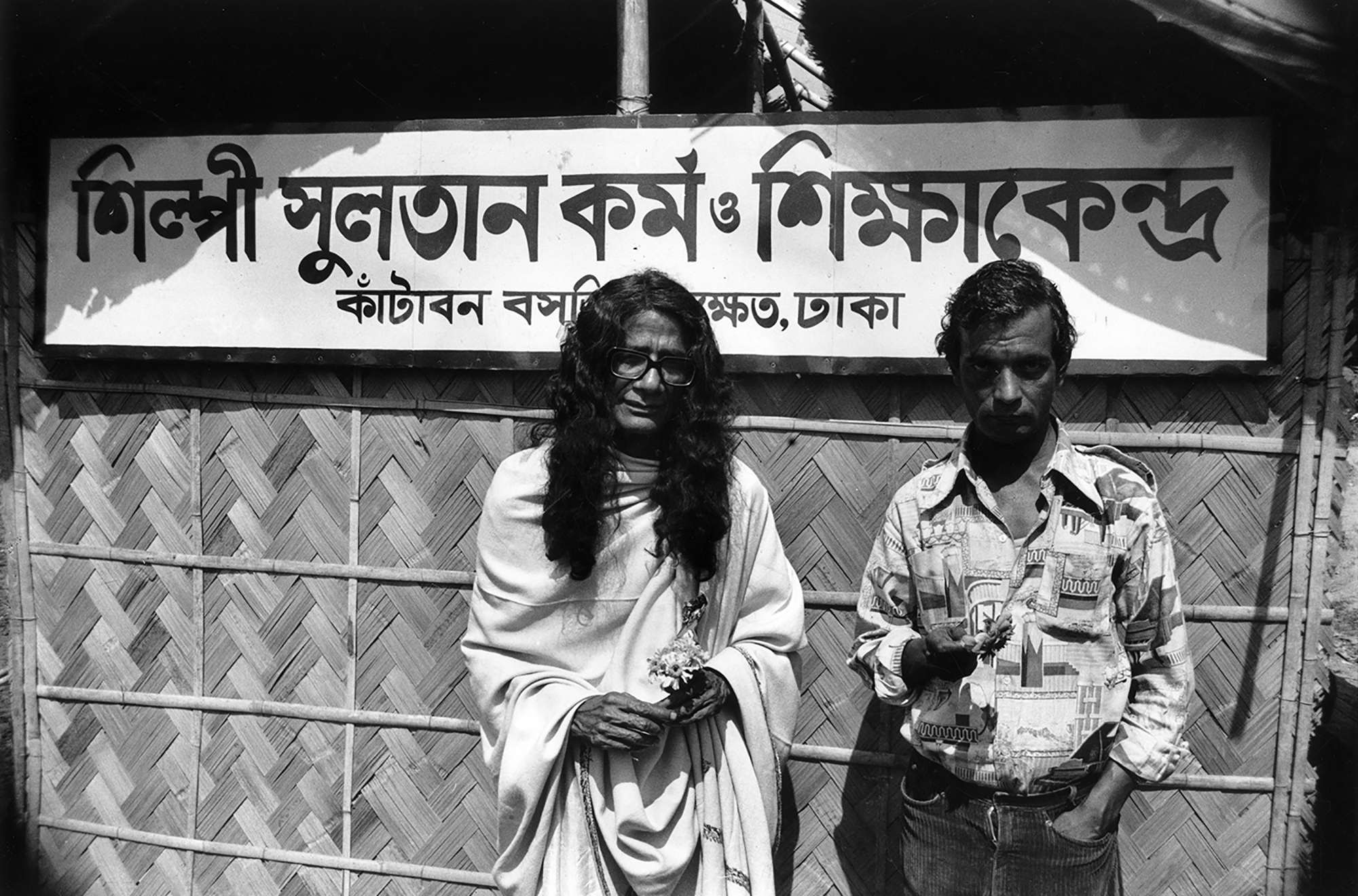
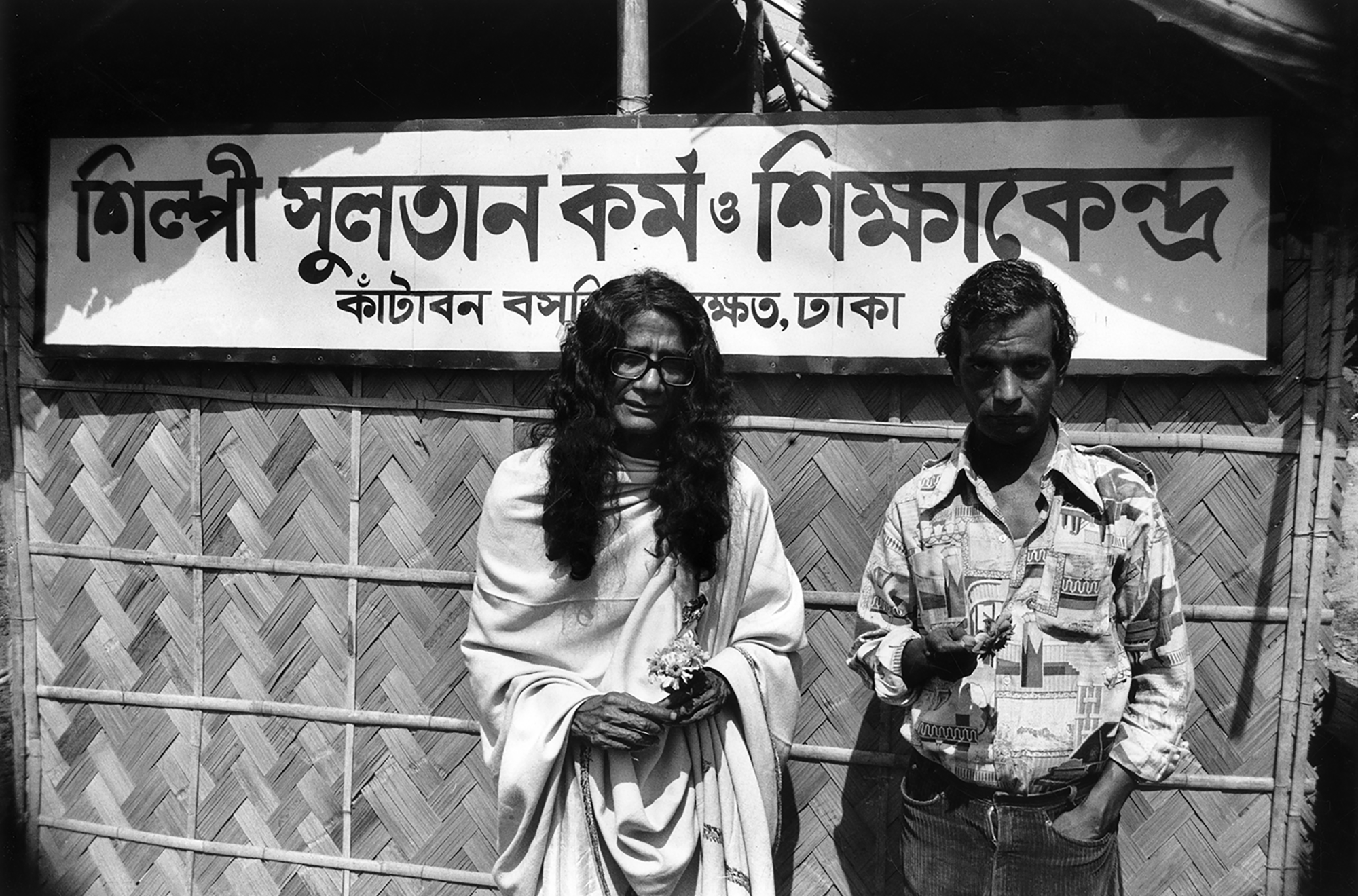
The dreamer: As a student, he was the leader of numerous followers, whom he demanded should always carry a flute with them. As a young teacher at the university, he appropriated a piece of land on the campus and planted it with aubergines (which he describes in the book on plants as "tender as breasts, with only the nipple missing"). The effect this had on other people reminds one of the actions of the German artist Joseph Beuys. It was also at this time that he undertook the first experiment with a slum school together with his journalist friend Mostan. The school was soon discontinued because of a lack of realism and perseverance (one of the most frequent criticisms of Sofa was that he started a thousand things but carried none through to the end). In his last years, he initiated the first human chain in Bangladesh to protest against the culture of hartal (strikes), with which the major parties ruin the country. He also launched a movement to stop the violence at the university. And finally, five years before his death, he opened his second slum school. This time he carried it through, despite all the difficulties, sorrows, and humiliations inflicted by co-workers. He looked after the school until his death.
The mystic: How often he spoke to me of the great feeling of unity with all and everything that possessed him and sometimes overwhelmed him. He allowed this feeling to shape his life in such a way that he lived constantly on the brink of ruin. Sometimes he would cry out: "I want all who suffer to come and eat me!" as he tore at his chest with both hands. He gave away all he had, and more: he could survive only with the help of wealthy sponsors, and most of what he begged from them he passed on to others.
The famous, the respected, the feared: It is hard to believe how well known he was in Bangladesh. At my farewell party before leaving Bangladesh, a friend sang a very popular song. Afterwards, Sofa approached him and asked, "Do you know that I wrote that song?" He did not. Sofa had become part of Bengali culture.
Sometimes leaders of both major parties would call him, at times even Sheikh Hasina and Khaleda Zia personally. The influence of his independent mind and writings was known and respected – at least by those who respected such things. Others sent him death threats.
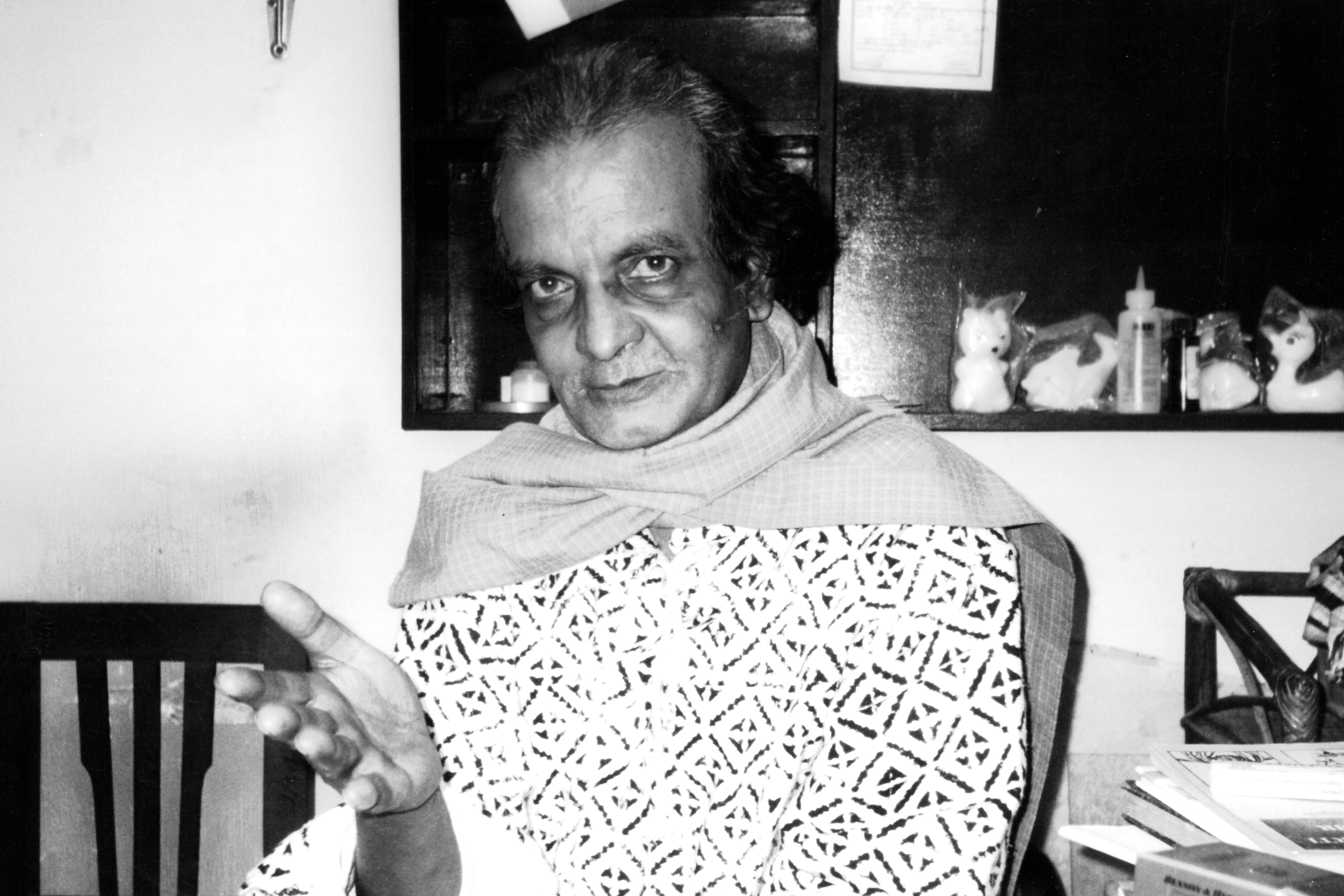
Both major parties, time and again, tried to court him into their camp whenever he had written something against the other party – or threatened him if he had lashed out against their own. He always refused to side with either of them. That was the situation in which he revelled: to be courted by someone powerful and then proudly insist on his independence, regardless of the consequences. Dictator General Ershad once offered him a job, to which Sofa replied to his face that he could not be bought.
Finally, I turn to the intellectual and cultural achievement that earned him the greatest respect and fame: his translation of Goethe's Faust into Bengali (from English). The quality of this translation has been praised far beyond the borders of Bangladesh. He first encountered Faust one night when he, a Muslim, kept watch at the house of a Hindu friend in order to protect him against communal violence. There he found Faust and the verse of Mephisto that could serve as an epitaph to his life. This verse struck him so deeply that he decided to translate the book, which until then had been unknown to him. For twelve years he persevered until the task was completed. In his name, I would like to respond to his critics: it is not essential to carry through everything one has begun, but rather to distinguish between the tasks one is called upon to carry through and those one is not. "Gray, dear friend, is all theory / And green the golden tree of life." His verse of fate reads in his own translation:
বৎসঅর্থহীন তত্ত্বের কচকচি
সোনালি জীবন বৃক্ষ শুধুই হরিৎ
Dr Tobias Schüth is a German physician who worked in Bangladesh from 1994 to 2000. During that time, he developed a close friendship with Ahmed Sofa.
Send your articles for Slow Reads to slowreads@thedailystar.net. Check out our submission guidelines for details.
Bengal's forgotten slave trade: Portuguese, Arakanese and Dutch trafficking networks
Mufazzal Haider Chaudhury and the idea of Bangladesh
The Tagore paradox: Why critique strengthens his legacy
What Sufism can teach us about the modern world
The journey of Qawwali across South Asia: Music, mysticism, and cultural exchange
Thinking with Partha Chatterjee
Why secularism is losing ground in South Asia

Interview / Modern Islam has always been a 'secular' entity

How the banned film Satluj reopened the darkest wound in Punjab's history