The journey of Qawwali across South Asia: Music, mysticism, and cultural exchange
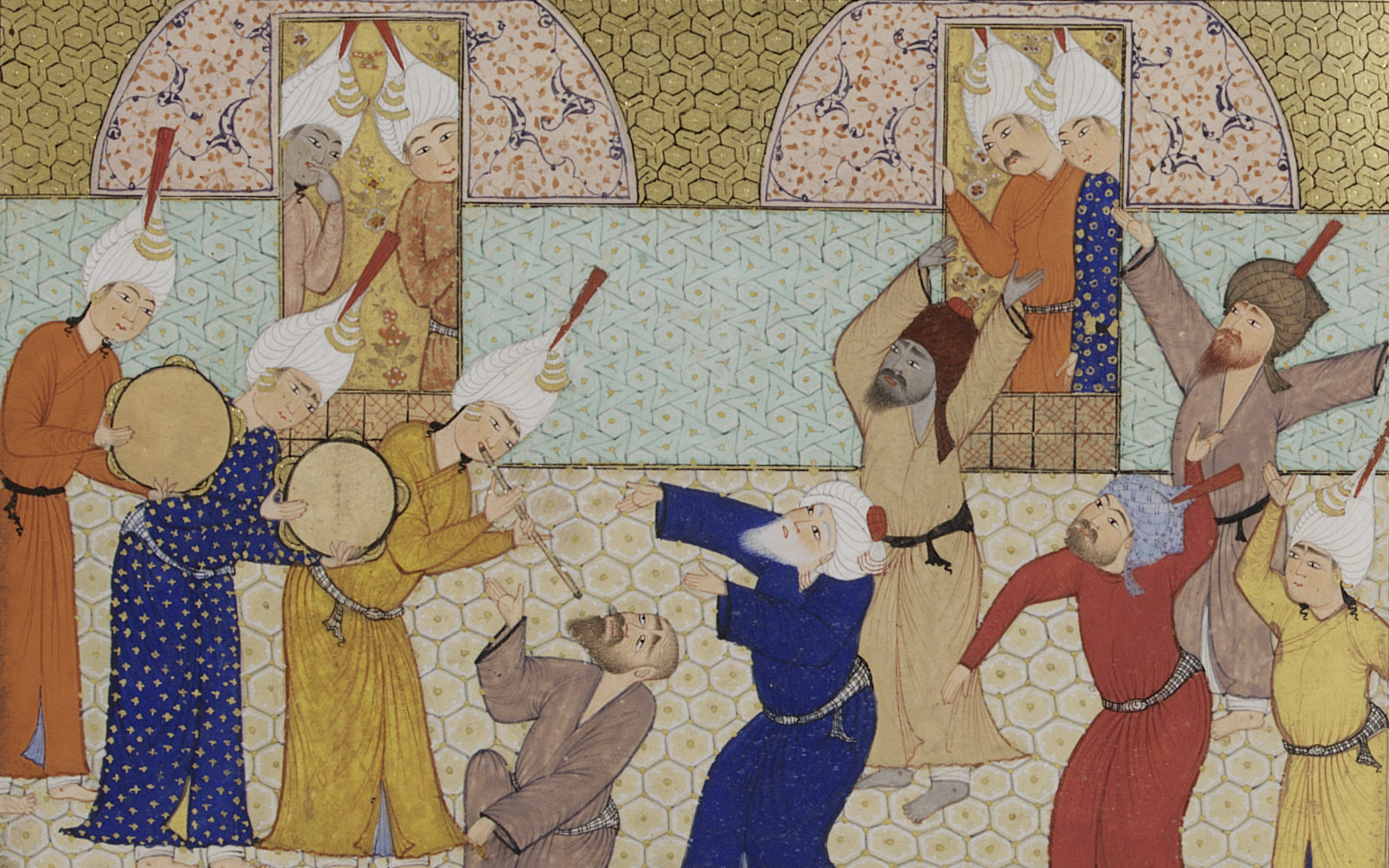
Sufism, or tasawwuf, the mystical and esoteric dimension of Islam, encompasses both a rich tradition of Sufi music, known as sama in Arabic and sema in the Turkish-Persian tradition, and a sophisticated body of mystical thought. The literal meaning of the word sama is “listening” or “attentive hearing”. The practice of sama originated primarily in Persia and Turkey, where certain Sufi orders pioneered the use of music for religious purposes. Historically, several Sufi orders became especially renowned for their use of sacred music, including the Mevlevi Order, the Rifa'i Order in Turkey, the Shadhili Order in North Africa, the Qadiriyya and Khalwatiyya in various parts of the Islamic world, and the Chishti Order in South Asia.
The Chishtis became particularly known for their deep attachment to sama. According to them, sama was not merely lawful but highly beneficial for seekers of divine truth. In northern India, sama was popularised by Muinuddin Chishti (d. 1236). He was passionately devoted to sama and would often become absorbed in spiritual ecstasy during musical gatherings. Under his influence, many scholars of the Delhi Sultanate also developed an inclination towards sama. Numerous renowned Sufi saints are said to have died while in a state of spiritual ecstasy or rapture during gatherings of sama. Qutbuddin Bakhtiar Kaki is believed to have died in 1235 while performing raqs (spiritual dance) during a sama gathering at his khanqah in Delhi.
Emergence of qawwali
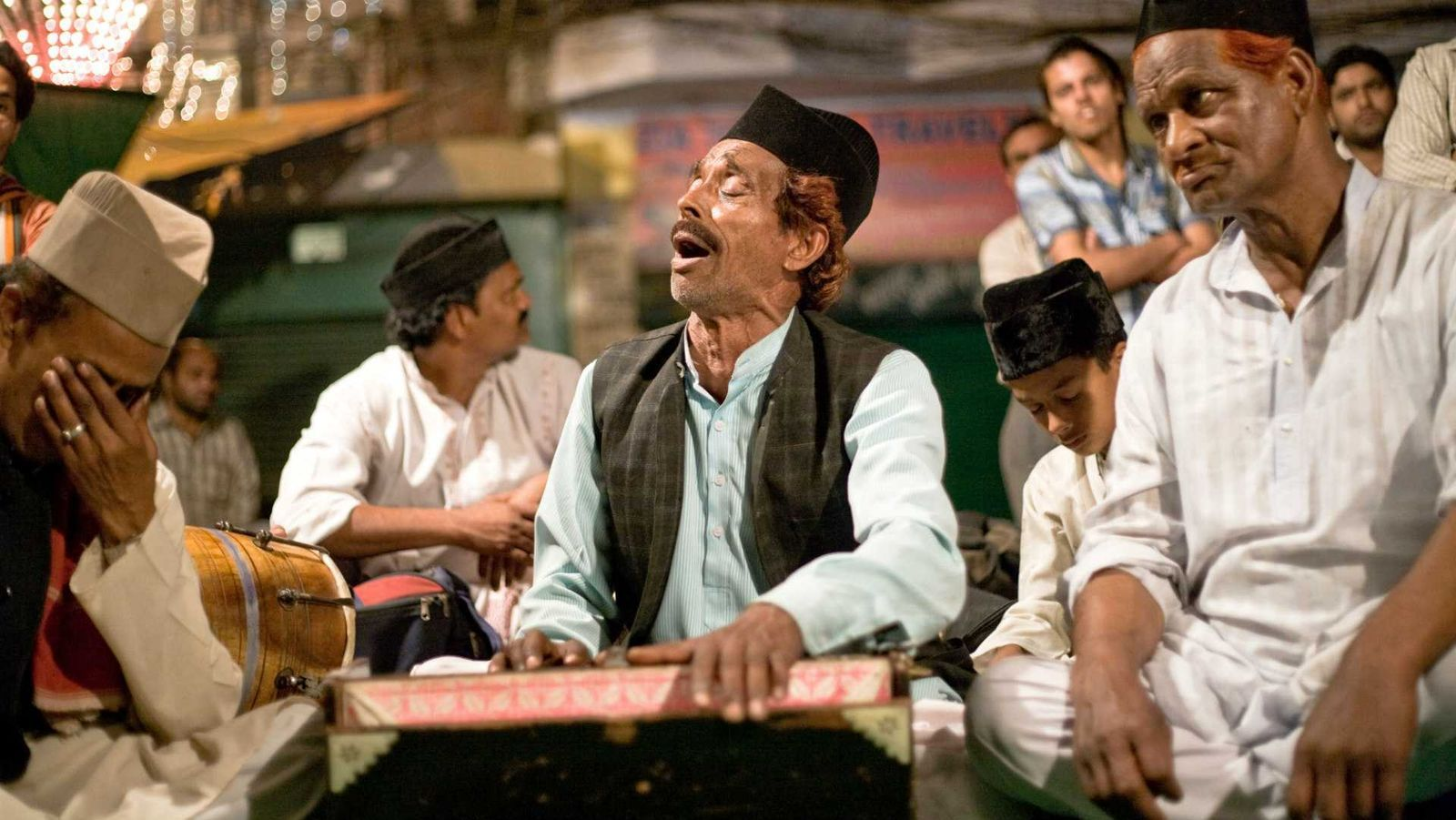
Towards the end of the thirteenth century and the beginning of the fourteenth century, a new form of sama emerged, known as qawwali. Amir Khusrau (1253–1325), the close disciple of Nizamuddin Auliya, is generally regarded as the originator of this new sacred genre of Sufi music. Khusrau was trained in music and collaborated with Pandit Gopal Nayak in developing qawwali on the foundation of Indian classical music. Through this collaboration, the present form of Sufi music in the subcontinent took shape. Both Amir Khusrau and Bulleh Shah expanded the repertoire of Sufi poetry and music in Punjabi, Braj, and Purbi. Later, these traditions spread further into Deccani Urdu and Bengali. Khusrau is also credited with inventing musical instruments such as the sitar and tabla and introducing them into the musical tradition. He composed captivating poetry in praise of his pir and creatively adapted Indian classical ragas and instruments for performance before him. The philosophical verses of the Sufi saints were translated into local languages and sung to the rhythms of local folk traditions. In India, Sufi music likewise assumed a distinct local form through the contributions of Amir Khusrau, resulting in the birth of qawwali, which became distinct from other traditions of Sufi music across the Islamic world. Eventually, qawwali became one of the principal rituals of the Chishti Order.
The word qawl (Arabic: قول) literally means “utterance” or “saying”. A qawwal is one who repeatedly recites or sings the qawl, and qawwali refers to the music performed by a qawwal. Qawwali is a performative form of Sufi music in the Indian subcontinent, now prevalent in Pakistan, India, and Bangladesh. It is generally performed in khanqahs or at sacred Sufi shrines. A principal male vocalist renders philosophical and spiritual poetry in multiple languages, accompanied by supporting singers or a chorus. Hand clapping and various musical instruments further embellish the performance. The formal gathering at which qawwali is performed is known as a Mehfil-i-Sama.
Since the time of Amir Khusrau, the art of singing qawwali has been transmitted across generations for more than seven hundred years by hereditary musicians known as qawwal bachche. Bengali qawwals, however, are mostly self-taught, as there is neither a formal institution nor an established method for teaching this musical tradition.
The famous Grand Trunk Road, regarded as the Indian extension of the Silk Route, extended from Peshawar in the west to Calcutta in the east. Sher Shah Suri (1540–1545) revived this road and extended it from Chittagong to Kabul. Aurangzeb later constructed markets, mosques, wells, hammams, and, at times, khanqahs along this road at state expense. By this period, Sufism had become deeply embedded in Indian culture, and khanqahs had spread across the region almost as extensively as mosques. The Grand Trunk Road established direct communication between different regions of northern India. Consequently, these trade routes played a significant role in spreading Sufi culture and qawwali throughout the subcontinent, especially in Bengal and the Deccan.
Development of qawwali
Initially, qawwali was confined to the annual urs celebrations, but it later spread to other shrines. Alauddin Khalji was the first to introduce qawwali into the royal court. During the Mughal period, qawwali expanded further, and under British rule it gradually acquired an entertainment-oriented character under the patronage of zamindars.
One of the principal reasons qawwali earned deep admiration and significance in Eastern culture is that it transports devotees into a state of self-forgetting ecstasy and mystical trance, wherein they become immersed in the love of the Divine. The manifestation of this ecstasy varies from person to person. In some cases, it is expressed merely through rhythmic nodding of the head; others begin to dance in a dreamlike state, while, in more intense instances, violent convulsions or uncontrollable trembling of the body may occur. Society generally accepts this ritualised loss of self-control, and no social stigma is attached to it.
The final stage of hal is fana, whose nearest analogue may be found in the Buddhist concept of nirvana. At this stage, worldly consciousness dissolves, and the individual attains ultimate union with the Eternal. Occasionally, deaths during qawwali sessions have also been recorded. It is believed that one who dies in such a state has attained fana.
Qawwali in Bengal and West Bengal
Md. Enamul Haq, in his pioneering work on the history of Sufism in Bengal, Bange Sufi Probhab (2012), pointed out that music (sama) and ecstatic dance (halqah) became prominent in the Sufi khanqahs of the Chishtiyya and Suhrawardiyya orders in medieval Bengal. According to him, the indigenous Bengali people were unfamiliar with this kind of ecstatic music and dance before the arrival of the Sufis (Haq 2012).
Bengali Muslims are the second-largest Muslim community after the Arabs. According to researchers, this is the result of the large number of conversions to Islam in medieval Bengal. Both Enamul Haq and Richard Maxwell Eaton (1993) have pointed out that the Sufis played a crucial role in this process. According to Haq, the indigenous Bengalis received the Islamic tradition from the Sufis. The Sufi poets of medieval Bengal composed a large body of religious literature, including hamd, naat, and ghazal, in order to disseminate Islamic philosophy among the local people.
The incorporation of Arabic and Persian words such as Allah-Khoda, Nabi-Paigambar, and Pir-Murshid became prominent during this period (fourteenth to eighteenth centuries) in Bengali literature. A number of ballads known as Dobhasi puthi were composed in this mixed language by Sufi poets such as Alaol and Syed Sultan (Sharif 1969). Kazi Nazrul Islam (1899–1976), the Rebel Poet of Bengal, used this language most successfully in hundreds of his Islamic songs, ranging from hamd, naat, marsiya, and ghazal in Bengali. His songs are classified as a distinct genre of Bengali music, Nazrul Geeti.
Avishek Ghosh said, ‘I heard the term “Bangla qawwali” for the first time in a Baul-Fakir ashram (place for spiritual retreat) in Nadia. But it has no similarity with traditional qawwali in terms of either its music or its context. Even though the zikr/dhikr, or the repetition of “Allah Hu Allah”, has a connection with qawwali, the melody and style of performance bear a much closer resemblance to Baul, Fakiri, and Marifati songs. Dotara and dhol, the two traditional folk musical instruments of Bengal, were used as accompanying instruments.’ When asked about the structure of this music, Arman Fakir said: ‘We cannot sing like the qawwals because we belong to the Fakiri musical tradition. We use our own melodies, which sound more appropriate in Bengali qawwali.’
Similar debates can be found among researchers regarding Maijbhandari music, the Sufi devotional music of Bangladesh. Hans Harder, in his book Sufism and Saint Veneration in Bangladesh: The Maijbhandaries of Chittagong (2007), has discussed the music of the Maijbhandari order, the indigenous Sufi order of Bangladesh. From his discussion, it can be assumed that Maijbhandari songs certainly have some connection with the Indo-Persian concept of sama and qawwali.
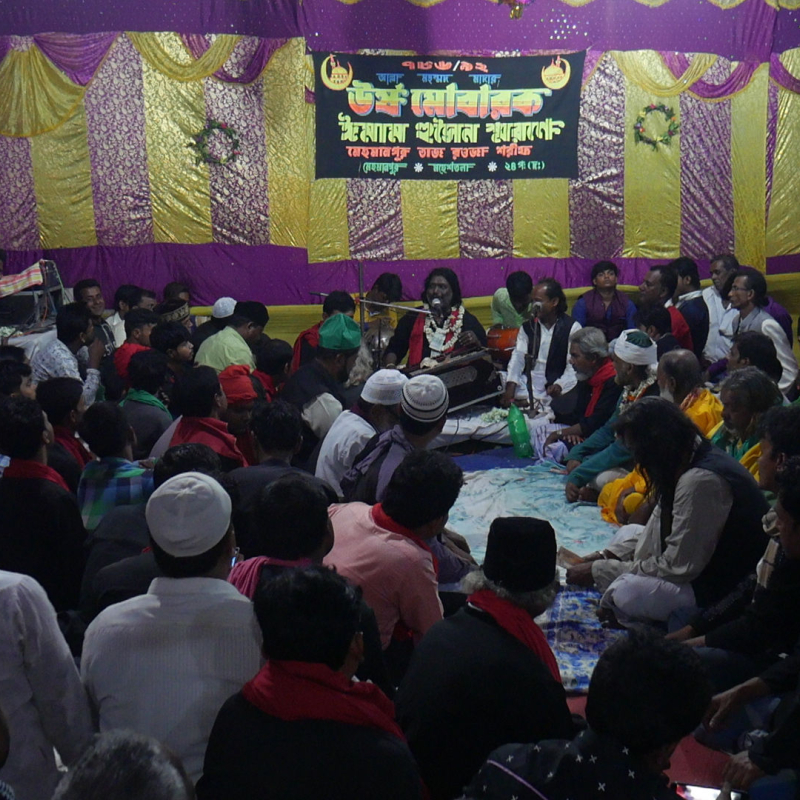
In the present-day context of West Bengal, qawwali performances take place in Sufi dargahs, households, and religious celebrations across districts such as Medinipur, Howrah, Bardhaman, Bankura, Purulia, Hooghly, North 24 Parganas, and South 24 Parganas. Ghutiyari Sharif in South 24 Parganas, the Dargah of Mastan Shah at Mehmanpur (Budge Budge, North 24 Parganas), the Dargah of Sadir Baba (Sadiruddin Chishti) at Enayetpur (West Medinipur), and the Pagla Baba Mazar at Tollygunj (Kolkata) are among the Sufi shrines that host qawwali performances every Thursday night and during the annual celebration of urs (the death anniversary of Sufi saints).
The singers (known as qawwals) who perform at these shrines are generally well conversant with both Urdu and Bengali qawwalis, since both Urdu- and Bengali-speaking Muslim communities inhabit the surrounding areas of many of these shrines. Another reason is that the qawwals and composers of these areas draw their inspiration directly from both the traditional and the popular Urdu qawwali repertoire. In an interview conducted for the present research, Qawwal Naser Jhankar of Arambagh (Hooghly, West Bengal) explained: ‘People do not really encourage us to sing in Urdu, as most people do not understand it. After all, we are Bengali, and everyone understands Bengali songs.’
Naser has been performing Bengali qawwali for the last thirty-five years. He is a popular singer among listeners of Bangla qawwali. A number of his Bengali qawwali albums, namely Pir Na Khoda, Belayeter Badshah Maula Ali, and Zinda Koran, have been released by Blaze Audio Video, a local recording company. These CDs and VCDs are commonly found in the shops surrounding Sufi shrines. Titles such as ‘Jhankar’, ‘Lalkar’, and ‘Bachcha’ are among the common stage names adopted by qawwals. However, regarding the origin of Bangla qawwali, Naser provides no clear evidence:
‘As far as I know, Khadem Qawwal, the most famous qawwali singer of his time, was the first to popularise qawwali in the Bengali language. He was from Bargachhiya village in Howrah district... Many years ago, I saw him only once at a concert when he was about seventy-five or eighty years old. He was sharing the stage with another famous qawwal, Munna Jhankar. He is still remembered by audiences and contemporary qawwali singers for his contribution to popularising Bengali qawwali.’
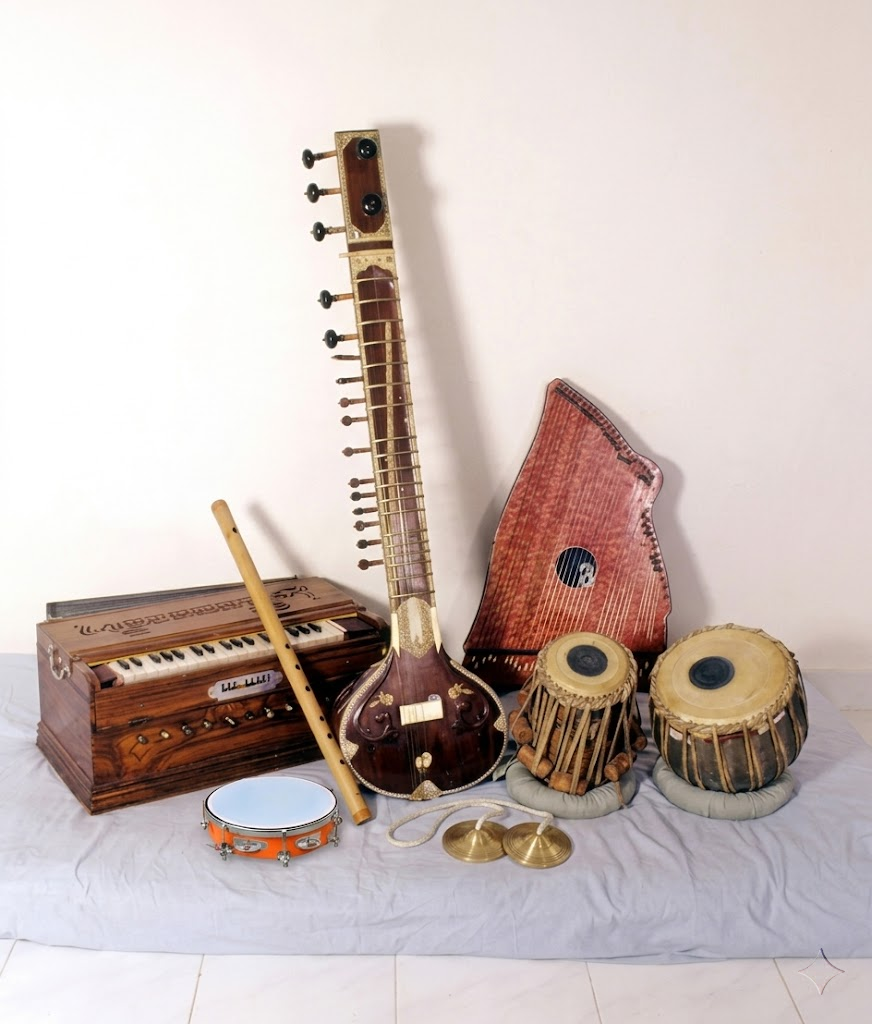
In qawwali, rhythm is primarily created through hand clapping (tali) and percussion instruments. Traditional folk instruments of the Indian subcontinent such as the dholak, pakhawaj, and tabla have long accompanied qawwali performances. Small handheld cymbals such as the kanjira and the jingling dafli are also used. Today, the harmonium has become an indispensable component of qawwali, often played by the lead vocalist himself.
Safiuddin Husaini, alias Khokon Qawwal, a sajjadanashin (hereditary administrator) of the Dargah of Mastan Shah Baba, suggests that qawwali in Bengali was introduced by the Bengali-speaking disciples of Urdu-speaking saints who came to Bengal from outside the region. They introduced the ideas and emotions of Persian and Urdu poetry into the Bengali language.
Khokon Qawwal describes the different themes within qawwali in greater detail. According to him, a qawwali performance begins with hamd in praise of God, followed by naat in praise of the Prophet and qawl in praise of Ali Mushkil Kusha, respectively. Thereafter, manqabat is sung in praise of the walis (friends of God). While poetic forms of different lengths (ranging from short to long) and metrical schemes such as qasida, ghazal, and qita are employed in Persian and Urdu qawwali, Bengali qawwali contains a minimum of three to five verses preceded by a refrain, similar to other genres of Bengali folk music. Since the time of Amir Khusrau, the art of singing qawwali has been transmitted across generations for more than seven hundred years by hereditary musicians known as qawwal bachche. Bengali qawwals, however, are mostly self-taught, as there is neither a formal institution nor an established method for teaching this musical tradition.
Themes and emotional dimensions of qawwali
The highly melodic nature of qawwali enables listeners to memorise and sing it with ease. In terms of content, Sufi poetry is remarkably diverse, encompassing moral teachings, Sufi ethics, Sufi cosmology, and divine love (ishq). Ishq may be understood as an intense form of love associated with the longing to behold Allah or unite with Him. Sufi poets believed that metaphor (majaz) could serve as a bridge to Truth (haqiqat). Consequently, they frequently employed the language of human love to express divine love.
In one survey conducted among visitors listening to qawwali at the dargah of Nizamuddin, participants were asked to select from a list of seventy-five emotion-related words those that most closely matched their experiences. Their responses may be grouped into three principal categories:
- Spiritual love
- Trance or ecstatic absorption
- Moral or noble emotions such as sabr (patience), bahadur (courageous), mazbut (strong), khush (joyful), fakhr (proud), and fateh (victorious)
Within such a diverse audience, the coexistence of religious and worldly emotions is only natural. Yet the moral dimension present in almost all the selected emotional expressions demonstrates that qawwali plays an important role in the moral and spiritual lives of people irrespective of religion. This ethical dimension constitutes a significant contribution to the psychology of music. Western theories of musical emotion generally emphasise reflexes, rhythmic synchronisation, memory, concepts associated with music, or the listener's anticipation of melodic progression, rather than moral emotions.
Qawwali is believed to create in devotees a sensation through which they become liberated from the ceaseless anxieties and exhaustion of daily life, entering instead into another realm that appears mysterious and unknown. The significance of qawwali does not lie merely in its words or their literal meaning. Rather, its “inner charm”—the inward significance and spiritual emotion embedded within the performance—forms the central core of the qawwali experience. Through metaphorical and symbolic expression, qawwali creates profound inner meanings within the human mind. Especially powerful is its use of contrasting concepts such as spiritual versus worldly love, union versus separation of lovers, and eternity versus temporality.
Some unmarried young women have associated qawwali with wedding music. Lines such as “Allāh Milāyā” (“Allah has united us”) inspire in them the hope of attaining a worthy life partner. In this way, qawwali functions as a means and blessing for union with the beloved. Most devotees report that they listen to qawwali in order to attain inner peace and tranquillity. Alongside motivating the fulfilment of human desires and emotional satisfaction, qawwali also serves as a source of spiritual strength.
Research further indicates that many devotees feel spiritually connected to Allah through the power of music. By listening to sacred music, they attempt to refrain from actions prohibited by Allah. One devotee stated that he had previously deceived people in business, but after regularly listening to qawwali, he gradually repented and abandoned such practices. Some devotees visiting dargahs also regard qawwali as a means of obtaining divine assistance. They explained that qawwali exerts an influence in fulfilling hopes such as their children's academic success or other personal aspirations. Research findings additionally suggest that qawwali aids the healing of patients and provides not only spiritual awakening but physical strength as well.
According to Idara Naqash Bandia (2009):
“Spiritual strength is the strongest defence against disease and the means to attain higher health and well-being.”
Women were permitted to enter the dargahs of Sufi pirs. However, musical-religious gatherings were generally attended only by men, and this pattern largely continues today. Nevertheless, certain exceptions have emerged in recent times with the appearance of female qawwals such as Abida Parveen and Reshma.
Language of qawwali
Traditional qawwali generally begins in Persian, then progresses into Punjabi or Urdu, and further eastwards into Hindi or Purbi. This west-to-east linguistic transition reflects the missionary and bridge-building character of qawwali in the propagation of Islam throughout South Asia. In the Deccan, Deccani Urdu replaced Braj or Purbi, while in Bengal the Bengali language came to be used.
Whenever language becomes a barrier between performers and audiences, qawwals rely more heavily upon melody, rhythm, and cadence in order to communicate emotion and spiritual experience. Veteran qawwals achieve remarkable success in this regard.
A luminous example is Nusrat Fateh Ali Khan, who succeeded in creating profound spiritual ecstasy even among Western audiences and earned international acclaim.
The performance of qawwali
Traditionally, qawwali gatherings are held at Sufi shrines or meeting places of Sufi orders. Thursday is usually the designated day for qawwali performances at dargahs. The largest event occurs during the annual urs, literally signifying the passing of a spiritual leader from the temporal body into eternity. Both qawwals and listeners traditionally sit cross-legged on the ground in a courtyard facing the shrine. Even before large audiences, microphones were generally not used; rather, the powerful voices of the qawwals resonated clearly throughout the entire courtyard.
The principal singer, known as the mohri, sat in the centre facing directly towards the dargah, as though addressing the pir himself. Immediately behind him sat the tabla player, while slightly to his left sat the prompter carrying books or manuscripts of the lyrics. On either side of the mohri generally sat two singers accompanied by harmoniums, daflis, and manjiras (avazia). The remaining chorus members sat in rows along both sides, with the more skilled singers occupying the front positions. Everyone usually sat slightly behind the lead singer as a mark of respect. This arrangement was known as qayada. However, with the introduction of modern technology such as microphones and sound mixers, the traditional arrangement has undergone certain modifications in stage and studio performances.
Sufi music is poetry-oriented, accompanied by rhythm generated through hand clapping. The principal components of Sufi music are:
- Shazeena — nagma (melody)
- Rubaee — qatat (a four-line poem)
- Uthan — girehbandi (repeated high-pitched passages of music and poetry)
- Khirat — khyal (certain portions becoming absorbed or dissolved within music and poetry)
- Improvisation — do angkagana (qawwali)
Qawwali begins with the alap (slow, free melodic introduction), during which only the lead singer invokes Allah, the Prophet, and the pir through mystical verses or couplets. During this phase, the remaining performers and the audience maintain complete silence, thereby creating the spiritual atmosphere necessary for ecstatic experience.
Once the initial atmosphere has been established, the qawwals enter the principal body of the performance. Rhythm and tempo are gradually introduced, beginning moderately and then slowly intensifying while carefully observing the audience's response. Any verse or melody that deeply affects the listeners or the presiding spiritual figure is repeated with greater fervour and emotional intensity in order to induce trance. By emphasising and repeating particular words and syllables in varying ways, the qawwal reveals both the manifest and the hidden meanings of the poetry. In this manner, listeners are guided towards meanings that were previously concealed, until ultimately all meanings appear unveiled.
In qawwali, rhythm is primarily created through hand clapping (tali) and percussion instruments. Traditional folk instruments of the Indian subcontinent such as the dholak, pakhawaj, and tabla have long accompanied qawwali performances. Small handheld cymbals such as the kanjira and the jingling dafli are also used. Today, the harmonium has become an indispensable component of qawwali, often played by the lead vocalist himself.
Qawwali in popular culture
In adapting itself to popular music and culture in India, qawwali entered Hindi cinema in 1960 through the song “Yeh Ishq Ishq Hai” from the film Barsaat Ki Raat, thereby giving birth to a new genre known as filmi qawwali. A. R. Rahman has composed numerous filmi qawwalis that sound remarkably close to authentic qawwali and have been visually represented in films accordingly. Following the Sufi Conference held in New York in 2001 under Pakistan's initiative, Sufi music began receiving international recognition. Nusrat Fateh Ali Khan achieved worldwide fame. Established classical musicians and certain bands also began incorporating Sufi music into their repertoires.
After the success of Nusrat Fateh Ali Khan, Junoon, and Rabbi Shergill, large-scale public performances of the genre emerged, leading to the rise of a new subgenre known as techno-qawwali. Techno-qawwali refers to qawwali or extended lyrical poetry performed with modern, funky tunes and heavy beats. Although younger generations readily identify with techno-qawwali, traditional qawwali continues to be performed in dargahs according to strict spiritual conventions. In the contemporary context, Sufi music has adapted itself to pop and techno culture. This represents a natural evolution of Sufi philosophy alongside the popular music of the age.
Critics argue that this “packaged” cultural commodity contains little spirituality and that its consumers exhibit limited religiosity or spiritual engagement. Nevertheless, one fact remains beyond doubt: Sufi music continues to fulfil its traditional purpose of uniting diverse peoples through the message of peace, love, and universal brotherhood.
References
1. Style, Concept, Emotion: Qawwali in India by Thomas A. Graves.
2. Origin and Journey of Qawwali: From sacred ritual to Entertainment by Anuradha Bhattacharjee.
3. Bangla Qawwali: Sufi Musical Tradition of Bengal by Avishek Ghosh.
Abdullah Mosab is a Lecturer in the Department of History and Culture at the University of Chittagong, specializing in Sufi traditions and the cultural history of Bengal.
Send your articles for Slow Reads to slowreads@thedailystar.net. Check out our submission guidelines for details.

APO 433: Dhaka’s forgotten post office of World War II
Dadabhai Naoroji: The man who exposed the economics of British colonialism

Untold stories of 1971 through private letters
The extraordinary journey of Atish Dipankar Srigyan

Forgotten story of Jeanette Van Tassel, the American woman who flew over Dhaka in 1892
Beyond 1947 / A personal essay
Abul Mansur Ahmad / A global quest in search of a nation
Chand Bibi and the forgotten history of Muslim women’s political resistance
Women’s voices in Nazrul’s Dhumketu