A new history of Battala books
When one thinks of the cultural sphere of nineteenth-century Bengal, the overwhelming impression is that of learned scholars, social reformers and literary efflorescence, when intellectual giants like Vidyasagar, Bankim and Rammohan dominated the scene. It is believed that the advent of Western education in the region was responsible for shaking its people out of their medieval stupor and effecting a Western-style ‘Renaissance’ in contemporary thought and practices. The driving engine of this phenomenon, scholars hold, was the printing press, with a sea of Bengali print production shaped by a Western-educated elite ushering in an Enlightenment of the Bengalis.
However, what this perspective overlooks is that print in nineteenth-century Bengal was not used and engineered by dominant social groups alone. Given its cheapness and accessibility, the printed book enjoyed wide circulation. Dominant ideas about society and history, literary tastes and styles, therefore, did not go unchallenged. It is important to bring these author-printer-reader groups back into focus to offer a new social history of print and reading in the region.
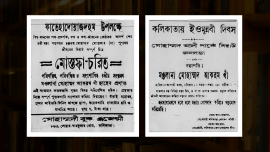
From the middle of the nineteenth century onwards, Bengali book production was centred at Battala in Calcutta, which was also the heart of the commercial trade in Bengali print. Consisting initially of rickety, cheap wooden presses and, later, metal presses, run by relatively poorly educated printers-publishers and constantly engaged in prolific production, the presses of ‘Battala’ [a generic term used to denote poorly printed ephemeral literature from the lesser-known presses in the area] far outstripped the elite presses in Calcutta in terms of output. Typically, Battala presses had average print runs of 2,000–3,000, compared with only 500 for the more highbrow presses like Tattvabodhini. What lay behind this phenomenal success? Who were the readers of Battala books? What significance does Battala hold for the history of Bengali printing and publishing? As shall be demonstrated here, in reality, Battala books were much more than mere bibliographic curiosities, as presented in prevailing writings on the subject.
For that, we first need to understand what was happening to Bengali as a language. As a vernacular that was adopted by both the ruling classes and the indigenous population as the principal medium of communication, Bengali was undergoing a profound change from the late eighteenth century onwards. There were two principal aspects to this: one, a major shift from poetry to prose writing as the need for precision arose in the composition of legal and administrative treatises; and two, the standardisation of Bengali grammar and vocabulary. In the active intellectual climate that had been stirred up following the encounter with the West, Bengali also became the medium of self-expression for a conscious and articulate urban literati. With growing numbers among the literate population and a prodigious printing and publishing industry, increasingly large reader-writer groups jostled for recognition in the ongoing debates.
Following the establishment of the first Bengali printing press in Serampore in 1800, both the language and its written literature became objects of immense scrutiny, surveillance and debate among the Bengali people. The new Bengali became the hallmark defining the urban, educated upper-middle classes and an essential tool for establishing their power over less privileged groups, gaining added significance from the fact that it was, for the first time, perpetuated in print form. It was marked by a highly Sanskritised vocabulary, purged of its naturalised Perso-Arabic content; adherence to Victorian puritanical norms that shunned bodily references in literature; and an artificial construction of the Bengali literary canon.
The self-description of a culturally chauvinistic 'bhadralok' (literally, gentlefolk) necessitated contrast with other non-conforming stereotypes. In the cultural milieu of contemporary Bengal, this was generated through contrived images of traditional, backward and unrefined women, lower social classes and poor Muslims, their social status mapped by their speech patterns and literary cultures. The new, westward-looking, standardised Bengali print language and canon disclaimed any association with the primitive, rustic culture of the pre-print world. Shared literary traditions thus later came to be stereotyped and stigmatised variously as belonging to women (meyeli), Muslims (Musalmani Bangla), and the vulgar ‘lowly’ classes (itor bhasha).
But Bengali print did not mirror only the aspirations of the dominant classes in society. What has not been sufficiently appreciated in scholarship so far is that other, less privileged social groups were able to impress their stamp on it. Cheap printing techniques and the spread of basic literacy had combined to create, from the mid-century onwards, a sizeable body of printer-publishers, authors and readers of relatively plebeian origin. Privileged publishing failed to satisfy the demand created by this enlarged readership and alternative literary tastes.
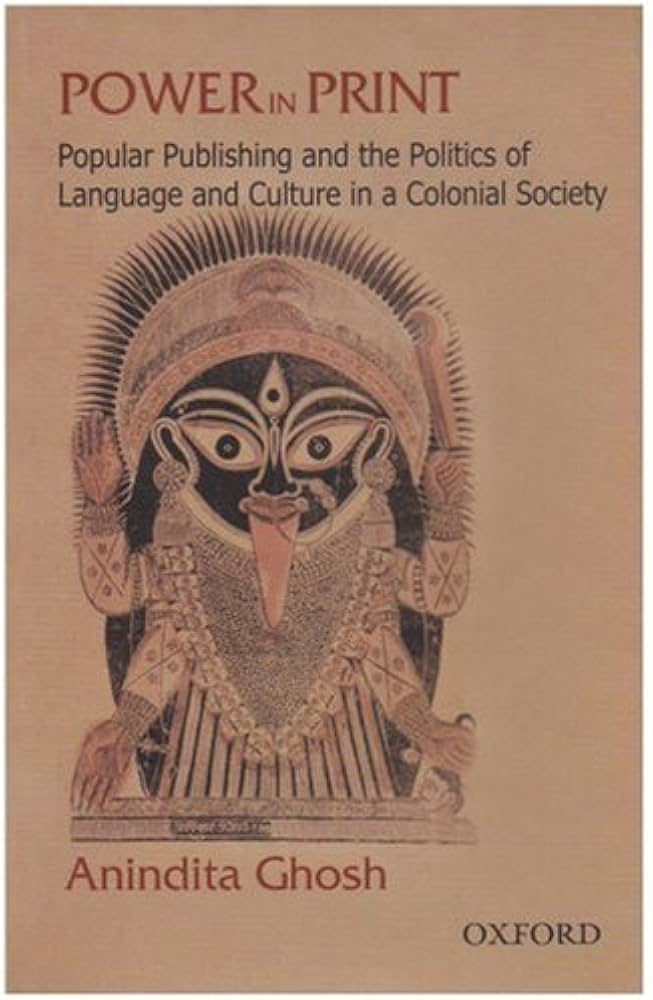
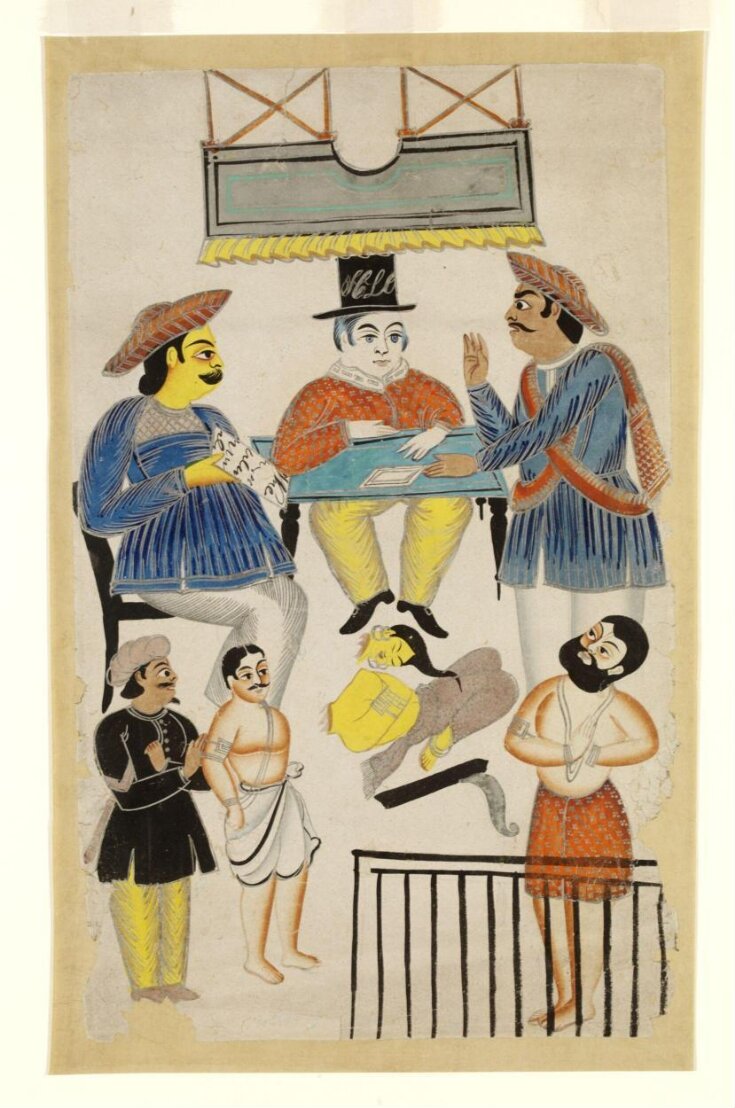
At the heart of this remarkable phenomenon lay the numerous small presses huddled close together in the narrow lanes and by-lanes of the Battala area, a part of the teeming 'native town' in north Calcutta. Despite bhadralok disapproval, these small presses did a brisk trade in cheap, ephemeral pamphlet literature, consisting of almanacs, popular religious mythologies, sensational romances and dramas, erotic poems and songs, and the like, which enjoyed a large and popular readership in lower-middle-class urban and rural homes. Besides, the continuing importance of oral traditions well into the period ensured that print crossed the boundaries of literacy. It was a common practice during the period to read such works aloud to a gathered group of listeners. Woodcut and metal-engraved pictures of mythological and even more contemporary scenes also sold at Battala at very low prices. It is possible to see, then, how print, far from perpetuating dominant cultural norms, had actually opened up a process of dissemination of more plebeian writing.
In 1857, there were a total of 46 Bengali presses operating in Calcutta alone. Together, they accounted for 5,71,670 books printed for sale that year. Twenty years later, in 1877, the number of Bengali presses operating in Calcutta was 61, with 16 mofussil or suburban presses [Bengal Library Quarterly Reports, 1877]. The largest genres they produced were educational literature, Hindu almanacs, books on mythology and Hinduism, religious and secular works in 'Musalman-Bengali', and fiction, with average print runs of 2,000. Prose or poetry dealing with mythological or 'erotic' themes and containing explicit or suggestive sexual expositions had a flourishing market. Even a cursory look at these representative genres most associated with Battala shows how, both in terms of content and in a strictly linguistic sense, they were the defining 'others' of the emergent standardised modern Bengali language and literature in colonial Bengal.
What was particularly appreciated were small books of perhaps 30 or 40 pages. Serial publications of mysteries and adventures (rahasya), pamphlet prahasans or farces, cheap tracts, and some of the less illustrious periodicals sold very well. A contemporary report by a missionary observer mentions a 'hideously obscene book with its 20 most filthy pictures' selling 30,000 copies in just 12 months [James Long, Returns Relating to Publications in the Bengali Language (Calcutta, 1859), p. xxv]. Traditional romances from manuscript days, like Kamini Kumar and Jivan Tara, also sold well. A press on Chitpore Road sold out 3,750 copies of Vidyasundar in just four months. Wandering hawkers and peddlers helped diffuse Battala books far into the rural interior. Very often, melas or fairs were ideal venues for selling them. With such widespread distribution networks, it was easy for the Battala publisher to reach the average reader in the countryside.
Cheap printing techniques and the spread of basic literacy had combined to create, from the mid-century onwards, a sizeable body of printer-publishers, authors and readers of relatively plebeian origin. Privileged publishing failed to satisfy the demand created by this enlarged readership and alternative literary tastes.
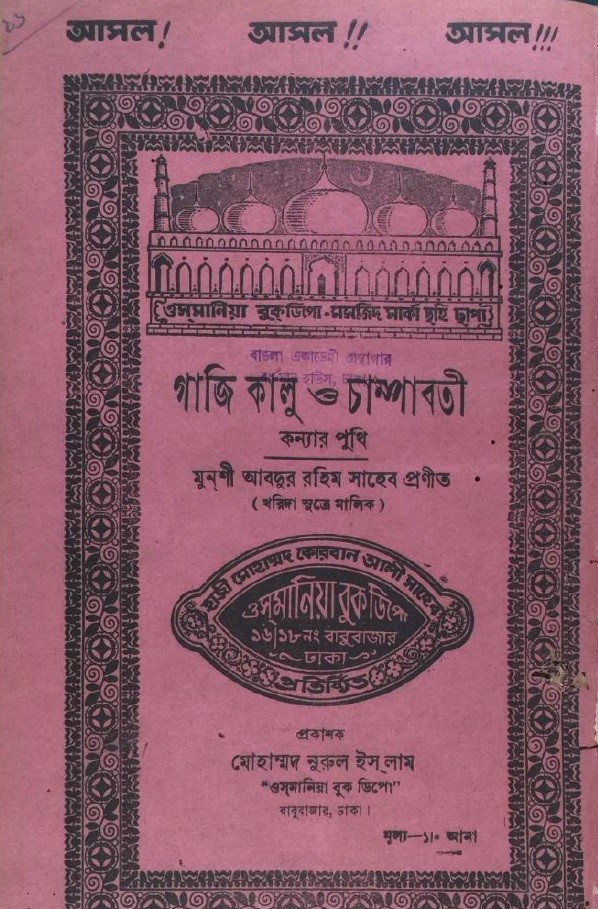
‘Muslim-Bengali’ works, both religious and secular, produced by presses in both Battala in Calcutta and Chawkbazar in Dhaka, were extremely popular. Most of these works were identical printed versions of their original manuscript editions, which had been very popular in pre-print Bengal. Written in archaic verse, they continued to cater to a taste for the supernatural and unreal, abounding in monsters, sorcery, adventures, and intrigues. As such, they were marked by an entire absence of any 'enlightening' influence from the new, reformed Calcutta-based canon. Their appeal to consumers cannot be indicated by sales figures alone. The literature attracted large audiences that were almost invariably illiterate, for it was a common practice to read these works aloud to groups of men and women in rural areas.
A small note here on the term ‘Battala’ as used here. Although predominantly used in scholarship to loosely denote poorly produced pamphlets, in reality, the earlier defects characterising these works had disappeared almost completely by the 1870s. Besides, Battala books also included other significant genres, such as religious and educational literature, and not just ephemeral ones. In the writings of the reformists, the term had a very special resonance. It sounded a note of caution wherever it appeared. Literary journals, newspapers, and learned societies were vehement in their criticism of the alleged trash that Battala produced. The columns of Bangadarshan and Somprakash regularly carried diatribes against the invisible perpetrators of this crime and urged their readers to stop patronising them. In using the term 'Battala' here, I have mainly been guided by the reformist definition.
With new opportunities for education opening up under colonial rule to meet the needs of the fast-expanding government and business networks in the latter half of the nineteenth century, the growing number of literate Bengalis provided a fillip to the Battala trade. For an immigrant population from the surrounding districts and suburbs of Calcutta, commuting daily to the city and back, the printed book was an easy and cheap form of recreation.
By the 1860s and 1870s, 'antahpur' or 'zenana' education had produced a considerable body of literate and partly literate women. Lack of access to guided collections, such as public libraries, for women very often meant that they read whatever came their way. As the missionary James Long noted, 'if females are not supplied with the good books they will be sure to read bad ones' [James Long, Returns, p. ix]. Sensational novels, romances designed to titillate the senses, and bawdy short skits carried enormous appeal.
From the mid-1870s onwards, a new genre of literature began to figure prominently at Battala and became the target of colonial and bhadralok reformers. Published as small pamphlets costing between one and four annas, prahasans or social farces were short skits written in racy and abusive language and voiced a stringent critique of the educated and well-to-do in society. Of the known writers, most came from the urban petty bourgeoisie and lower-caste groups.
Economic opportunities and education had provided avenues for upward mobility to many groups, irrespective of caste or customary occupation. Particularly towards the end of the century, lower-caste groups were making their presence felt and had created a significant number of claimants to the bhadralok world [Aparna Basu, The Growth of Education and Political Development in India, 1898-1920 (New Delhi, 1974), pp. 114-15]. But their sense of alienation from its sanctified 'cultured' bounds prompted them to ridicule and satirise the Anglicised babus.
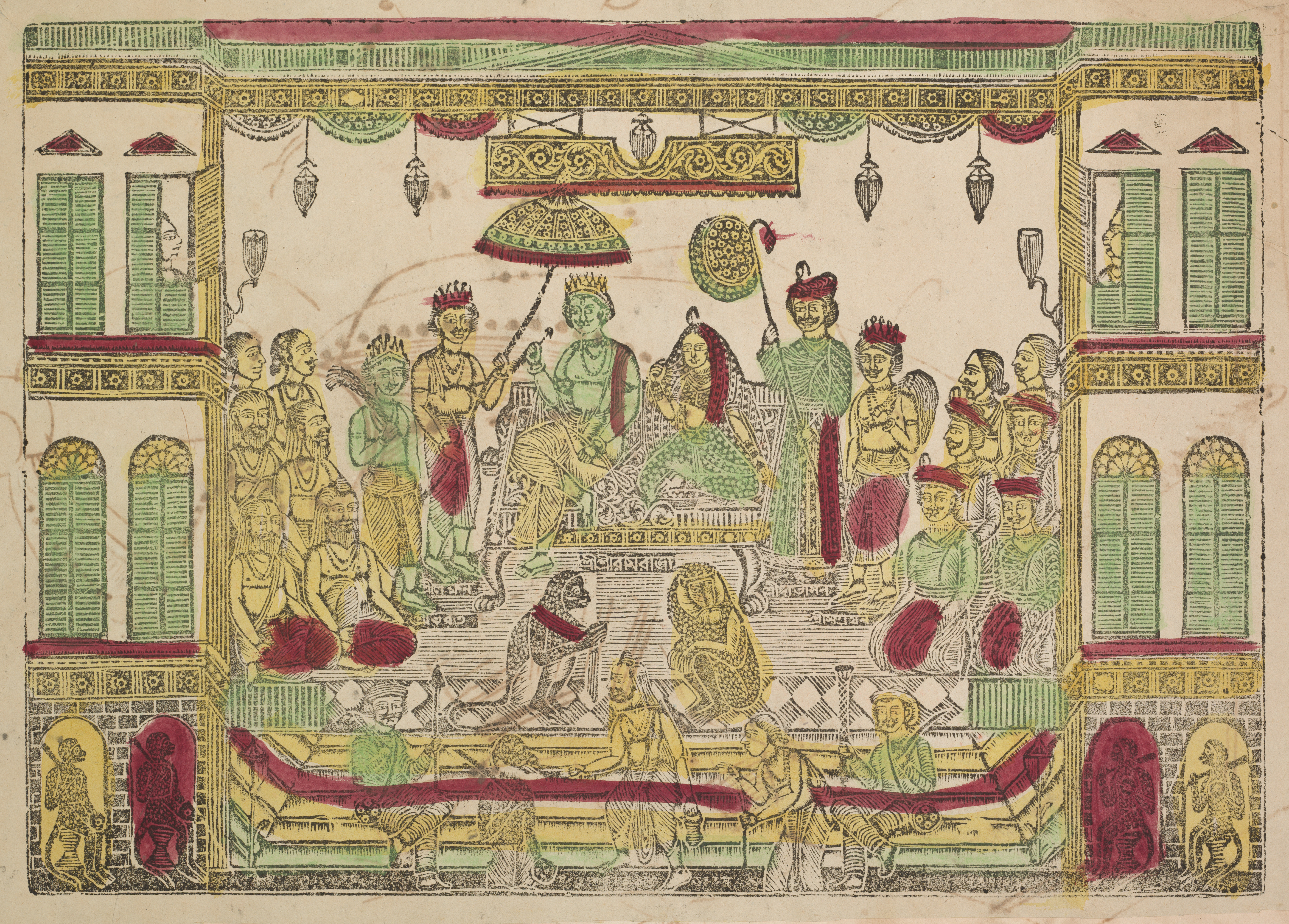
Standing outside the bounds of mainstream literature, the farces offer an insight into all that ran counter to it. Wise rustic folk, maidservants, and prostitutes in these farces are contrasted with scenes of prosperous bhadralok licentiousness, hypocrisy, and falsehood. While their language and content were deemed outside the bounds of literary gentility, the farces themselves questioned the very basis of this 'respectability'. Their strong moral tone mocked the promiscuous lifestyles of urban men and women, frauds and hypocrites posing as reformers and holy men, and villains involved in contemporary scandals.
In nineteenth-century Bengal, more than anything else, Bengali marked a site that was animated by power struggles across a broad social spectrum. The huge population of educated people who crowded the lower levels of the city's establishments from the mid-nineteenth century onwards constituted a sizeable body of opinion just below the more voluble and powerful voice of the upper-middle classes. As the principal patrons of the printed Battala genres of the kind described above, they stood for all that ran counter to educated efforts to dictate literary tastes. Battala books, for us, therefore, constitute both a significant social commentary and a vibrant mass print culture. Following on from this, we need to reassess the place of Battala on the literary map of Bengal and rightfully acknowledge its tremendous importance in the making of modern Bengali print culture and readership.
Anindita Ghosh is Professor of Modern Indian History at the University of Manchester, UK, and the author of Power in Print: Popular Publishing and the Politics of Language and Culture in a Colonial Society, 1778-1905 (Oxford University Press, 2006).
Send your articles for Slow Reads to slowreads@thedailystar.net. Check out our submission guidelines for details.
APO 433: Dhaka’s forgotten post office of World War II
Dadabhai Naoroji: The man who exposed the economics of British colonialism

Untold stories of 1971 through private letters
The extraordinary journey of Atish Dipankar Srigyan

Forgotten story of Jeanette Van Tassel, the American woman who flew over Dhaka in 1892
Beyond 1947 / A personal essay
Abul Mansur Ahmad / A global quest in search of a nation

Chand Bibi and the forgotten history of Muslim women’s political resistance
Women’s voices in Nazrul’s Dhumketu