Why Zia still matters in today's Bangladesh

On May 30, 1981, Ziaur Rahman, the founder of the Bangladesh Nationalist Party (BNP) and a sitting president, was brutally murdered in Chittagong by a group of mutinous army officers while he was on an official tour.
Ziaur Rahman took power only four years earlier, in 1976, at a time when Bangladesh, facing coups and counter-coups, was on the verge of collapse.
Restoring order
In 1976, when Ziaur Rahman assumed the country's leadership, he took harsh and decisive action to quell rebellions and, most importantly, restore the chain of command within the army, which had completely collapsed by then. The New York Times observed at the time that his tough decisions helped lift "the new nation, created when it broke away from Pakistan in 1971, to its feet".
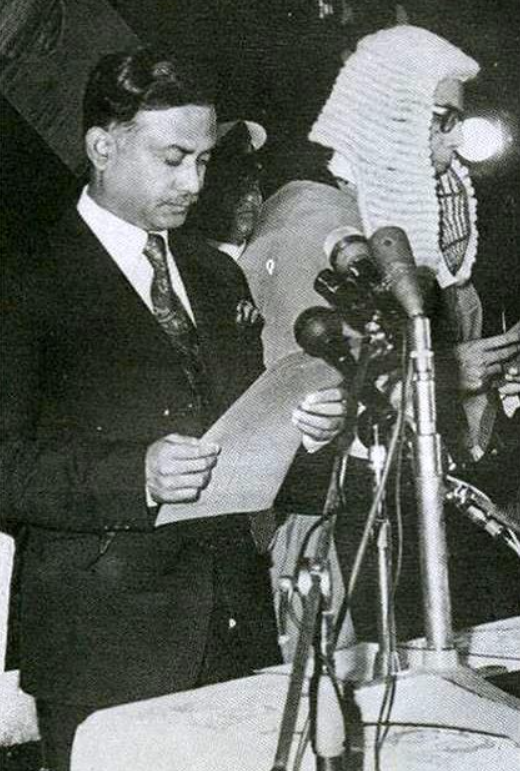
Laying foundations for nation-building
Following the restoration of order in the army and the consolidation of power, Ziaur Rahman embarked on medium- to long-term reforms in governance that transformed Bangladesh from a collapsing state into an economically advancing, administratively consolidated, forward-looking nation. Most important among these were: (i) strengthening management accountability within the government by introducing, and personally engaging in, regular reviews of the progress of policy and programme implementation and problem-solving, including capacity-building in development management in the public sector; (ii) mass mobilisation for development through his famous 'canal-digging' programme and through the co-option of grassroots communities in development via the introduction of the idea of 'Gram Sarkar'—the village government—for development through village-level participation and planning; (iii) investment in agricultural research to bolster rice production and achieve food self-sufficiency; (iv) liberalisation of trade and investment, which saw the birth of the ready-made garment (RMG) industry in Bangladesh in 1978—an industry that, in time, became the country's leading export earner and a major driver of economic growth; and (v) recalibration of foreign policy that not only bolstered Bangladesh's image overseas but, more importantly, opened up opportunities for labour exports to the Gulf countries, which transformed Bangladesh in due course.
Another visionary step taken by Ziaur Rahman was his decision to abandon, albeit temporarily, the Five-Year Plan drawn up by the BaKSAL government and replace it with a Two-Year Reconstruction Plan (TYRP). This was mainly because Zia realised, quite correctly, that neither the existing resources nor the institutional arrangements, which were largely fractured and inept, were equipped to realise the ambitious goals of the Five-Year Plan. The Two-Year Reconstruction Plan (TYRP) prioritised the reconstruction of war-damaged infrastructure, strengthening public-sector management capacity, and resuscitating the rural economy as its key goals.
These measures paid dividends, both in the short and long run. Bangladesh became a viable economy, steadily improving its agricultural productivity and diversity and enhancing project management capacity such that foreign aid utilisation increased from a dismal 17% of the annual allocation to 86% in 1980, while GDP growth rose from -1.7% in 1975 to 4.5% per annum in 1980.
Currently, Bangladesh and a new BNP government would face similar challenges: an inherited, directionless society, an inept and politicised bureaucracy, evolving local and global pressures, and an uncertain economy.
A look back at Zia's vision, strategies, and actions, especially in reviving a broken and moribund economy, may help a future government map out a viable pathway to recovery. Another key aspect of Zia's success was his reliance on a good team—capable and honest men and women.

Uniting the nation
Another of Zia's milestone accomplishments was his introduction of the idea of "Bangladeshi nationalism". During the 1972–75 Bangabandhu-led period of governance, citizens of Bangladesh were referred to as 'Bangali', a term derived from the majority ethnic and linguistic group in the country. This was problematic because the people of Bangladesh are neither racially nor linguistically monolithic, and the country has ethnic minorities who are neither racially nor linguistically 'Bangali'. These divergences made the idea of classifying all residents of Bangladesh as 'Bangali' an exclusionary majoritarian imposition. Besides, people across Bangladesh's border in West Bengal (India) are also racially and linguistically Bangali and are so identified, which made the idea of referring to the citizens of Bangladesh as 'Bangali' not only untenable but also confusing.
In view of the above, Ziaur Rahman and his governing team took a particular interest in promoting the idea of a 'Bangladeshi' identity as a concept of nationhood that is inclusive and one that would distinguish the citizens of Bangladesh in terms of their territorial distinctiveness as well as their ethnic, linguistic, and religious heritage, reflecting a unique diversity.
Inspiring the youth
Another huge crisis that Bangladesh is currently facing is a confused, if not directionless, younger generation.
In 1976, when Ziaur Rahman took power after a series of coups and counter-coups, and at a time when democracy had died at the very hands that had promised it and for which hundreds and thousands had sacrificed their lives, many people, especially the youth, were not only frustrated but had also become directionless when presented with an authoritarian system. Zia took several steps to inspire the youth, especially those that infused in them a sense of patriotism and national pride, such as the public acknowledgement and honouring of national heroes for their contributions to the country across various fields. These included the introduction of the Ekushey Padak in literature, art, and culture (in recognition of the Language Martyrs of February 21, 1952); the Swadhinata Puroshkar (Independence Award) to honour those who contributed to independence and nation-building; and the Notun Kuri (The Blooming Flower), an award presented to young talent.
To inspire the younger generation, Ziaur Rahman also introduced the idea of 'Promod Bhromon' ('Excursion with the President'), a pleasure trip with the President during which he would take top-performing high school graduates on a journey with him to inspire and motivate young people. During these excursions, Zia also reminded them of their obligations to the country.
Many believe that these initiatives—Bangladeshi identity and the encouragement of the younger generation—inspired and mobilised the people, giving them a sense of direction and motivating them to contribute to the mission of building the infant and traumatised nation in a more unified and cohesive manner.
Putting Bangladesh on the global map
Ziaur Rahman's foreign policy was based on three basic principles: economic development, security, and the sovereignty and dignity of Bangladesh. To achieve these goals and promote economic development, he forged closer relations with international multilateral and bilateral aid agencies, including those from the Gulf states, and, more importantly, strengthened Bangladesh's ties with China. He also took the lead in mobilising and uniting Muslim-majority countries under one umbrella and, more importantly, conceptualised and championed the idea of SAARC, enabling the nations of South Asia to cooperate and work together for mutual advancement. India delayed its launch and, after it was finally established in 1985, five years after Zia's death, SAARC has effectively remained dysfunctional since 2014, again largely because of India.
It is time for Bangladesh to renew its efforts to revive SAARC and to seek an alternative regional cooperation platform with willing partners.
The journey
Let me summarise the accomplishments and unfinished journey of Zia by quoting the message of condolence delivered by the then Australian Prime Minister, Malcolm Fraser, following Zia's death, which he read in the Australian Parliament on June 21, 1981:
"With the tragic assassination of President Ziaur, Bangladesh has lost a leader of zeal and, I believe, integrity… One of the principal reasons for the late President's success and popularity was his dedication to the development of rural Bangladesh and its immense population, who worked hard to overcome the crushing problems of food shortages and poverty. He announced this year that food production in Bangladesh doubled over the previous 12 months. That was a remarkable record by any standard."
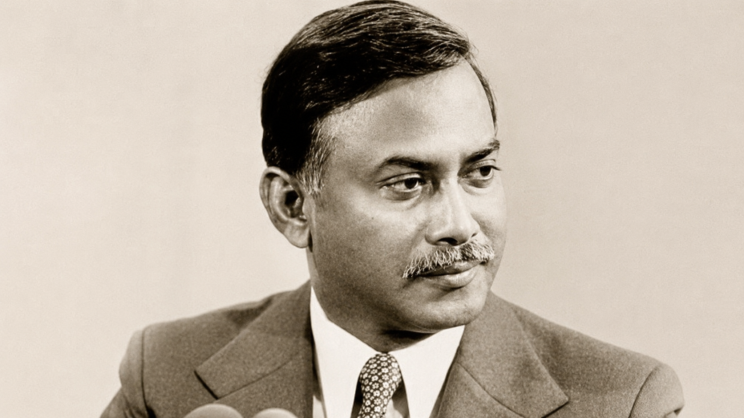
The time is ripe, if not an obligation, for a newly elected BNP government to reflect on and draw lessons from Zia's vision and the characteristics of his governance that transformed Bangladesh from a 'basket case' into a thriving economy and a proud nation.
M. Adil Khan is a Professor at the School of Social Science, University of Queensland, Australia, and a former Senior Policy Manager of the United Nations.
Note: The article is based on the author's recently published book: M. Adil Khan (2024), Bangladesh's Seven Governing Periods, 1972–2022: Accomplishments, 'Constants of Bad Governance' and Much-needed Resets; South Asia Journal, New Jersey, USA.
Send your articles for Slow Reads to slowreads@thedailystar.net. Check out our submission guidelines for details.
Professor Anisur Rahman: The economist who put people at the centre

APO 433: Dhaka’s forgotten post office of World War II
Dadabhai Naoroji: The man who exposed the economics of British colonialism

Untold stories of 1971 through private letters

The extraordinary journey of Atish Dipankar Srigyan

Forgotten story of Jeanette Van Tassel, the American woman who flew over Dhaka in 1892
Beyond 1947 / A personal essay
Abul Mansur Ahmad / A global quest in search of a nation

Chand Bibi and the forgotten history of Muslim women’s political resistance