


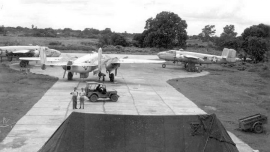
APO 433: Dhaka’s forgotten post office of World War II
7 HOUR(s)
•
In Focus
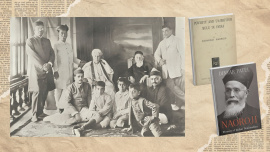
Dadabhai Naoroji: The man who exposed the economics of British colonialism
8 September 2026
•
In Focus
Untold stories of 1971 through private letters
7 September 2026
•
In Focus
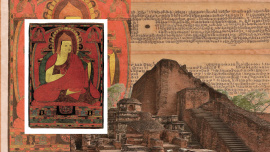
The extraordinary journey of Atish Dipankar Srigyan
6 September 2026
•
In Focus
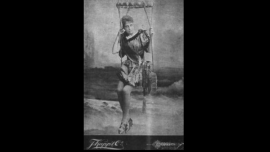
Forgotten story of Jeanette Van Tassel, the American woman who flew over Dhaka in 1892
5 September 2026
•
In Focus
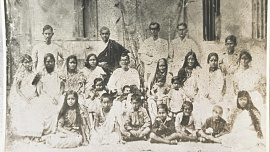
Beyond 1947 / A personal essay
4 September 2026
•
In Focus
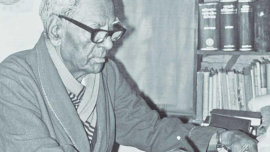
Abul Mansur Ahmad / A global quest in search of a nation
3 September 2026
•
In Focus
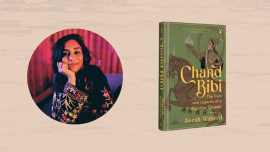
Chand Bibi and the forgotten history of Muslim women’s political resistance
2 September 2026
•
In Focus
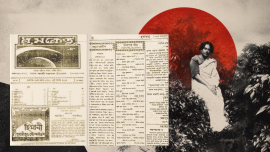
Women’s voices in Nazrul’s Dhumketu
31 August 2026
•
In Focus
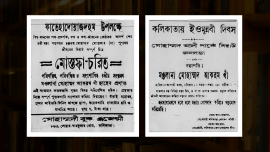
How Milad-un-Nabi shaped Muslim cultural life in colonial Bengal
26 August 2026
•
In Focus
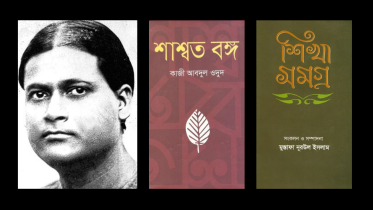
Muslim Sahitya Samaj Centenary
In the light of Shikha: A letter tainted by anachronism
19 January 2026
Amanul Huq: The romantic documentarian
The international photography festival Chobi Mela will begin on January 16. This year’s festival is being organised around the theme “Punô”—meaning again or to begin anew, differently.
12 January 2026
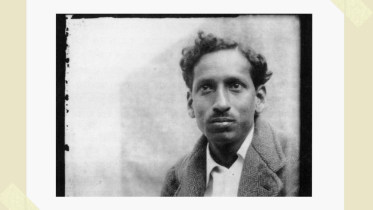
Before the selfie age: Daddy’s self-portraits
Daddy’s most widely seen self-portrait was taken in 1951.
10 January 2026
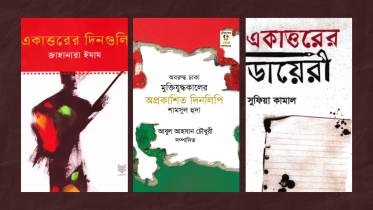
Living in occupied Dhaka: Diaries from 1971
Ekattorer Dinguli, Ekatturer Diary, and Abaruddha Dhaka remind us that the Liberation War did more than give birth to a nation
6 January 2026
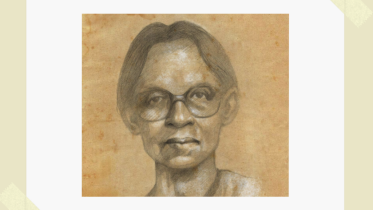
Ila Mitra: A symbol of indomitable courage
Ila Mitra transformed suffering into resistance, becoming one of the subcontinent’s most enduring symbols of courage.
6 January 2026
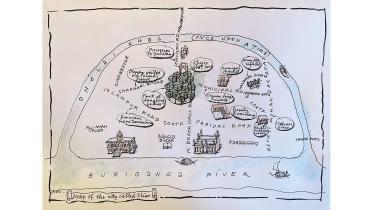
In a city called Elias
In a city called Elias, there is no beginning and there is no end—“it lives imperishably.” The past and the dead are as vital as the rank waters of the Buriganga.
4 January 2026
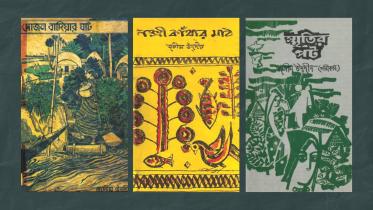
The making of folk poet Jasimuddin
Jasimuddin remembered singing songs to himself. He could not remember the words but remembered putting his own words into some of them.
4 January 2026
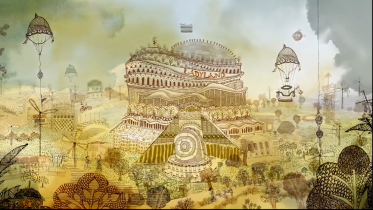
“In Rokeya’s writing, I see a universal truth”
A Spanish animator reimagines Sultana’s Dream
1 January 2026
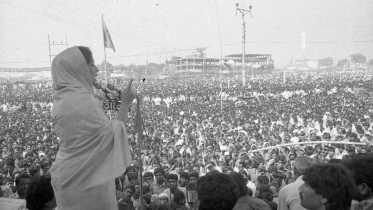
The untold history of why Khaleda Zia entered politics
Why did Khaleda Zia, a typical housewife who had become widow at a critical age in terms of Bangladesh's culture, join politics?
30 December 2025
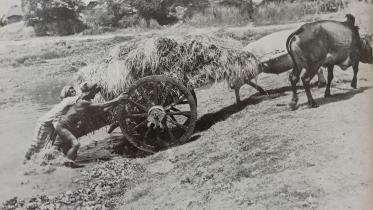
Zainul Abedin, Naib Uddin, and the making of a classic
Zainul flows into Naib Uddin, and Naib Uddin flows back into Zainul, again and again. But their relationship is not limited to subject matter alone.
29 December 2025
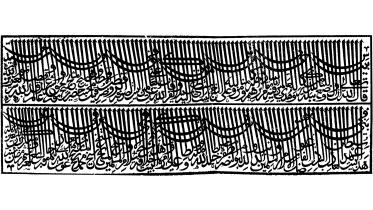
A journey through Bangladesh’s Islamic inscriptions
Inscriptions serve as a missing link to the past, offering many historical clues otherwise unavailable elsewhere.
28 December 2025
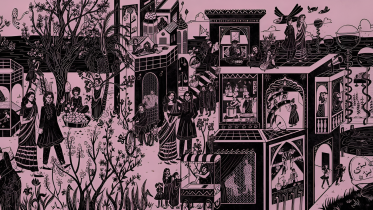
Why Rokeya’s two-hour workday utopia remains urgently relevant
Rokeya’s utopia asserts that the highest priority of science is not maximising output, but maximising human freedom and leisure.
28 December 2025
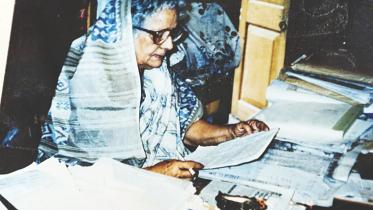
Nurjahan Begum: A life for women’s voices
Begum had to shift from its office from one country to another, witness Partition, Liberation War, change of regimes, change in printing technology, but its editor, Nurjahan Begum, never wavered.
25 December 2025
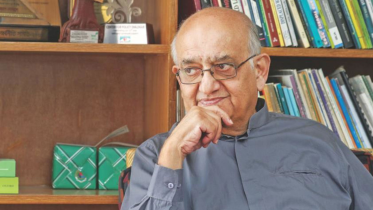
Anti-Liberation War forces have taken advantage of the failure of democracy
In conversation with Rehman Sobhan, one of Bangladesh’s most distinguished economists and a celebrated public intellectual.
24 December 2025

Kazi Fazlur Rahman, a civil servant and an intellectual giant
Kazi Fazlur Rahman was a Member of Bangladesh’s first Interim Government in 1991
15 December 2025

Chittagong, before Chittagong: An early history
In the remote east of a region once called Harikela lies Chittagong, an upper Bay of Bengal port city at the juncture of the medieval Bengal, Arakan and Tripura kingdoms.
14 December 2025

The untold story behind 1971’s two most haunting photographs
Because the image was published, Naib Uddin’s life came under threat.
12 December 2025

What Begum Rokeya knew about changing Bengali Muslims from within
Liberation is not about what one wears or does not wear but about the values they live by
7 December 2025

Living in a time of fear: The rise of digital inquisition in Bangladesh
The pervasive violence — both physical and symbolic — in our times is contagious.
4 December 2025

A British witness to Bangladesh genocide: Val Harding’s 1971 story
In April 1971, at the age of 24, Val Harding was volunteering as a nurse at a hospital in Kathmandu, Nepal, when she first heard of the atrocities on March 25 in Dhaka and the fight for the Liberation of Bangladesh.
30 November 2025