Mapping Bangladesh’s defence future
The political transition in Bangladesh has ushered in a new era of hope, presenting a unique opportunity to rethink and reformulate several aspects of statecraft. As the defence forces embody the strength of a nation, there is much anticipation regarding the plans for this sector. The political parties have also resonated with this sentiment in their election manifestos, as they laid out their visions for enhancing defence capabilities under the overarching philosophies “Bangladesh Before All” and “An Uncompromising Bangladesh”. As the new political government settles in, it is imperative to look at the key pledges and share some insights regarding the expectations surrounding them.
At the strategic level, the Bangladesh Nationalist Party (BNP) shared its plan for formulating a National Security Strategy (NSS). Both BNP and the National Citizen Party (NCP) called for establishing a National Security Council (NSC). There have been calls for an NSC and an NSS for several years, and finally they might be in sight. The NSS is a crucial document, as it gives direction regarding the state’s plan to apply all elements of national power to attain its political objectives, both during war and in peacetime. It indicates the state’s approach to ensuring and upholding security, prosperity, and global standing. While it is common for major powers to publish their NSS at regular intervals, there has not been any such publicly available document for Bangladesh. Therefore, there is a great deal of eagerness to see what an NSS might look like for a country such as Bangladesh.

While formulating the NSS, it is very important to look into all elements of power used in contemporary times and assess what we have at our disposal. Self-identification of our current position is essential, as it would provide clarity regarding what combination of power we want to exercise and what kind of influence we want to project. Do we want to see ourselves as a small South Asian state, or do we want to establish ourselves as an emerging middle power with greater stakes and responsibilities? These are some of the key issues that need to be addressed. It is expected that policymakers would take geopolitical realities into consideration and adopt an approach that helps to secure our strategic objectives.
In line with the NSS, political parties have called for formulating a defence policy and defence doctrine. The Defence Policy 2018 was based on the core aspects of the 1974 Defence Policy. Reviewing it is a need of the time. It is expected that the government would include all relevant stakeholders, including think tanks, in the policy formulation process. Consulting diverse views would make the policy more participatory and effective.
As geopolitical competition intensifies and a transactional approach in international relations becomes the new norm, it is wise to prepare for any restrictive measures imposed by major powers. Such preparation includes the diversification of defence articles acquisition and the strengthening of indigenous production capability where possible. In the manifestos, both BNP and Jamaat shared their interest in promoting military research and developing the domestic defence industry. While some aspects of the manifestos are rhetorical, the underlying objective of expanding and strengthening indigenous capabilities is evident. A long-term vision is vital in materialising this pledge. This needs to start by developing subject matter experts to operate at different levels of this industry.
One of the core principles of our defence policy is credible deterrence, and the periodic enhancement of defence capabilities is a fundamental requirement for ensuring it. BNP, Bangladesh Jamaat-e-Islami, and NCP have pledged to strengthen defence capability by modernising the Armed Forces. In its election manifesto, BNP expressed its vision for a four-dimensional armed force; Jamaat shared broad views on updating the 2030 modernisation goal into a forward-looking Vision 2040; and NCP shared specific visions for the weapon systems it seeks to acquire. Although there are some differences in approach, the intention to invest in defence capabilities is well reflected in all three manifestos.
However, in this sector, there is an inherent struggle to match aspirations for technologically advanced armaments with economic realities. Here, it is important to note that the maximum portion of the defence budget is required to cover operating costs, and only a very small percentage can be dedicated to new procurements. It is paramount for policymakers to take this into consideration and plan ways to increase allocation for modernisation purposes. At the same time, it is essential to look for cost-effective technologies. Recent inter-state conflicts have demonstrated how low-cost defence technologies can deliver kinetic effects in asymmetric warfare. Operational-level ingenuity has been instrumental in this process. These events have provided critical insights for small military organisations around the world. It is expected that policymakers would take these into consideration in the policy formulation process.
It is also pivotal to consider the geopolitical setting of the policy. The defence policy should be aligned with the evolving strategic landscape of both the immediate and extended region. Bangladesh’s geography has always influenced its strategic thinking. While the priority on land is imminent, the strategic competition centring the Indo-Pacific region has made the operational environment in the maritime vicinity very uncertain, requiring our defence forces to stay prepared for potential contingencies. It is expected that the defence policy would adequately emphasise the requirements for securing national interests in the Bay of Bengal and in the wider Indian Ocean region.
As geopolitical competition intensifies and a transactional approach in international relations becomes the new norm, it is wise to prepare for any restrictive measures imposed by major powers. Such preparation includes the diversification of defence articles acquisition and the strengthening of indigenous production capability where possible. In the manifestos, both BNP and Jamaat shared their interest in promoting military research and developing the domestic defence industry. While some aspects of the manifestos are rhetorical, the underlying objective of expanding and strengthening indigenous capabilities is evident. A long-term vision is vital in materialising this pledge. This needs to start by developing subject matter experts to operate at different levels of this industry. Joint production is a major avenue for developing the indigenous industry. It is expected that the relevant authorities would critically examine possible strategic partnerships and make informed choices. Reviewing the Foreign Direct Investment (FDI) policy and making it more user-friendly is crucial in this regard. Moreover, such a large-scale endeavour cannot be sustained by solely catering to domestic needs. It is important to engage in active diplomacy to explore markets and attract potential buyers. The trade policy also needs to be reviewed, as production- and policy-level synergy is integral for this purpose.
At the strategic level, the Bangladesh Nationalist Party (BNP) shared its plan for formulating a National Security Strategy (NSS). Both BNP and the National Citizen Party (NCP) called for establishing a National Security Council (NSC). There have been calls for an NSC and an NSS for several years, and finally they might be in sight. The NSS is a crucial document, as it gives direction regarding the state’s plan to apply all elements of national power to attain its political objectives, both during war and in peacetime. It indicates the state’s approach to ensuring and upholding security, prosperity, and global standing.
Besides strengthening and expanding the regular forces, it is also essential to plan and prepare for situations that may demand the integration of the general population in national defence. The concept of People’s War has been a key feature of Bangladesh’s strategic culture, as witnessed in the Liberation War. It is also reflected in the existing Defence Policy. The political parties have shared similar ideas in their election manifestos. BNP called for formulating the defence policy in light of Ziaur Rahman’s ‘People’s Warfare Doctrine’. Jamaat proposed a 6–12 month voluntary military training programme for men and women aged 18–22 years. NCP called for building a combat-ready reserve force by training 30 thousand youths in arms and military tactics every year. Although the approaches differ, the underlying objective appears similar. Short-term military training or national service can be instrumental in unconventional warfare. Several countries have either voluntary or mandatory national service requirements. Bangladesh can consider this as well. However, Bangladesh already has a large pool of paramilitary and auxiliary forces. If the government wants to proceed with the idea, there has to be a convincing narrative to justify, promote, and popularise this initiative through a consultative process.
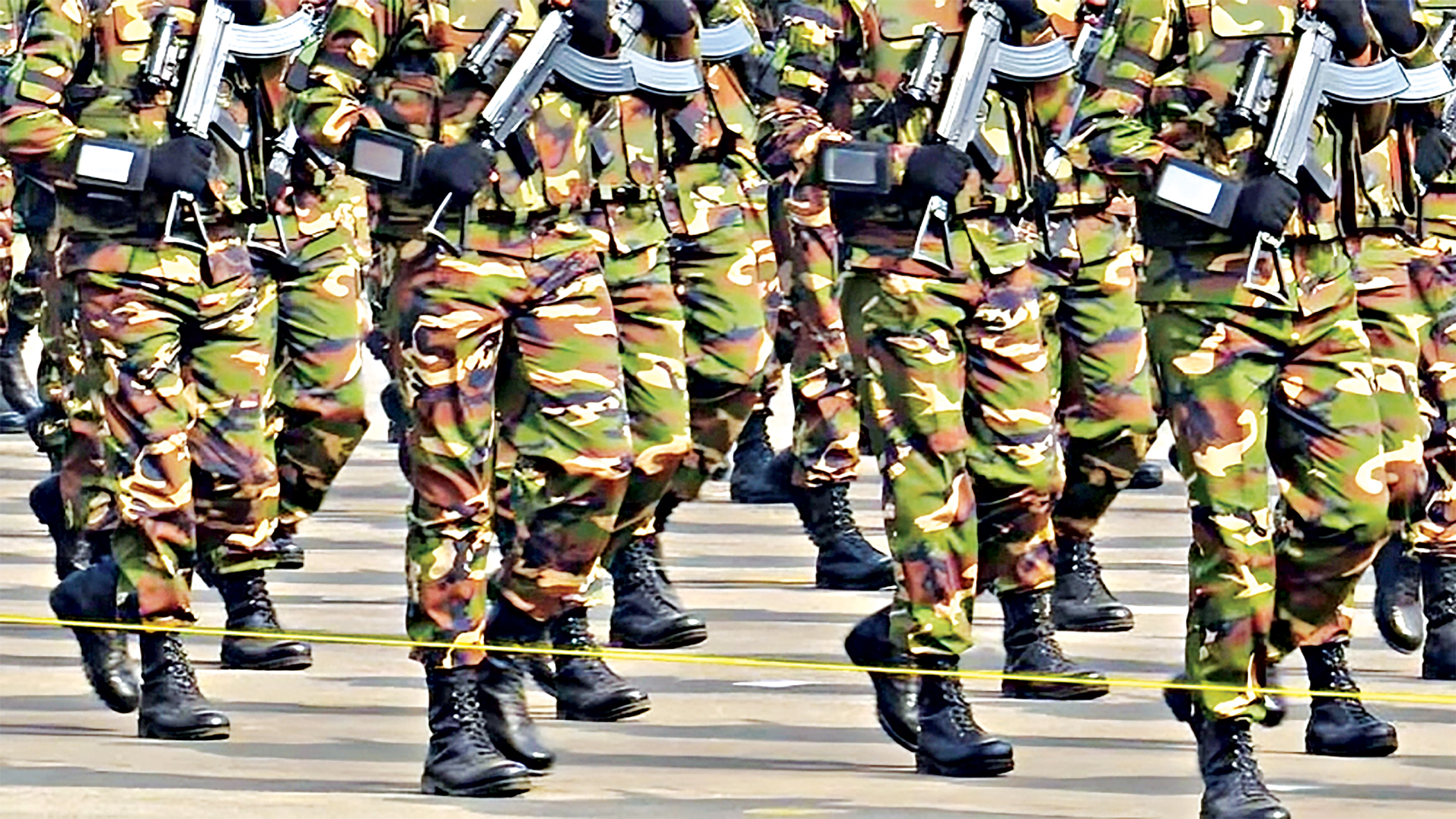
Through the defence policy visions in the election manifestos, one can gain some working knowledge regarding the priorities and preferences of the political parties for strengthening our defence capabilities. Transforming these visions into policy would be a critical step. Election pledges have been made in the past too, but this time the people’s mandate is strong, and so are their expectations from these policies. It is now time for the ruling party to deliver and for the opposition to follow up.
Ayesha Binte Towhid is a Research Fellow at the Bangladesh Institute of International and Strategic Studies (BIISS). She can be reached at ayesha@biiss.org.

From the Carter Doctrine to the Mecca Pact: A changing Gulf security order

More capability, less autonomy? Bangladesh’s emerging security dilemma

An anti-West network is emerging: How should Bangladesh respond?

The Mecca Pact: Deterrence, Israel, and the new Gulf security equation
What Nepal’s flood devastation means for Bangladesh, India and China
Five reasons why Bangladesh shouldn’t join the Mecca Pact
Why Gaza peace deals keep falling apart
Rohingya genocide: Will the ICJ verdict bring justice?

Should Bangladesh join the Mecca Pact?