The myth of victory in Lebanon and Iran

As war escalates in the Middle East, Dr Bashir Saade, lecturer at University of Stirling, and author of “Hizbollah and the Politics of Remembrance,” speaks to Ramisa Rob, Geopolitical Insights Editor of The Daily Star in an exclusive interview explaining developments in Lebanon and Iran and what “victory” means for the US and Israel.
TDS: Can you explain how the geopolitical dynamics changed in the Middle East since October 7, 2023?
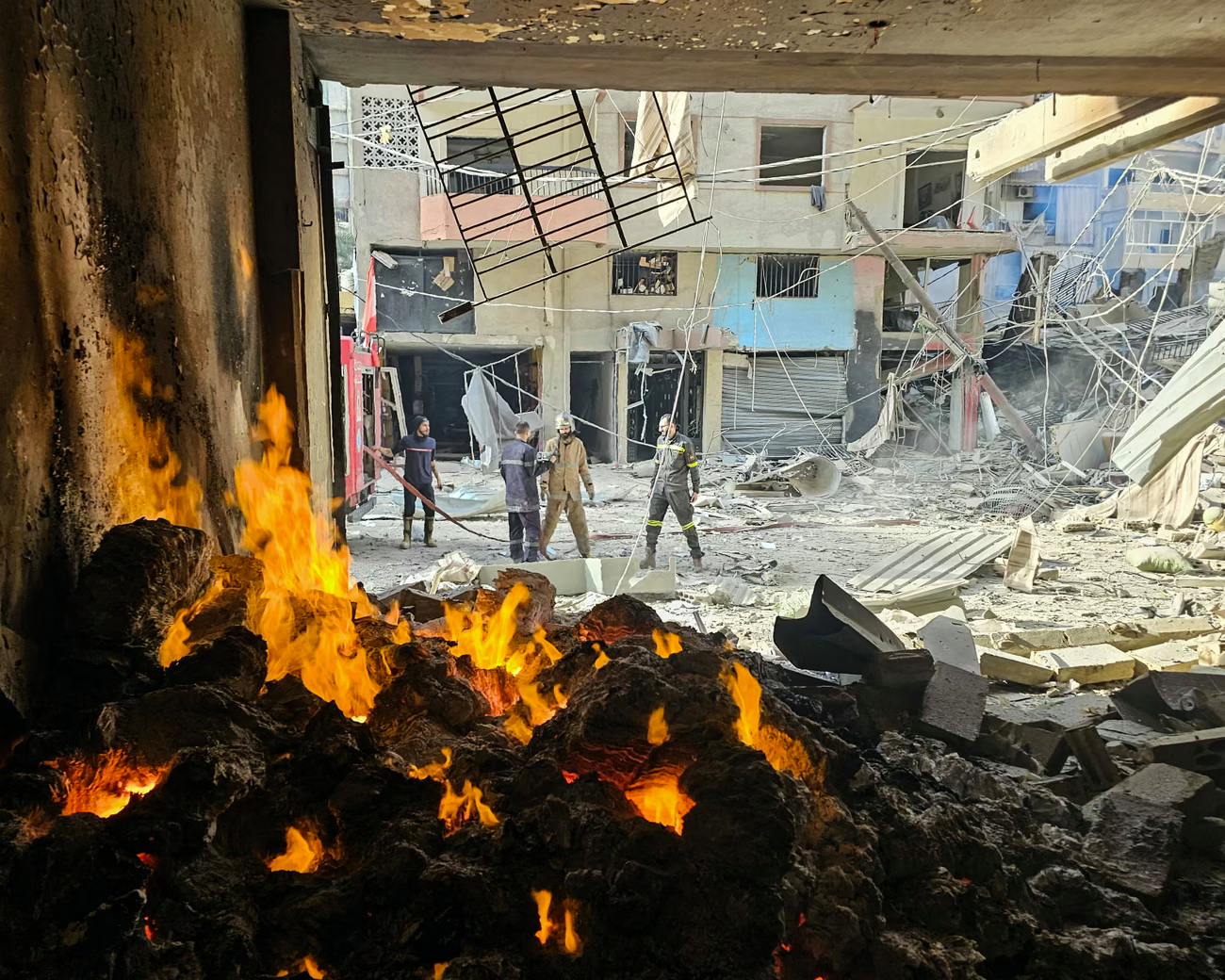
DBS: Since October 7, there have been major transformations in the rules of the game between Hezbollah and Israel. The Lebanese government is allied with the US, and has been indirectly bidding for Israel to demilitarise Hezbollah. In certain areas, the Lebanese army ceased strategic weapons, including anti-aircraft missile carriers, which would have been useful now that Lebanon is being pounded. There were threats from Israel towards the Lebanese government that if the latter did not succeed in demilitarising Hezbollah, Israel would launch a large-scale operation, all the while striking Lebanon everyday.
When the US and Israel decided to act on Iran — which was planned for years — it also strategically coincided with an Israeli intervention in Lebanon against Hezbollah. The assassination of Ayatollah Ali Khamenei happened, and Hezbollah shot a few rockets against Israel, knowing in advance that the Israelis would start their campaign. The ground invasion is most important to follow, in order to understand how this will unfold. Historically, Israel has not been able to make much progress in Lebanon at that level but you never know with the current situation. Israel is militarily superior, in numbers of soldiers, military infrastructure and they have significant air coverage, which Hezbollah does not have.
On the internal political front, the Lebanese government is pushing for Hezbollah to surrender to the Lebanese army, which itself is currently split and mostly under the US dictate. Hezbollah is not an isolated, parachuted organisation from Iran — as often depicted in parts of the media. Hezbollah is part and parcel of the organic community in Lebanon. Members of Hezbollah have family and friends in the Lebanese army. So there’s tension internally, and a schizophrenic attitude within the Lebanese government. The Lebanese government is also currently asking for the start of negotiations of peace with Israel, including normalising relations with Israel. Very expectedly, Israel has refused to negotiate for peace with Lebanon. Israel never wanted to negotiate for peace, as it doesn’t suit Israel’s interests. There’s even talks of Syria intervening to indirectly help Israel and isolate Hezbollah from the east side.
TDS: What is Hezbollah’s relationship with Iran right now?
DBS: Hezbollah has had logistical, financial and military support from Iran, historically. It’s a mixture of intellectuals, militants, and politically inclined actors from several organisations, who went to Iran in the 1980s, and asked for support to start a resistance project against Israel. They asked Ayatollah Khamenei at the time. As a result of this, the Iranian Revolutionary Guards — leading the current fight against the US — sent a battalion to Lebanon and trained what has become Hezbollah. Since then, there's been a synergy between the Iranian Revolutionary Guards and Hezbollah. There’s logistical communication, technological linkages; they’ve worked together for years. The assassinations that targeted senior officials in Hezbollah also targeted senior officials in the IRGC. Hezbollah General Secretary, Hasan Nasrallah was killed in Lebanon, alongside Iranian generals. The Israeli Prime Minister Netanyahu once said that he discovered that Nasrallah was not only the leader of Hezbollah, but the de facto leader of the resistance axis, which included the IRGC, Hamas, Yemeni Houthis, Iraqi factions. That being said, the relationship between Hezbollah and Iran is not exactly like some of the press portrays it, where it is presumed that Iran gives order to Hezbollah. That is a really big misunderstanding. The nuance of the relationship is that it’s a partnership, where, if anything, Hezbollah ends up being the decision-maker as they are on the ground.
The latest decision of Hezbollah to act on Israel is not based on orders coming from Iran. It is one that involves Hezbollah’s strategic survival, and defending their land in the south of Lebanon, even though critics of Hezbollah say it’s not working, leading to further disruption and that they cannot fight Israel. It’s a valid criticism, in many ways, and disagreements along these lines have substance, but the idea is that Hezbollah can restore some form of strategic strength against Israel. Now, is that true? Is it going to work? The humanitarian toll of that is, of course, horrible. Was it avoidable? These are interrogation points to dive into. But overall, it’s important to understand that the relationship between Hezbollah and Iran is complex, involving different figures and national interests.
TDS: What are the different national interests of Iran and Hezbollah, at this point in war?
DBS: They are fighting a survival war. Since October 7, the US and Israel have decided that the resistance coalition has to be neutralised or eliminated. It is not viable for the US and particularly Israel to have the coalition of resistance exist as a political actor. In politics, you either negotiate and recognise the other as an existing actor and try to compromise, or you reach a point where you decide that taking them out with force as such, would have a better outcome. For the US and Israel, the idea is clearly to create some kind of a ground for regime change in Iran as we’re seeing with targeted killings, so that there is no entity such as the IRGC anymore. The regime change entails a US-friendly government in Iran. In Hezbollah’s case, they want a complete demilitarisation and integration of the group in the Lebanese government, which is more or less, the declared aim of Israel and the US. Iran and Hezbollah both want to preserve themselves but for different reasons. They have ideological similarities in the sense that they’re both anti-Israel. But in Lebanon, the difference is protecting their land, villages, and making sure Israel cannot colonise the south of Lebanon. In the case of Iran, they don’t want a US-aligned government.
TDS: In your view, is there a possibility that this war ends with a US-aligned government in Iran? Is it possible to eliminate resistance groups?
DBS: History shows that most regimes, groups, and political actors don’t only survive when they have equal power to the attacking force. They survive through asymmetric means. It is true that Iran — and Hezbollah — are no match for the US, Israeli army and their technological, military capabilities. But they can fight wars that exhaust Israel and US’ capabilities, and withstand total destruction. So that’s the difference, and this is what Iran is continuing to bet on. They are also betting on the paralysis of the world economy, to the Gulf region, which is the most important region for wealth accumulation for the world economy. It’s not just because of oil and gas, but also financial markets. Most of the US currency is actually Gulf money. This is why the Iranian war, as labelled by many commentators, is a war of attrition, that bleeds the enemy as much as possible till the enemy feels that they cannot “afford” this anymore.
Israel is trying to occupy the south of Lebanon, and it may succeed, but it is facing fierce resistance. One of the issues with the wars that the US and Israel is waging in the region — even in Gaza with Hamas — is the idea that you can eliminate your enemy is a bit of a myth. Their enemy — the resistance groups — is an ideological one, fighting against injustice, occupation and Israel’s machinations which have broken apart many families. So these people are not going to go away. If someone is killed in a family, his son will fight, or his cousin will fight — and so on. The only way to deal with such an enemy for the US and Israel is through political compromise, which they don’t wish to do as Hezbollah and the Iranian regime are some of the only ones in the world rejecting US and Israel. Hezbollah and Iran’s point remains that all will not be on your teams, but also our terms.
TDS: How long is prolonged war on all fronts, sustainable for the US and Israel and Iran and Hezbollah?
DBS: There’s talks that Israel is considering the usage of nuclear weapons in Iran, which would be a disaster. Israel is desperate. Iran is huge in land mass and the killing of leaders and top officials cannot lead to quick change. Hezbollah is in a different situation of course, but as long as there is someone hiding behind a mountain or valley in the south of Lebanon, it’s hard to fully eliminate them. They are in it for existential reasons so they will fight until everybody is dead. They don’t care. If anything, they’re waiting to die as the martyrdom culture is very strong in both Hezbollah and Iran’s case.
From what’s happening recently, it does seem to me that the US is already reconsidering. For Lebanon, it’s different and it’s possible that it would last longer than the one in Iran and the US. The problem though, is the more you corner an arrogant enemy, like the US and Israel, they start using other means of destruction. The Israelis start bombing civilian infrastructure here and there, because again, they are desperate. The more the US and Israel become aggressive, it’s a sign of weakness that they’re not succeeding in hitting where they hope to. Even in Gaza, the narrative is that Hamas is decimated. Hamas leadership may be gone, but Hamas still exists underground. Their idea as a resistance faction continues to exist. Tomorrow, their sons and families are also going to be there. Total destruction of the Gaza Strip has been achieved but is there really a strategic victory for Israel? Something similar may happen to Lebanon. Israel wants to transform the south and parts of Beirut into a new Gaza — so they continue on in the same kind of thinking.
TDS: To understand what strategic victory entails, what is the larger objective here?
DBS: The main doctrine that Israel operates on — which is different to the US — is spreading terror by calling their enemies “terrorists.” The doctrine of terrorism, in order to inflict terror, so as to produce a political outcome is a quintessential Israeli policy. The idea in Lebanon is to create a complete state of disarray, displace people within the country to tents and without homes. The doctrine entails spreading mayhem and chaos. Everyone is scared, and wondering when this will end. The strategy here is that spreading terror will lead to a change of heart: “enough is enough.” It’s partly working, as many Lebanese people are saying that, “we know that Israel is a monster, so why should we poke that monster anymore when we’re suffering?” That sort of mentality is very much engineered by Israel, as we see in the genocide in Gaza as well.
Lebanon is split: there are many people in the country who are against normalising ties with Israel, while there are many people who aren’t. But Israel refused to normalise, and that’s really important to note. They think they can eliminate the opponent. The only way they will stop is if the opponents bleed them dry, and there’s some form of stalemate. Now, we’re in the last war, really. Maybe it will lead to a partial neutralisation of the project of resistance. It is set to be a long war, unless there’s something tactically new that happens in the next few weeks that would change the rules of the game from existence and survival for Iran and Hezbollah, and the objective of eliminating ideologies from the perspective of Israel and the US.
The main objective in spreading terror is evident when Zionist activists in Israel voice their intentions of colonising Lebanon, which has fertile land, in continuity with northern Palestine. But here’s the issue: there’s always been a resistance against Israel historically. There will always be resistance against any form of injustice. Nobody will simply accept colonisation and disappear into the trenches.
TDS: What do you make of the language in the media, for example, with Iran saying they will kill Netanyahu?
DBS: Half of this war is media warfare. There’s been fake reports that he died, and fake videos of him, in general. He was alive but he entertained mystery during that period when the false reports were emerging. All of this creates psychological warfare — what we call “psyop.” Essentially, you spread news that will change the way the war is happening, such as one party saying we’ve conquered this part of the area, so the opponent has to shift their plans. Using misinformation to change military strategy is another expertise of Israel, for decades. Iranians are also trying to do the same. But it’s also commentators, and the general public in social media, influencers, who participate in the large-scale spread of misinformation about the trajectory of the war.
TDS: Does social media complicate understanding the reality of the war?
DBS: It complicates efforts to understand what is truly happening. Before in “psyop” warfare in World War I and World War II, people were less involved, and it was between militaries. Today, we are all involved with every single video they consume, like, or share.
You can see Trump, as a character, spreads media misinformation. Everything he says is aimed at attracting attention, with catchy declarations and slogans that don’t need to mirror any form of reality. But the danger is that they become reality because people start thinking in a certain way. Trump is highly skilled at creating narratives. It may appear as though he doesn’t think when he says something, but the fact is, he is saying exactly what works.
TDS: But can Trump, let’s say, create a narrative of victory, and will it work?
DBS: It can work. Trump says all sorts of outrageous things, and no one stops him. There was a huge resistance during the Iraq war, and the mechanisms of critique and power that existed then, have been eroding over time because of the way you sell a certain narrative. Before they at least fabricated claims of weapons of mass destruction, but now Trump does not even need to do that. He does not need to say anything. International institutions are completely rendered obsolete, which plays a part, but there’s also widespread normalisation of new ways of presenting and consuming information. For example, the notion of assassinating leaders here and there, is being normalised. Khamenei, for example, was a religious leader, and so for those people who did follow him, it is akin to killing a pope. But he’s been branded as the biggest criminal — and that was successful because not many people knew him in the West. Even markets move with populist discourse from Trump. And people are bystanders; you cannot stop a US President once he goes into war.
TDS: Doesn’t the US intelligence have a duty to provide accurate information or warn the President?
DBS: There is a continuity of antagonism towards Iran in what we call the “deep state,” of US foreign policy across governments. The intelligence community, I think, are in agreement over this. One hears opposition voices, but the system itself seems to be agreeing on the fact that fighting Iran needs to continue.
In the case of Hezbollah, it’s even more simple. Hezbollah will always be a US enemy as they attacked US interests in the 80s, and the US never forgets. There's a documentary on the CIA chasing Hezbollah fighters for years, until the CIA and Mossad killed one of them, Imad Mughniyeh in 2008. This is the mentality of the US and Israeli intelligence community — to chase one with force until they beat them.
The assassination of leaders is done by intelligence and as we are seeing, Mossad and CIA are very strong and work relentlessly to penetrate all these groups. The fact that Iran has been so shaken in the last few years as well, is due to the high-tech means and collaborations of the intelligence units. But targeting leaders or civilian structures simply does not solve the problem. Israel and the US have plans for the region that would never be completely accepted. The resistance will continue in cycles even if neutralised now. Before finding a long-lasting compromise, it will not work. Now, if Israel wants to compromise, they have to completely rethink what they’re doing in the region as a political project, which they are not willing to do.
TDS: Do you think this war would be a wake-up call for the international community to reflect on the political project of Israel that you just spoke about?
DBS: I think “reflect” is a very kind way of looking at the world. There is really no international community anymore. Europe is weak, divided and spineless. The US is captured by radical, pro-Zionist thinking. Meanwhile, the rest of the world — Russia and China, for example — is waiting to see how the empire of the US will slowly crumble. There never was an international system holding it all together. We’re in a more turbulent phase, where Russia has been bogged down in a war in the backyard, and China is in economic warfare with the US. So the Middle East is really the place where the battle is happening, because a project like Israel is showing it is a strong, destabilising force that can be used by the US empire. Israel can be a ruthless criminal willing to do anything, for their colonial project to survive. It is totally ridiculous that Netanyahu has an ICC arrest warrant but there’s no accountability, and he gets invited to travel to the US.
Maybe Israel thinks if they kill everybody, they can live in peace. But no project historically has survived on a mountain of injustice. Every project like Israel has ended up collapsing. We cannot name one tyrant in the history of humanity that continued. It cannot continue like this. Eventually, the colonial process of Israel will stop.
Send your articles for Slow Reads to slowreads@thedailystar.net. Check out our submission guidelines for details.
The politics of fear: From Gaza's paper kites to ‘unsafe’ on campuses
Shared rivers, shared responsibilities: The case for water treaties

Shanghai Cooperation Organisation at 25: Can China, India and Russia really speak with one voice?
Bihar wants Delhi to not renew Ganges treaty. What does it mean for Dhaka?
Bangladesh and the United States: Beyond the tariff bargain

From the Carter Doctrine to the Mecca Pact: A changing Gulf security order
More capability, less autonomy? Bangladesh’s emerging security dilemma
An anti-West network is emerging: How should Bangladesh respond?
The Mecca Pact: Deterrence, Israel, and the new Gulf security equation