US-Iran peace talks fail, what now?

“Iran has tested its nuclear weapons. It is called the Strait of Hormuz. Its potential is inexhaustible.” [Dmitry Medvedev, April 8, 2026]
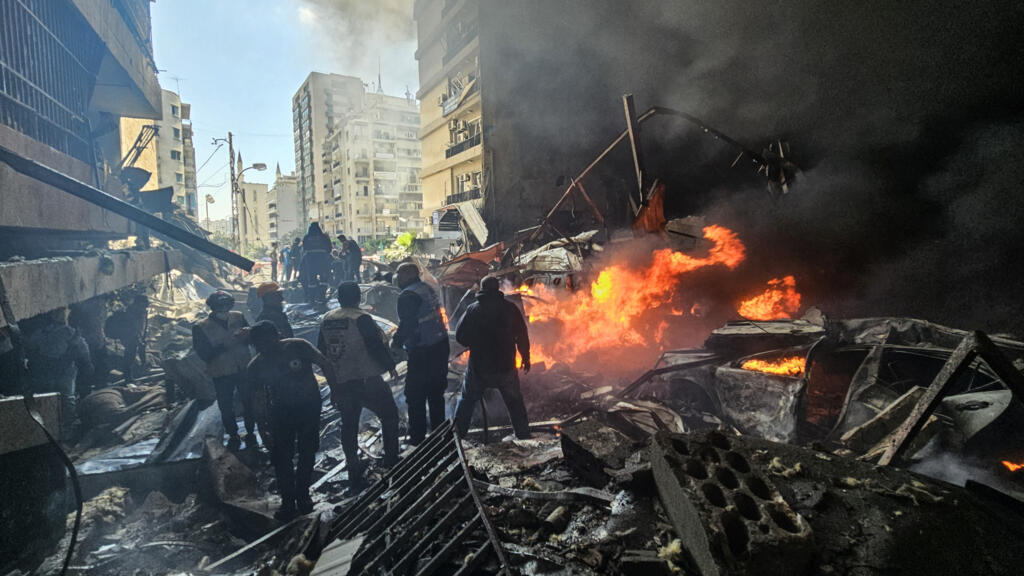
On April 8, the United States (US) and Iran concluded a two-week ceasefire through Pakistani mediation aimed at halting the ongoing war in West Asia. However, the ceasefire did not bring an end to the conflict, as Israel continues to conduct large-scale strikes on Lebanon, and the United Arab Emirates (UAE) has reportedly carried out airstrikes on an Iranian oil refinery on Lavan Island after the ceasefire. Meanwhile, although the ceasefire stipulates the reopening of the Strait of Hormuz in the Persian Gulf—an important maritime chokepoint for global energy trade—it remains almost non-functional owing to the risk of Iranian strikes and naval mines.
Notably, before April 8, Iran consistently stated that it did not seek a ceasefire, while the administration of US President Donald Trump repeatedly threatened Iran to accept its terms without success. So, why have the parties now decided to conclude a ceasefire?
Both sides have claimed victory in the war after the ceasefire, but the reality is far more complex. So far, the US and Israel have failed to achieve any of their stated objectives in this war: they have not succeeded in toppling the Iranian government, fully destroying Iranian military potential—particularly its missile and drone arsenal—recovering 440 kg of enriched uranium from Iran, or even opening the Strait of Hormuz after its closure by Iran. Moreover, Iranian strikes have caused substantial damage to US military facilities, as well as civilian infrastructure, throughout West Asian states, including the UAE, Qatar, Kuwait, Bahrain, Jordan, Saudi Arabia, and Israel. Also, Hizbullah has fiercely resisted the renewed Israeli invasion of Lebanon and inflicted considerable losses on Israeli armour and personnel. In addition, Iranian and Iraqi Shia militia strikes have led to the withdrawal of North Atlantic Treaty Organization (NATO) forces from Iraq. Thus, the US and its allies have so far failed to achieve either tactical or strategic victory over Iran.
On its part, Iran has suffered severe attrition as a result of US and Israeli strikes, including the loss of numerous senior political and military leaders, the near-destruction of its air force and navy, the substantial degradation of its nuclear facilities, considerable depletion of its missile arsenal, and extensive damage to its civilian infrastructure. The high-profile assassinations exposed the deep penetration of Iran by US and Israeli intelligence services, whereas Iranian strikes on Gulf Arab states have seriously damaged Iran’s relations with these states. Moreover, Iranian-backed Iraqi Shia militias have suffered serious losses, while Lebanon is witnessing thousands of casualties, a major humanitarian disaster, and substantial destruction to its civilian infrastructure.
The US had initiated the war on Iran in order to detach Iran from the developing Sino-Russian bloc and owing to persistent lobbying by Israel, which seeks the destruction of Iran to realise its own regional ambitions. Since neither US nor Israeli objectives have been achieved, and neither Washington nor Tel Aviv has run out of resources, it is likely that they would seek to attain these objectives by restarting the war, by fomenting internal conflict inside Iran, or through a combination of both.
Still, Iran and its Axis of Resistance allies have so far demonstrated unexpected strategic resilience and attained substantial political advantages. The killing of Iranian Supreme Leader Ayatollah Ali Khamenei has backfired spectacularly, as instead of accelerating regime change, the event unified the pro-government segment of the Iranian population and hardened the resolve of the Iranian elites. US and Israeli efforts to incite Iran’s minorities, particularly the Kurds, to revolt against the government gained little success, while a widely anticipated anti-government uprising by the Iranian populace did not materialise. Moreover, Iran has maintained control over the Strait of Hormuz, collecting tolls from ships transiting it, and even after employing substantial military capabilities, the US has not succeeded in opening it. Additionally, by fiercely resisting Israeli forces in Lebanon, Hizbullah has demonstrated that reports of its demise were greatly exaggerated.
Targeted Iranian strikes on US military facilities across the region and the resultant evacuation of US personnel from these facilities have demonstrated both the US’s inability to protect its far-flung network of overseas military bases and its Gulf Arab allies. For decades, oil-rich Gulf Arab states had maintained a symbiotic relationship with the US, backing the petrodollar arrangement and hosting US bases in exchange for US protection against external threats. The vulnerability of these facilities has laid bare the fragility of this arrangement. Similarly, persistent Iranian strikes on Israel have exposed the weaknesses of Israeli defence systems, including the much-vaunted Iron Dome, and shattered the myth of its invulnerability among regional states. Meanwhile, Russia has used the opportunity to give the US its own ‘Ukraine’ by providing Iran with substantial intelligence, cyber, and drone support, while the US’s European NATO allies have refrained from joining the war, partly in response to the Trump administration’s previous antagonistic actions towards them.
Furthermore, the Iranian closure of the Strait of Hormuz and strikes on oil and gas facilities in the Arab Gulf states resulted in a spike in oil prices, bringing financial windfalls for oil-rich states such as Iran itself, Saudi Arabia, Oman, and Russia, but causing serious economic dislocation in other states throughout the world. The economic shock has been so severe that the US was forced to relax sanctions on Russian and Iranian oil. Meanwhile, keeping its experience in Vietnam, Iraq, and Afghanistan in mind, the US is unwilling to mount a ground invasion of Iran, and launching such an invasion would be a strategic nightmare. Iran’s large size, mountainous and desert terrain, and potentially hostile population make a ground invasion extremely difficult, while most of Iran’s neighbours would be unwilling to serve as a staging ground for such an invasion.
Thus, instead of strengthening the US and Israel, this war has handed them several strategic setbacks. Moreover, their stocks of high-end and precision military equipment, particularly radars and missiles, have been considerably depleted. On its part, Iran has also absorbed huge losses in men and materiel. Accordingly, both sides needed a respite, and that is why the ceasefire came into effect.
Whether the ceasefire would pave the way to a full-fledged peace treaty is yet unclear. Tehran has claimed that the ceasefire is based on its 10-point peace proposal, which includes conditions such as the cessation of war in Iran, Iraq, Lebanon, and Yemen, acceptance of Iranian control over the Strait of Hormuz, the payment of reparations to Iran, and the removal of all sanctions on the country. If the US concludes a peace treaty containing these conditions, it would be a decisive victory for Iran. On the other hand, the US peace plan avoids calls for regime change in Iran or the dismantling of its missile arsenal, while offering sanctions relief as an incentive. Both peace plans require the denuclearisation of Iran, but Iran has, in any case, never admitted to having a nuclear weapons programme. Thus, even a peace treaty based on the US plan would not entail a defeat for Iran. Hence, in both scenarios, Iran, although severely damaged, remains in a comparatively better strategic position.
Both sides have claimed victory in the war after the ceasefire, but the reality is far more complex. So far, the US and Israel have failed to achieve any of their stated objectives in this war: they have not succeeded in toppling the Iranian government, fully destroying Iranian military potential—particularly its missile and drone arsenal—recovering 440 kg of enriched uranium from Iran, or even opening the Strait of Hormuz after its closure by Iran.
On the other hand, while the war has demonstrated the extent of the military and intelligence capabilities of the US and Israel, it has left them in a precarious strategic position. None of their objectives has been achieved, and their political and diplomatic position has worsened. The US goal of derailing a potential Russia–China–Iran alliance has not been realised, while the Israeli strategy of using US power to crush Iranian capabilities proved ineffective.
Precisely for this reason, there are doubts about the establishment of a lasting peace between the parties. Since the start of the Israeli–Palestinian War on October 7, 2023, Israel has openly sought to establish regional hegemony by smashing the Iranian-led Axis of Resistance and creating a Greater Israel by annexing substantial territories from its neighbours. Accordingly, it has devastated and effectively bifurcated Gaza, severely mauled Hizbullah and destroyed most of Syria’s strategic arsenal in 2024, recognised the breakaway statelet of Somaliland in order to use it as a base against the Yemen-based Ansar Allah, attacked and severely damaged Iran in June 2025, backed anti-government protests inside Iran, and again attacked Iran in concert with the US on February 28, 2026. The ceasefire is unlikely to deter Israel from pursuing these ambitions, and it is unlikely to leave any stone unturned to reignite the war. The continued attacks on Lebanon, despite the ceasefire, apparently aim at provoking the Iranians into retaliating and thus dragging the US back into the conflict.
Meanwhile, regime change in Iran, along with the destruction of its military capabilities, would be profitable for the US, but it is not an immediate necessity for them. Moreover, the US public is not in favour of costly wars abroad, and it would be politically risky for the Trump administration to restart the war. Yet, the actions of the US indicate that it may restart the conflict if negotiations with Iran are unsuccessful. The US is already undertaking measures to refill its stock of high-end weapons, such as Tomahawk cruise missiles and Patriot air defence systems, and reinforcing its presence in West Asia. It has already sent additional fighter jets and attack aircraft to the region, and several strategic assets, including the USS George H. W. Bush carrier strike group, the 11th Marine Expeditionary Unit, and the 82nd Airborne Division, are heading to the region. These measures are intended to pressurise Iran into accepting terms more amenable to the US during the negotiations, but if the negotiations fail, they can be used to conduct renewed attacks on Iran.
Hence, there is a possibility that the US is not conducting negotiations with Iran in entirely good faith. Israel would surely use all its political capital in the US to push Washington to renew the war against Iran.
In brief, the US had initiated the war on Iran in order to detach Iran from the developing Sino-Russian bloc and owing to persistent lobbying by Israel, which seeks the destruction of Iran to realise its own regional ambitions. Since neither US nor Israeli objectives have been achieved, and neither Washington nor Tel Aviv has run out of resources, it is likely that they would seek to attain these objectives by restarting the war, by fomenting internal conflict inside Iran, or through a combination of both.
Upon the conclusion of the Treaty of Versailles in 1919, French Marshal Ferdinand Foch had prophetically commented, “This is not a peace. It is an armistice for twenty years.” The first round of negotiations between the US and Iran in Pakistan has already ended in failure. Let us see how many years—or indeed, days—the armistice between the US–Israeli bloc and Iran holds!
Md. Himel Rahman is currently serving as Lecturer, Department of International Relations, Gopalganj Science and Technology University.
Send your articles for Slow Reads to slowreads@thedailystar.net. Check out our submission guidelines for details.
Why Gaza peace deals keep falling apart
Rohingya genocide: Will the ICJ verdict bring justice?

Should Bangladesh join the Mecca Pact?

Documenting Rohingya history / Rohingya repatriation needs more than diplomacy

Nine years on, Rohingya refugees need more than shelter

Myanmar’s partial Rohingya repatriation plan: Another attempt to mislead Bangladesh?
Is Trump’s Gaza peace plan falling apart?

What Japan’s changing Indo-Pacific strategy means for Bangladesh

Can India and Bangladesh build a more equal economic partnership?