Char contracts: Surviving river erosion without the state
"Bahe, bari kodhai?" ("Brother, where is your home?")
In the chars of Chilmari, this question is not merely a polite greeting. It goes to the heart of a person's existence.
When a char dweller is asked where their home is, they point towards the middle of the river and reply, "In the riverbed." They mean that the homestead, courtyard, and village where they once lived have all been swallowed by the river, leaving behind nothing but an expanse of water. Such is the nature of the chars – a landscape shaped by the ceaseless interplay of silt and water, erosion and accretion, floods and renewal.
The next question inevitably follows – "Elai koi thaken?" ("Where do you live now?") Rather than naming an exact location, they respond: "Elai to mui nodir shonge chukti kori thakong. Jeyde nodi jay, mui-o odhei jai." ("Now I live by making a contract with the river. Wherever the river goes, I go too.")
Within this simple statement lies an entire philosophy of life embraced by char dwellers.
When the river's currents wash away homes and ancestral land, people must migrate wherever they can find refuge. For char dwellers, this "contract with the river" is therefore far more than a metaphor. It is a language of survival, a way of life, a strategy for navigating uncertainty, and a social system for coexisting with an ever-changing landscape.
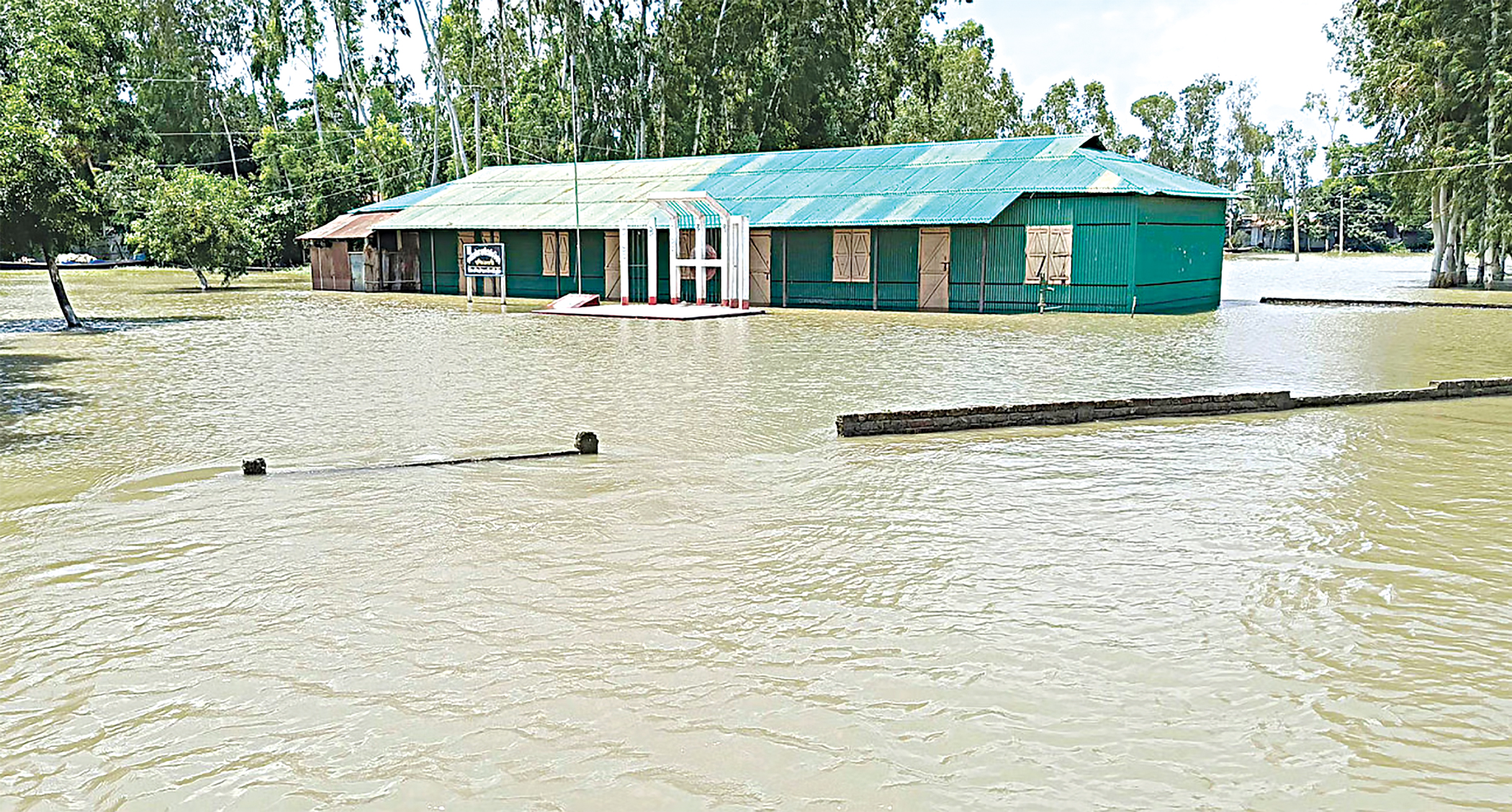
When a char disappears
The erosion of a char marks the beginning of a long period of hardship and uncertainty. At that moment, the overriding question that emerges is – Where can we go now?
It is here that the metaphorical contract with the river acquires its deepest meaning. Seeking shelter with relatives, living as adi (sharecropping tenants), settling on newly emerged chars, or finding space under the patronage of a local landholder – all of these are part of that broader contract with the river. People simply move wherever refuge is available. As char dwellers say, "Wherever the river goes, I go too."
Home, therefore, is never a permanent address, nor is there a predetermined path to rebuilding one's life. Survivors must largely discover their own routes to resettlement. Perhaps this is why the word ‘contract' is essentially a multi-layered concept associated with living in uncertainty for the char dwellers. Within this broader and deeply layered understanding of "contract" exists another, more tangible form – the char contract, an agreement between landowners and families displaced by river erosion.
A contractual relationship
After losing their homes to river erosion, families seeking shelter on someone else's land must enter into either a written or verbal agreement with the landowner. This arrangement is known as a ‘char contract.’
Under this contract, a displaced family is allowed to build a house and, in some cases, cultivate the land as well. In return, they usually pay the landowner an advance. Although this payment is often nominal or considerably below market value, the amount is typically specified in the agreement. The right granted by the contract, however, is never permanent. If the char disappears, so does the contract. In the chars of Chilmari, almost every family lives under a char contract at some point in their lives. Many spend their entire lives under such arrangements.
When the agreement is written, it closely resembles a legal deed. It is usually drafted on government-issued stamp paper and written in highly formal, almost judicial language. It includes the names of witnesses, signatures or thumbprints of both parties, and is sometimes sealed in red or blue ink. Those who cannot write leave their thumb impression. By mimicking the procedures of a court document, the agreement acquires an appearance of legal legitimacy.
Legally, however, the document carries no formal standing. Neither the state nor the courts officially recognise char contracts. Yet for families who have lost everything to river, this piece of paper represents the only visible assurance that they have the right to remain on someone else's land.
If a landowner fails to honour the agreement, displaced families have little practical remedy through the courts. Disputes are usually settled locally, where the landowner's word often carries the greatest weight. Even so, the existence of a char contract at least provides a basis for local arbitration.
The colonial-era Bengal Alluvion and Diluvion Regulations are still in force in Bangladesh. Under these regulations, land submerged by river erosion temporarily belongs to the state, but when it re-emerges as newly formed char land, ownership automatically reverts to the previous owner. Land relations in the chars thus continue to be governed by a legal framework dating back more than two centuries – one that offers virtually no protection to those displaced.
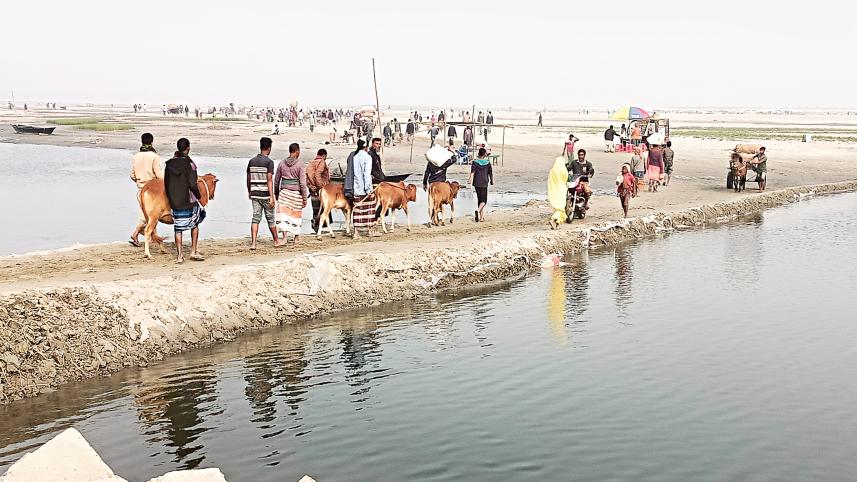
Although the language of the contract suggests security, its duration is defined by a single phrase: "for as long as the char exists." Its expiry is determined not by the calendar but by the river's own sense of time. Once the river consumes the land, the owner loses possession, and the family living there simultaneously loses its right to remain.
Yet the inequality becomes most apparent years later. If the same land eventually re-emerges, the original owner can legally reclaim it. The family that may have lived there for years, guarding it, cultivating it, and making it productive, cannot claim any corresponding right.
A char contract provides temporary shelter. The broader contract with the river, however, represents something far larger: an entire way of life in which, after every collapse, people search for new shelter, negotiate new agreements, and begin again.
Labour and contract in one guise
The char contract allows landowners to maintain their claims over their land. Vacant land is always at risk of being occupied by encroachers. Many char landowners do not live on the chars themselves. They reside upstream, in towns or suburban areas, and oversee their land through local representatives. They understand that keeping people on the land is the cheapest way to secure it. As a result, they allow families displaced by river erosion to settle there. In return, those families live on the land, cultivate it, safeguard its possession, and effectively represent the owner's presence. In many cases, they must give a share of the harvest, typically one-third, to the landowner, a practice rooted in the historical legacy of the Tebhaga movement. In the char regions, this form of residence based on labour and sharecropping is known as ‘adi kora.’ Although related to the char contract, the two are not identical.
An unwritten social contract
Bangladesh is often described as a development paradox. Despite enduring extreme poverty, frequent natural disasters, and severe climate risks, the country has achieved remarkable socio-economic progress, making it a widely recognised global example. That is the essence of the paradox. Following the famine of 1974, a new kind of social contract gradually emerged. The state, donor agencies, and development organisations committed themselves to providing at least a minimum level of social protection. Yet on the chars of Chilmari, that contract remains barely visible. Perhaps this is where Bangladesh's development paradox is most evident – those who are most vulnerable continue to remain largely outside this social protection promised by the state.
For the people of the chars, a "contract" is not merely a legal document, nor simply the state's promise of minimum social security. More often than not, a contract in the charlands means assuming responsibility for one's own fate.
Whatever form it takes, assistance must ultimately expand people's freedom to determine their own futures. The accumulated knowledge that char dwellers have developed through generations of living alongside the river, along with this broader contract they have forged with it, may well provide the foundation for how the state designs its compensation framework.
Even so, few realities are more devastating than what a family endures after losing everything to river erosion. It is from this reality that a recent grassroots campaign has emerged in Kurigram, demanding justice for people affected by riverbank erosion. Led by the Char Development and Implementation Council, the movement is submitting memoranda to the Prime Minister through the Deputy Commissioner, calling for legislation to ensure prompt compensation for families as soon as river erosion occurs, as well as the establishment of a separate Ministry of Char Affairs.
The significance of these demands lies in the fact that, until now, the burden of the contract with the river has fallen almost entirely on the shoulders of char dwellers. After every episode of erosion, they must search for new shelter, negotiate a new contract, and begin their lives all over again. This movement does not deny that reality. Rather, it asks a simple question: why should char dwellers alone bear the full cost of river erosion?
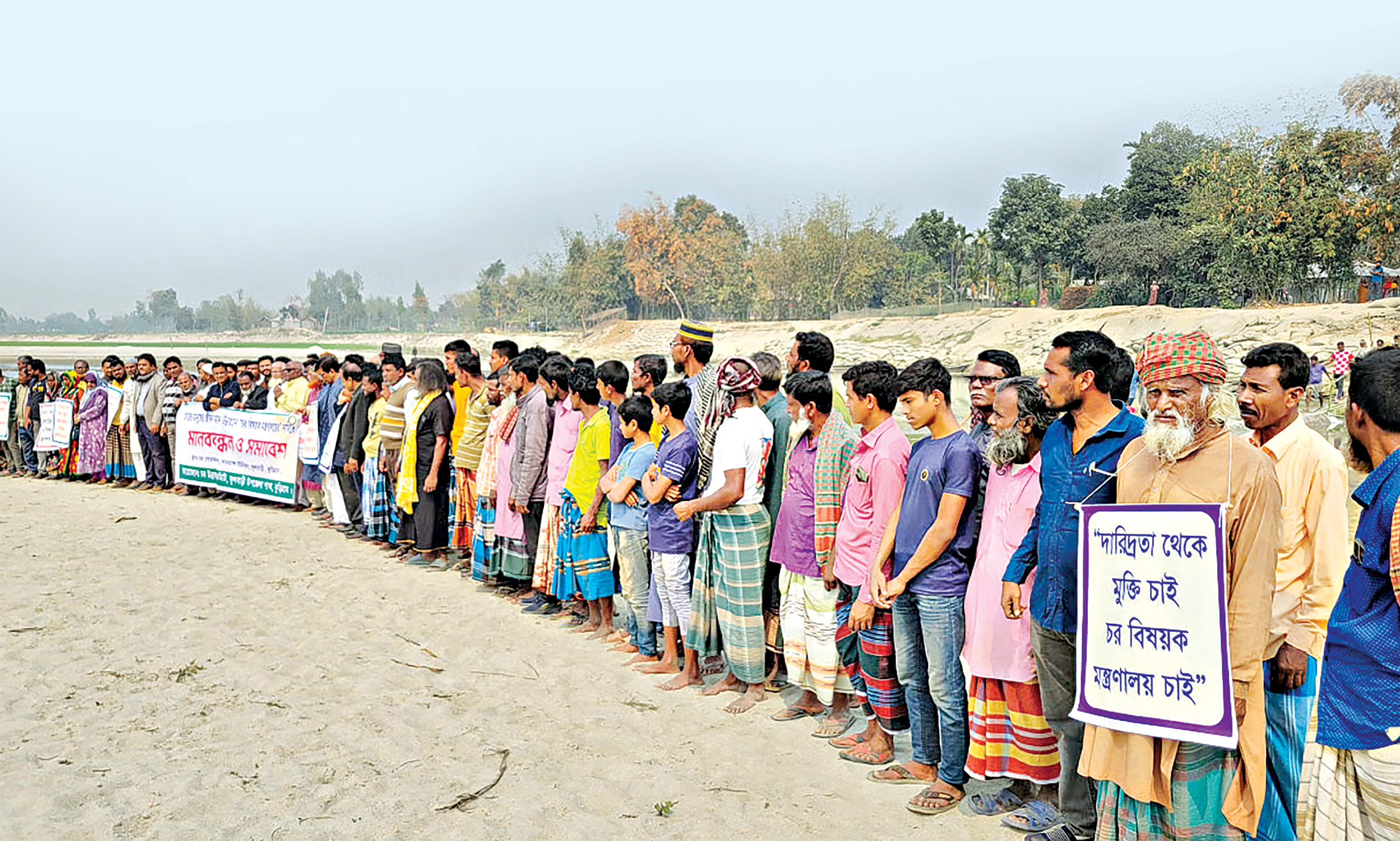
The state must determine how river erosion will be identified and officially documented. It must establish whether there are effective mechanisms to record where erosion has occurred, how many families have been affected, and how much land and property has been lost. It is crucial to build an institutional framework capable of maintaining accurate records of those affected by river erosion while ensuring timely compensation and support for their prompt rehabilitation.
Yet an even more important question than the institutional framework concerns the choices that compensation enables people to make. Providing compensation should not mean that the state will decide people's futures for them. Once families receive compensation after river erosion, they should be free to determine how best to rebuild their lives. Whether they choose to use the money to enter into a new char contract, purchase land, settle near relatives, or pursue another path to recovery should be their decision.
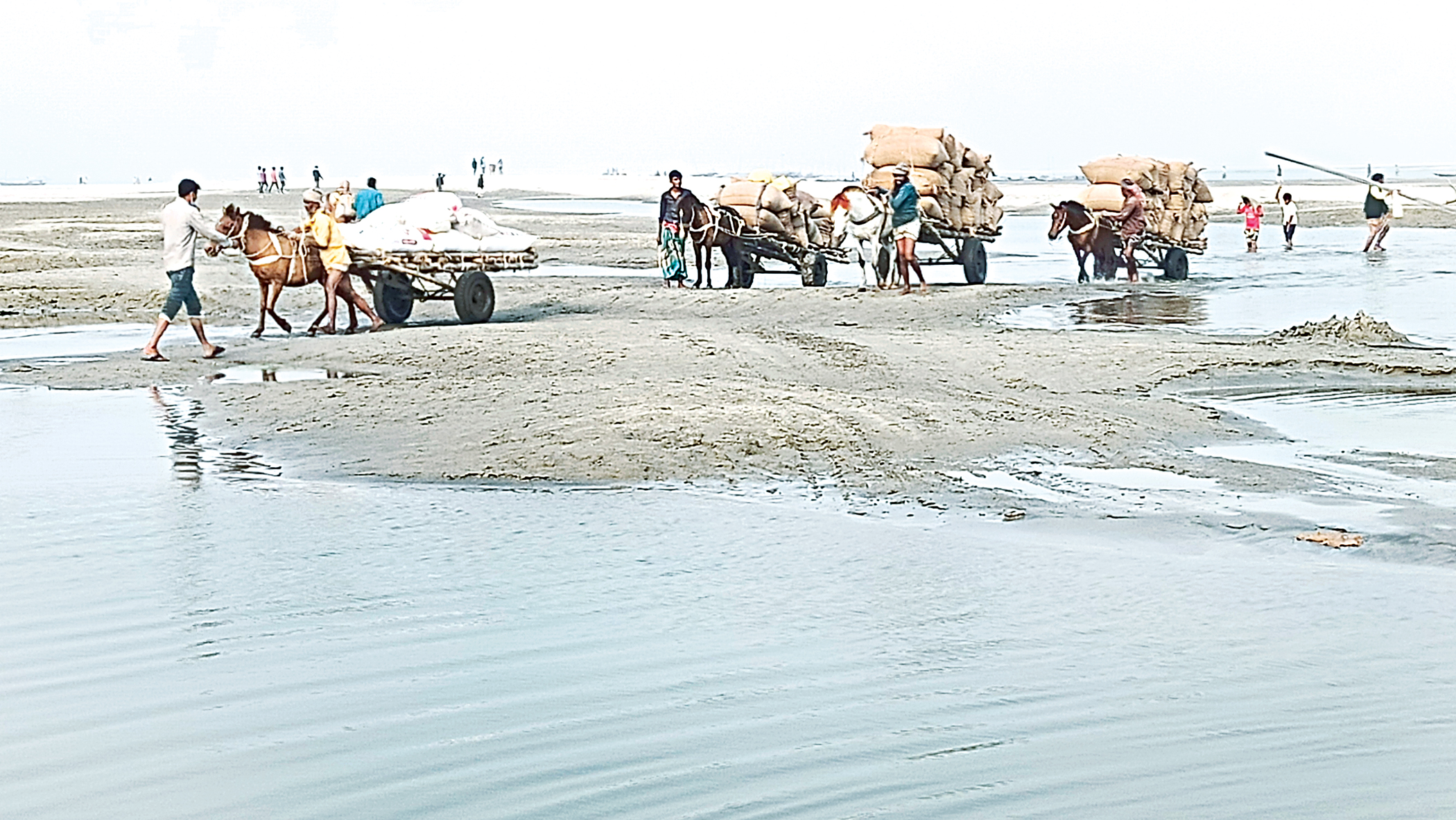
It is striking that, despite hearing stories of river erosion for generations, uncountable stories of villages, homesteads, and lives swallowed by the river, why do the state continue to hesitate over the simple question of providing financial support to those who have lost everything so they can rebuild? Whatever form it takes, assistance must ultimately expand people's freedom to determine their own futures. The accumulated knowledge that char dwellers have developed through generations of living alongside the river, along with this broader contract they have forged with it, may well provide the foundation for how the state designs its compensation framework.
As climate change intensifies, the scale and unpredictability of river erosion are likely to increase even further. Pushing char dwellers into further vulnerability can no longer be acceptable. The state must consider how it can stand beside communities living with this chronic insecurity. The people of the chars have already entered into a contract with the river. The question now is whether the state will merely bear witness to that contract, or finally sign it.
Dr Saad Quasem is a Lecturer in Anthropology and Climate Change at SOAS, University of London. The article was translated by Miftahul Jannat.
Send your articles for Slow Reads to slowreads@thedailystar.net. Check out our submission guidelines for details.

Why have Nihar Koli and Samrat been sent back to their alleged abusers?

The reality of vocational training for Bangladeshi women

Can we save young Bangladeshis from deadly Mediterranean crossings?

Breastfeeding in Bangladesh: What is holding mothers back?

Fidel Castro at 100 / Why Fidel Castro’s legacy still haunts Washington
Thirst in the Sundarbans: The water crisis facing Munda women

Which female-dominated jobs are actually the most exposed to AI?

What remains of Bangladesh's fading ethnic traditions

Good intentions are not enough: Why Bangladesh should rethink orphanages