Dhaka's Tesla: Technological upgrade or poverty trap?

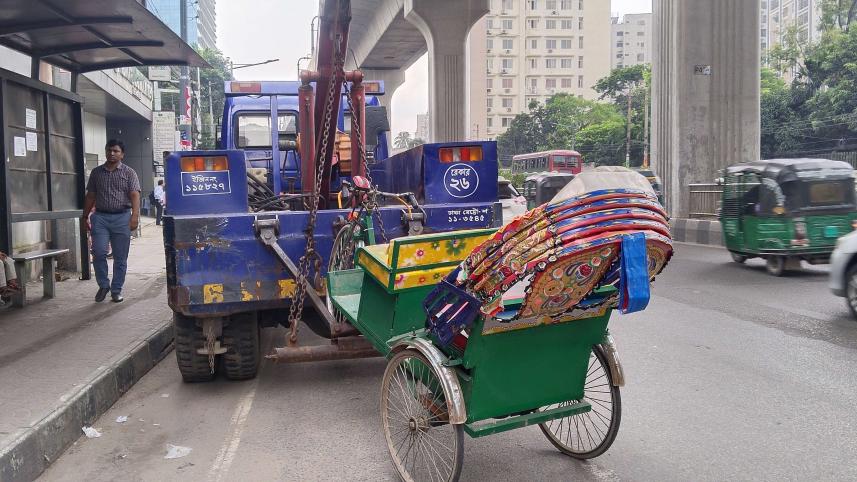
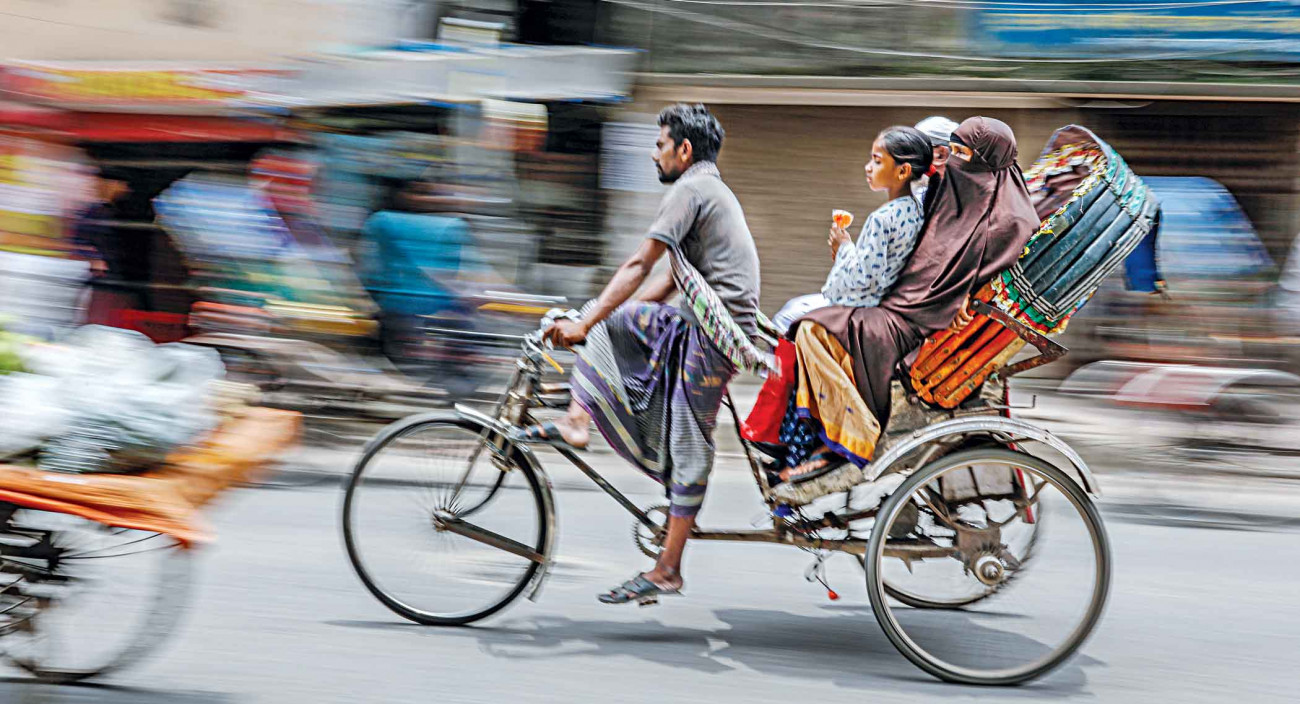
Around noon, a police wrecker came into the Mirpur 10 roundabout with a low mechanical growl. Rustam Ali stood at the roadside and watched his battery rickshaw, one of the shiny electric vehicles people jokingly call a Tesla, being chained and hauled away. An extension cord still trailed from the vehicle to a tea stall, whining uselessly in the heat.
Rustam gave a thin laugh.
"They call these things Tesla," he said. "I refer to it as the loan that ate my future."
That is closer to the truth than the joke. In Dhaka, battery rickshaws are often described as a nuisance, or at most as a story about poor men trapped in debt. Both are true. Neither is enough. What has developed in the city's back streets is more systematic: a last-mile extraction economy. Output is increased by electrification, with rent, debt, charging expenses, maintenance, and legal uncertainty taking most of it before the driver can claim it.
The vehicle moves faster, carries more, and might look like a technological upgrade. But the extra productivity is not retained in the hands of the man at the handlebars. It is advanced in anticipation by the garage owner through daily rent, by the lender through installment payments, by the repair-and-charge economy through maintenance, and by a state that is not minded to determine whether the sector is unlawful, condoned, or necessary.
That is why the trap persists. This is not because the system is ineffective, but because it is effective for others.
The men left out of the growth story
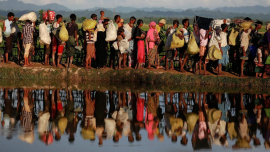
Rustam does not recall exactly when flooding deprived him of his land in Gaibandha. It is the repetition he remembers. The water stayed too long. Then it came again. Winter crops drowned. His household yard became a shallow pool. His family used the remaining part of their land to pay off their debts and buy themselves one more season. After this money was exhausted, Rustam arrived in Dhaka carrying about Tk 2,000 in the corner of his lungi.
He did not come to become a rickshaw driver. He had an old-fashioned hope that the city would absorb the distress of the countryside and convert it into wages.
This was not an unreasonable expectation. The development story had promised it for decades. The agricultural crisis would push labour into urban areas. Industry would absorb it. Instability would be turned into work in the city. Bangladesh did industrialise, but not to an extent that embraced everyone. The ready-made garment industry transformed the economy, but within a very narrow labour regime. Millions of rural women were taken into factories. The factory gate was not designed to accommodate many rural men without certificates, contacts, or an urban base.
It was no coincidence that they were not included. The formal labour-absorbing sector of the country was built around the recruitment of women into low-paid and tightly regulated factory work. Male migrants, in turn, were pushed into unskilled urban jobs where entry was easier but security was fragile: construction, transport, loading, hawking. For most men arriving from flooded fields or shrinking plots, it was not simply a lack of work. It was the incompatibility between the kind of labour the formal sector demanded and the immediate necessity of cash.
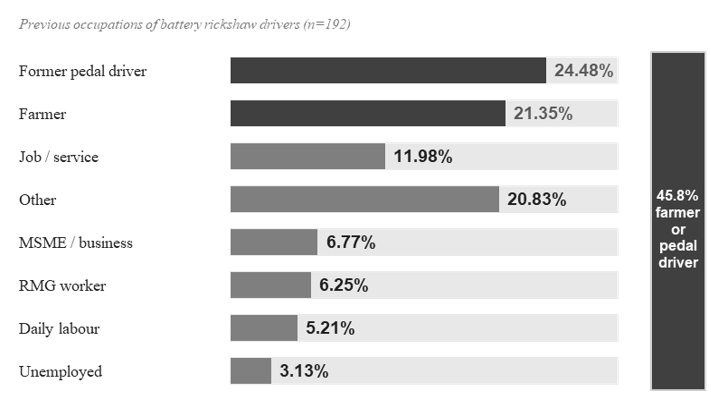
That is one of the reasons why many men are here. According to the Innovision survey used in this reporting, 21.35 per cent of battery rickshaw drivers were previously farmers, more than any other occupational group. The trend is also apparent among older day labourers and the previously unemployed: most of these men did not get drawn into a formal future. They were channelled towards a more improvised one.
For a new migrant with almost no savings, a battery rickshaw offers what the formal labour market often does not: immediacy. No certificate. No interview. No appointment letter. Instead of a hiring queue, a man can go through a garage. He is able to start earning within days, in some cases even earlier. When survival in a city is measured day by day, same-day cash is more important than future stability.
The displaced farmer comes to Dhaka in search of industry and finds a garage instead.
The upgrade that begins with debt
A pedal rickshaw is poor men’s transport in one sense; a battery rickshaw is poor men’s transport in another. The former is punishing to the body. The latter is costly to the wallet.
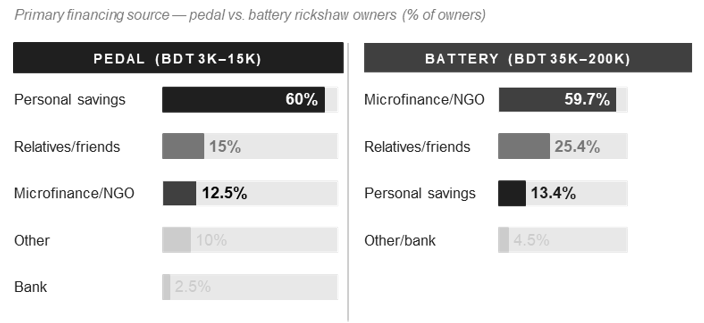
The difference is more important than the technology itself. A pedal rickshaw in Dhaka can cost between Tk 3,000 and Tk 15,000. It is still expensive, yet not entirely beyond the reach of savings. Around 60 per cent of pedal rickshaw owners eventually bought their vehicles through savings. Ownership, even though precarious, was at least conceivable. A battery rickshaw belongs to another economic universe. It may range between Tk 35,000 and almost Tk 200,000, depending on the motor and battery. For a new migrant who sleeps in a shared room and remits money back home, that is not merely a large amount. It is an impossible one.
That is the essential point of comparison. The difference between pedal and battery rickshaws is not simply speed. It is ownership. The old pedal rickshaw exhausted the driver; the battery rickshaw indebts him.
Borrowing is therefore not incidental to the battery rickshaw economy. It is built into it. In the Innovision survey, 59.7 per cent of battery rickshaw owners said they had financed their vehicles through NGO or microfinance loans. The mean loan value was approximately Tk 80,000, and interest rates ranged between 20–38 per cent. Rustam himself took a Tk 65,000 loan for his vehicle.
This is typically referred to as inclusion. But inclusion into what?
Not into secure ownership with the protection of law. Not into a regulated transport market. Not into a stable small business. It is entry into a more costly form of insecurity, financed in this case by microfinance. The battery rickshaw may generate more trips than a pedal vehicle, but it also requires charging, more expensive maintenance, and regular instalments that do not pause when the vehicle is seized, when rain empties the road, or when a child falls ill.
Wider studies on urban microfinance help explain why this is the case. A 200-household Hossain–Wadood study of Dhaka slum households found small gains in coping, some savings, some improvement in household expenditure, but no significant change in income, consumption, asset accumulation, or health expenditure. Microfinance may make survival slightly easier without altering the household’s position in the broader economic hierarchy.
Faruk, a 34-year-old driver in Rampura, explained the logic in a simpler way. One loan was for the rickshaw, he said. The latter was to pay back the former when he had a bad week. Innovision discovered that close to 15 per cent of borrowers already had several microfinance loans outstanding. New debt was coming not to grow income, but to ensure that previous debt did not appear to collapse.
How the squeeze works
The business model and the actors become visible. The driver supplies labour and absorbs volatility. Daily rent is extracted by the owner of the garage. Instalments are enforced by the lender. Mechanics and charging points make money from maintenance. There is the possibility for police and local actors to monetise illegality by seizing, fining, or extracting informal payments. Passengers are provided with convenience. The city gets a transport solution without necessarily constructing one.
Who benefits most? Not the man doing the driving.
That is brought into focus by the daily arithmetic. The incomes of drivers, according to the Innovision study, are Tk 832 a day. Garage rent alone removes Tk 414, or 49.8 per cent of gross income, leaving Tk 418 before loan instalments, charging, food, house rent, repairs, and informal payments. That is, half of the day’s earnings are gone before a driver can afford to survive.
That is the quantifiable core of the system. The squeeze is not figurative. It is arithmetic.
On paper, the battery rickshaw is more productive than the pedal rickshaw. In practice, that increased productivity is pre-appropriated. The machine works faster, and the gains are skimmed off upstream before the driver can convert them into security. What is left is income, occasionally, but hardly any capacity to save.
Better than unemployment, weaker than mobility
Any serious account must also test its own thesis. Is the battery rickshaw simply worse than everything that came before? Not quite.
For some drivers, it is clearly better than a pedal rickshaw. It is less harsh on the body, particularly for older men or those with injuries. It allows more trips in a day. Some drivers do earn more. There are loans that are being repaid successfully. It is also preferable to unemployment for a migrant who has no other secure option.
This is precisely why the industry continues to expand.
These facts do not undermine the argument. They explain it. The battery rickshaw persists because it is rational at the level of immediate survival, even while remaining weak as a path to durable security. It is superior to pedal driving in physical terms, superior to unemployment in monetary terms, and superior to waiting for a formal job that may never come. But these advantages ease the process of drawing men into a system in which the gains are skimmed off and the liabilities fall on them.
Whether drivers make money is not the question. Whether stability can be translated into earnings is the question. Too often, it cannot.
Speed, risk and tolerated illegality
Passengers prefer battery rickshaws for a reason. They are quicker than pedal rickshaws and better suited to short urban trips that buses handle poorly. The formal transport system in Dhaka does not function well, particularly in the last mile: the stretch between the main road and the house, the school, the market, or the office. Battery rickshaws close that gap cheaply.
But speed has its price. Innovision found that 30 per cent of passengers in battery rickshaws had been involved in an accident, compared with 18 per cent in pedal rickshaws. The injuries were also more severe: 44.54 per cent of battery-rickshaw accidents resulted in serious or very serious injury, against 29.58 per cent for pedal vehicles. These are heavier machines that travel faster on roads that were not designed to accommodate this coexistence.
For the driver, a week can be wiped out by a minor crash. Repair costs often exceed Tk 2,000. The loan does not stop, however, because the axle has bent. The garage owner still expects payment. The day’s rent is still due. The passenger goes away angry and hurt; the driver goes away without money that has yet to be earned.
Then there is the law. Most battery rickshaws remain unregistered. Innovision found that 97.4 per cent of them do not operate under formal registration. Yet they are everywhere. Vehicles are seized. Drivers are fined. Crackdowns are announced. Then the vehicles return. The vagueness is so routine that it can hardly be described as failure. It is governance by suspension.
This is not an administrative ambiguity. It is political. Complete prohibition would provoke anger in the city and create inconvenience in a transport system that already depends on these vehicles. Full recognition would generate obligations: licensing, route assignment, safety regulation, insurance, labour claims, charging facilities, and enforcement criteria. Non-decision is cheaper.
It also serves interests. The city receives inexpensive last-mile transport without having to build it. Passengers get convenience. Garage owners and lenders operate in a high-demand sphere where responsibility is diffused. Selective enforcement maintains a grey area in which seizure, fines, and tolerated illegality can all be applied when needed. It is not that the state cannot make a decision. It is that too many actors benefit from the decision being deferred.
This is why the sector persists. Not because its dysfunction is hidden, but because it is distributed.
The room he wants
At the end of the afternoon, Rustam is back at the tea stall by Mirpur 10. His latest Tesla stands beside him, quietly charging through another borrowed socket. The city moves around him as it does every day: buses pushing through traffic jams, motorbikes squeezing through gaps, passengers arguing over a five-minute ride, tea glasses striking metal trays.
I ask him what he wants, not what he imagines, not what he thinks might be possible, but what he wants.
He does not name a business, a second vehicle, or a leap into the middle class. He says he wants a room of his own. Not a rented room. His own. A home where his children would not be forced to move each time a landlord raises the rent.
It is a simple desire, and that is why it is shattering. The system is not only restricting movement; it is narrowing ambition to the wish for a secure room.
Rustam unscrews the cord, rolls it in his hand, and gets back into the driver’s seat. Then he eases into Mirpur traffic, another electric rickshaw threading between buses and motorbikes, carrying strangers across short distances while remaining far from the life he wants.
The machine moves. The man stays in place.
Khairul Hassan Jahin is a journalist at The Daily Star. He can be reached at khairul.jahin@thedailystar.net
Send your articles for Slow Reads to slowreads@thedailystar.net. Check out our submission guidelines for details.

Enforced disappearance in Bangladesh / Who investigates the state?

Gibbons, kingfishers and the changing world of Adampur Reserved Forest

More than refugees: How Rohingya youth are reclaiming their story
Behind every cup / The mental toll on women tea workers
From Shyamnagar to Kurigram: Women work, but where is the income?
Waiting for April: The other side of migration in the Sundarbans
Where have Bangladesh’s hilsa gone?
Lead poisoning in Bangladesh: A crisis ignored for too long
Who recycles Bangladesh’s garment waste?