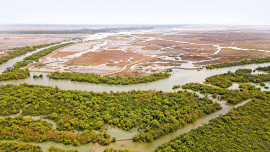
Forgotten on the coast: The Jaldas caught between two disasters
A fishing village on the seashore. The village is repeatedly submerged by tidal waters. It rises again, and work resumes. But the people remain in crisis year after year. Disasters, declining fish stocks in the sea, and social inequality are intensifying the economic crisis of the fishermen. Families are carrying the burden of debt.
‘The sea is taking our village back. We repeatedly face loss and damage. We came here for safe shelter to escape disasters. But the struggle for life here is more difficult. We are losing the fight against all adversities. We can no longer bear the burden of debt.’ — These are the words of Josna Rani Jaldas, a resident of the Jaldas fishing village on the seashore near Chittagong city.
During the conversation, Josna was sitting next to Bishwambhar Jaldas. Bishwambhar added, ‘We could not live in our original home, Sandwip, due to cyclones, tidal waves and river erosion. We repeatedly face crises. We took refuge on the Patenga embankment in Chittagong more than 30 years ago for safe shelter and livelihood. But the crisis has not left us here; it has followed us here too. Where will we go now?’
More than three hundred Jaldas families live outside the embankment in the Akmal Ali Road area of Ward No. 39 of the Chittagong City Corporation. Their livelihood depends on fishing in the sea. Many took refuge here over 30 years ago in search of shelter and work. Since then, their houses have been burned down in fires, exposed to sea erosion, or relocated due to infrastructure development, including the construction of a marine drive. Most recently, these families were displaced by Cyclone Sitrang in 2022.
The sea was once about two kilometres away from the homes of Bishwambhar and Josna Jaldas. A forest stood between the village and the shoreline. Over time, natural disasters have pushed the sea closer. The forest has disappeared. The village is now exposed. A fragile embankment stands along the shore, but it offers little protection. Even during normal tides, water enters homes. Like this village, many Jaldas settlements along the coast of Bangladesh face increasing risk.
From Kattali to Koralia
Jaldas families live across the eastern coastal districts of Bangladesh, including Chittagong, Cox’s Bazar, Noakhali, Feni and Lakshmipur. According to the Uttar Chattala Coastal Fishermen Jaldas Cooperative Welfare Federation, around 600,000 people from this community live in about 100 villages.
The federation’s president, Mr Liton Jaldas, said, ‘The people of this community survive by constantly fighting nature. No Jaldas village is free from hardship. New crises are emerging due to climate change.’
This reporter visited at least ten Jaldas villages across Chittagong, Sandwip, Sitakunda, Hatia, Feni and Lakshmipur. The findings reveal a pattern of displacement, environmental degradation and economic hardship.
In Salimpur fishing village in Sitakunda, development activities have created obstacles to movement towards the fishing pier. Most families here face a housing crisis and live in unhealthy conditions. In nearby Shitalpur, the expansion of factories has encroached on the village, threatening lives and livelihoods. Many residents came from Sandwip after losing their homes to river erosion. Here, they face new challenges. Gas lines are being laid, walls are being constructed, and settlements are being disrupted.
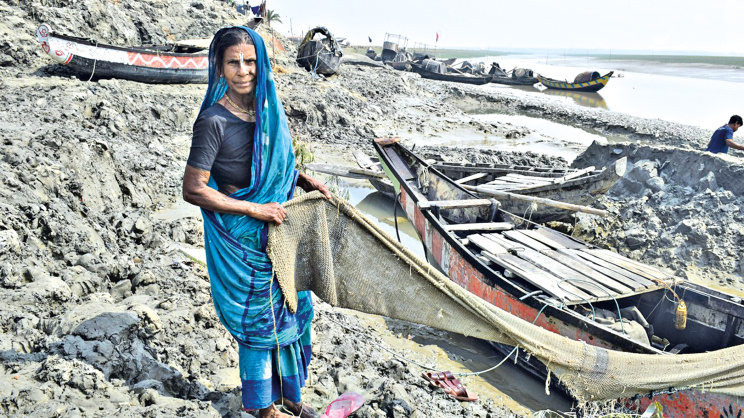
Kumira, another large Jaldas village in Sitakunda, faces similar risks. Residents have lived there for generations, but coastal erosion has forced parts of the village to retreat by more than a kilometre. Industrial activities, including shipbreaking, have increased pollution in the sea and rivers. As a result, fish stocks have declined sharply.
Further south, in Sonagazi Upazila of Feni district, two Jaldas villages lie along the Feni River. Once rich in fish, the river now yields almost nothing. In Koralia village in Hatia Upazila of Noakhali district, there were once around 100 Jaldas families. Today, most have left due to repeated crises.
Community facing adversity
The Jaldas community is a small, marginalised group living in one of the most climate-vulnerable regions of Bangladesh. Traditionally dependent on fishing, they have sustained themselves from the sea and rivers for generations. Today, that way of life is under threat.
Cyclones, tidal surges and river erosion displace families year after year. Many are forced to relocate repeatedly within the country. Climate change has intensified these challenges, placing the community under extreme pressure.
Economic hardship is deepening. Declining fish stocks, environmental degradation and industrial activities have reduced income opportunities. Many families are being forced to abandon fishing altogether. Some have migrated to neighbouring India in search of work.
As a Dalit community, the Jaldas also face entrenched social discrimination. They are often excluded from government support and development programmes. The combined burden of poverty, marginalisation and climate vulnerability has left them in a state of chronic insecurity.
Social inequality further limits their ability to respond to these challenges. Low literacy rates and widespread poverty restrict access to information, opportunities and public services. As a result, they remain on the margins of mainstream society. For generations, they have been labelled as backward, reinforcing a cycle of neglect. This persistent exclusion has deprived them of basic civil rights.
Gaps in disaster preparedness
A study titled Inequitable Information Flows and Disaster Resilience Among Traditional Marine Fishers (Jaldas) in Bangladesh highlights another dimension of vulnerability. It found that people in remote fishing villages receive cyclone warnings much later than those in urban areas.
In North Salimpur, fishermen can access early warnings through electricity, television and mobile internet. In contrast, fishermen on South Dhurung Island in Kutubdia depend on traditional methods, including announcements by Cyclone Preparedness Programme volunteers. This delay increases their risk during disasters.
The study calls for bridging the digital and geographical divide in disaster communication to ensure inclusive risk reduction and better protection for marginalised communities.
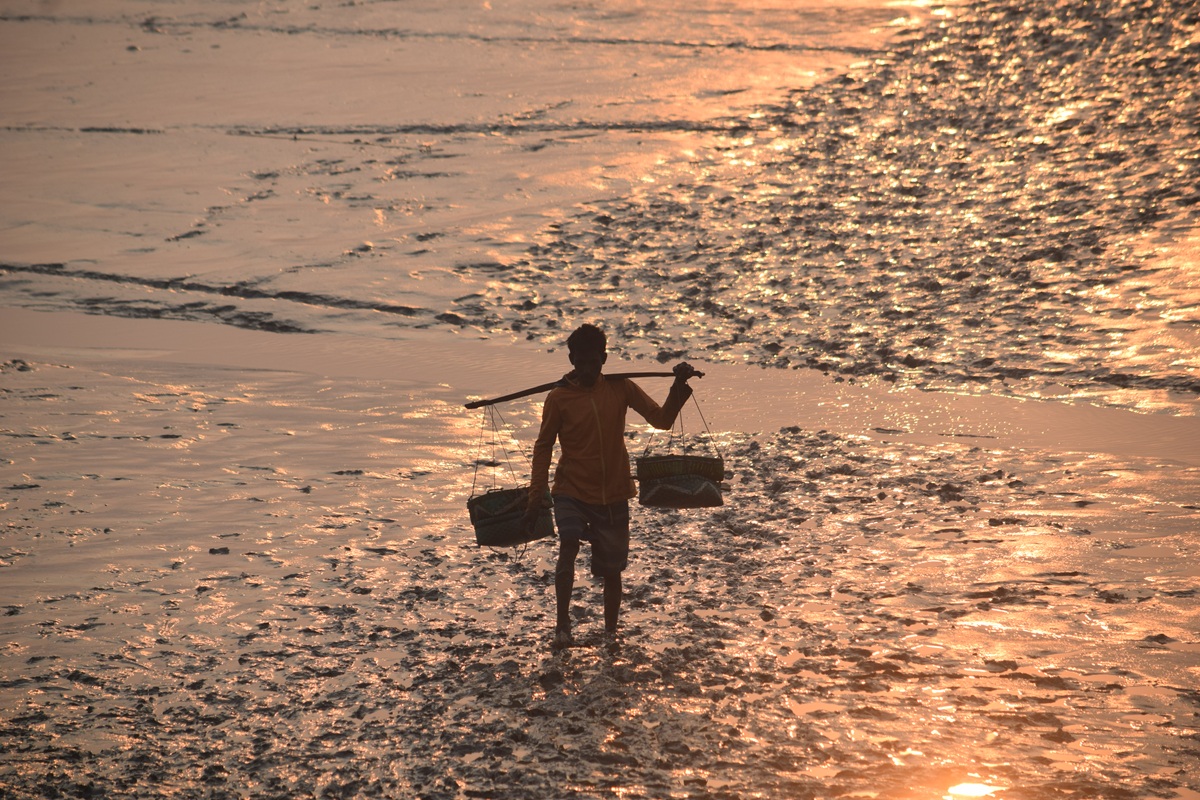
‘We demand justice’
Mr Harishankar Jaladas, a novelist from the community, emphasised the role of poverty in holding the community back.
‘The main reason for the backwardness of the Jaladas community is poverty. This is why education is not progressing. They need to be encouraged and given incentives. The importance of educating children needs to be explained. Then they will be able to progress,’ he said.
Dr Mohammed Mamun Rashid, a researcher on Jaldas community issues, pointed to structural challenges.
‘The Jaldas community has been living in chronic, multidimensional poverty from generation to generation. Now they are among the first victims of climate change. Moreover, commercial fishing has an adverse impact on their lives and livelihoods. Therefore, donors, humanitarian organisations and the Government of Bangladesh should treat them with dignity and take special initiatives through comprehensive planning and proper implementation,’ he said.
The demand from the community is clear and consistent.
‘Inform the head of government about our plight. We want to live normal lives after overcoming the crisis. Do us justice. Rehabilitate us.’ — This call is echoed by many, including Bishwambhar Jaldas, Josna Jaldas and Hari Jaldas.
For a community that has spent decades moving from one fragile shelter to another, the question remains unresolved: where will they go next?
Rafiqul Islam Montu is an award-winning independent journalist focusing on environmental issues, climate change, and coastal communities.
Send your articles for Slow Reads to slowreads@thedailystar.net. Check out our submission guidelines for details.
Bangladesh’s climate-displaced / From lost homes to life in Dhaka’s slums
Buried by development: The human cost of river dredging in Dumuria
Char contracts: Surviving river erosion without the state
When extreme heat becomes a death trap for Bangladesh’s workers
The slow disappearance of Kuakata’s Rakhines
The cost of conservation in the Sundarbans
A 300-year-old shrine and the legend of Oggean Thakur
My father retired. Why can't my mother?
Why extreme heat hits girls hardest in Dhaka’s informal settlements