Ten languages lost, countless stories gone
Khidirpur village in Godagari, Rajshahi, bakes under the midday sun as dry, dusty winds blow through. But something even more parched than the land is the language once spoken here. Bhumij, an ancient language from the Austro-Asiatic Kol-Munda family, now survives in only four families, with just a handful of words left. Bhumij is not the only language that has disappeared. Studies show that at least ten languages—Birhor, Kherwar, Rajwar, Turi, Hodi, Ho, Bhil, Banai and Dalu—have already vanished from Bangladesh.
On the outskirts of the village, we spoke with Ranjit Bhumij, now in his sixties. Though time has left its marks on him, his memories of his mother tongue still remain. With a faint smile, he managed to exchange a few words in his native language. However, speaking was becoming increasingly difficult, as his words mixed with Bangla and Sadri, causing his mother tongue to slowly fade away.
Bhumij is an old language from the Austro-Asiatic Kol-Munda family, with deep roots in the subcontinent’s history. Linguist George Abraham Grierson, in his famous survey, described how this language spread and noted its unique features in northern Bengal. Once, Bhumij was closely tied to the land, forests and daily life. Now, it survives only in the memories of four families in Khidirpur. Ranjit Bhumij recalls that in the 1980s, several Bhumij families still lived here. But social and economic pressures from larger communities forced many to leave. Those who stayed gradually lost their language.
Khidirpur’s story is just one part of a bigger picture. The Barind region, along with greater Mymensingh, was once home to many languages. Birhor, Kherwar, Bhumij, Rajwar, Turi, Hodi, Ho, Banai, Bhil and Dalu each had their own traditions shaped by their environment. The Birhor lived in forests, Rajwar communities settled in small, remote areas, and Kherwar groups lived on the plains. Each contributed to the region’s rich cultural and linguistic landscape. But over time, migration, policy changes and the rise of dominant languages caused these languages to fade.
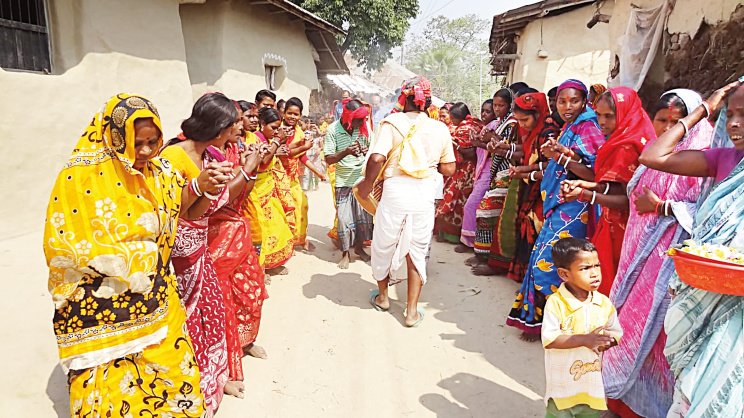
Sadri was once the common language in the region during colonial times, but later Bangla took its place through schools and government policies. As a result, people first replaced their mother tongues with Sadri, and then Sadri itself faded as Bangla became dominant. In just a few generations, whole languages disappeared. While the names of their speakers remain, the languages are forgotten. Many of these languages were never written down or recorded. They faded quietly, leaving no official trace. Once people stopped speaking them, they became part of history.
Over the years, several initiatives have attempted to address this crisis. The International Mother Language Institute Act of 2010 was established to safeguard endangered languages and promote linguistic diversity. In 2014, a comprehensive language survey was conducted, raising hopes for concrete action. However, the survey’s findings remain only partially published, leaving policymakers, advocates and communities without reliable data on which languages or groups are endangered or extinct. This lack of transparency has further complicated efforts to protect linguistic heritage. Moreover, many researchers and language activists report inconsistencies with observations from the field, deepening the uncertainty around the true state of language diversity in Bangladesh.
A collaborative initiative by Friends of Endangered Ethnic Languages (FEEL) and the Language Resource Hub found that languages such as Bhumij, Birhor, Kherwar, Hodi and Dalu have no written records. There are no dictionaries, audio or video recordings, or archives for them. The few words left in languages like Hodi and Bhumij exist only in the memories of their last speakers. As these languages disappeared from families and communities, no one tried to save them. Without plans to pass them on, they vanished completely. Now, efforts to document them are mostly about piecing together lost history, not bringing the languages back. In the end, a language lives on only if people keep speaking it.
When a language disappears, it is not just words that are lost. The wisdom, traditions and community ties connected to it also vanish. Every language holds stories, healing methods, ways of seeing the world and shared beliefs. Language shapes how we think. When it fades, it changes not only our speech but also how we understand the world.
When Bhumij disappears, Barind loses an important part of its cultural identity. The end of Birhor erases memories of a forest-dwelling, nomadic life. Losing Kherwar breaks a linguistic tradition in northern Bengal, and the silence of Rajwar dims a unique social identity from the border plains. The loss of Turi silences a local labour community, and Banai’s extinction removes a key part of northern Bengal’s culture. The vanishing of Bhil threatens the roots of one of the oldest communities in the region. The loss of Ho silences another ethnic group, and Dalu’s disappearance cuts historical ties near the Garo Hills. Hodi survives in only thirty-three words, a fragile remnant of a once lively culture.
It is alarming that these ten languages have vanished before our very eyes. The 2019 government gazette lists Bhumij, Birhor, Kherwar, Rajwar, Turi, Hodi, Ho, Bhil, Banai and Dalu as small ethnic groups. Yet, their languages remain unrecognised and undocumented, fading away in silence. These languages have vanished not only from daily life but also from academic research, policy discussions and official records.
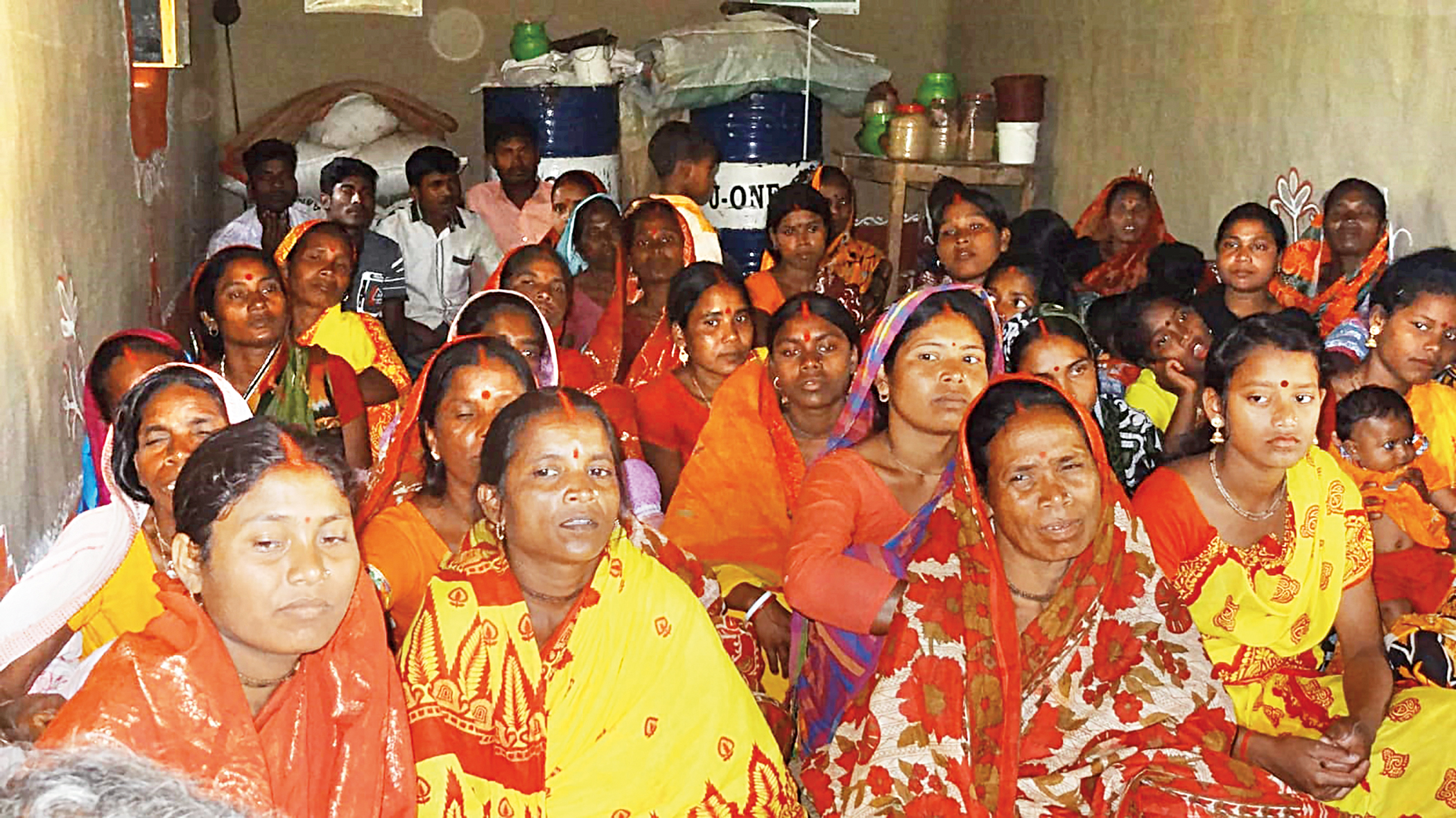
Ranjit Bhumij’s hesitant words show that language holds centuries of history. It carries a community’s thoughts, stories and identity. When people stop speaking their language, silence spreads. Words are forgotten, sentences become shorter, and each new generation speaks less. Over time, silence fills homes, playgrounds and gatherings, replacing the conversations that once filled these spaces.
When a language vanishes, we must ask whether its worth lies solely in the number of speakers or in the unique culture and meaning it embodies. Without urgent intervention from governments, educators and researchers, more languages will persist only in the memories of a handful of individuals, like Ranjit Bhumij or Liton Debsen of Hodi. In such cases, only the language’s name remains, while its rich cultural legacy disappears. Preserving a language is a tribute to our past and a promise to future generations. When a language is lost, our perspective on the world narrows. To ensure a richer, more inclusive understanding for all, we must act to prevent this loss.
Samar M Soren and Charu Haque are researchers and language activists.
Send your articles for Slow Reads to slowreads@thedailystar.net. Check out our submission guidelines for details.

More than refugees: How Rohingya youth are reclaiming their story
Behind every cup / The mental toll on women tea workers
From Shyamnagar to Kurigram: Women work, but where is the income?
Waiting for April: The other side of migration in the Sundarbans

Where have Bangladesh’s hilsa gone?

Lead poisoning in Bangladesh: A crisis ignored for too long

Who recycles Bangladesh’s garment waste?
Bangladesh running out of options on Rohingya crisis: Is there a way out?

Construction of the Sugandha-Kalatoli beach road / A grave threat to Cox’s Bazar’s sand dunes