


'We just ran'
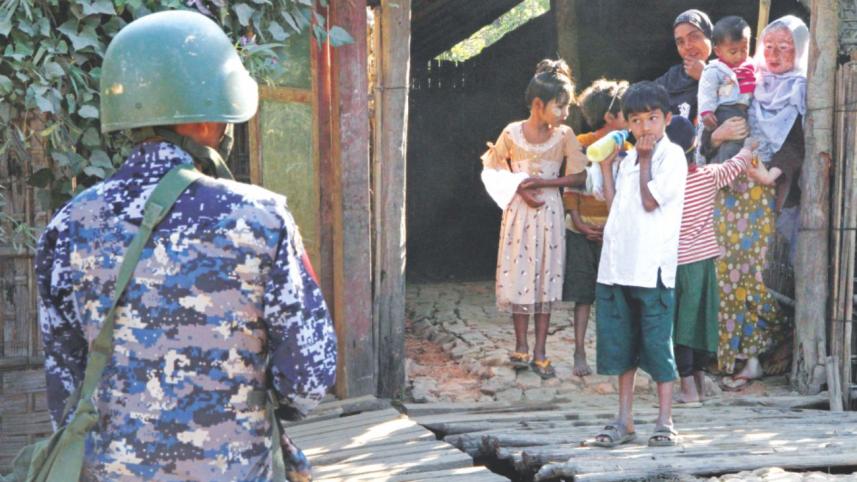
- Majority ethnic Rakhine -- who are Buddhist and who helped drive out Rohingyas -- are in conflict with Myanmar army
As bullets smashed into the walls, the residents of Alecheung village jolted from their sleep and fled leaving everything behind -- civilian victims of a crackdown by Myanmar's army on ethnic Rakhine militants in an area already concussed by violence.

"I just ran... I didn't even have time to take my phone," Zaw Win, 22, told AFP yesterday from a makeshift camp in the grounds of a pagoda, a few kilometres from his village in restive Buthidaung district.
Rakhine state, which borders Bangladesh, is a cauldron of religious and ethnic hatreds.
In 2017, 720,000 Rohingya Muslims were expelled in an army crackdown. UN investigators say that operation merits prosecution for genocide.
Now the majority ethnic Rakhine -- who are Buddhist and who helped drive out the Rohingyas -- are in conflict with the same army they supported against their Muslim neighbours.
On January 4 the Arakan Army (AA), a militant group espousing greater autonomy for the Rakhine, killed 13 in raids on police border posts, prompting an army kickback.
AFP reporters joined the first government-steered media visit to Buthidaung, one of the areas of restive Rakhine worst hit by fresh violence.
The displaced from Alechaung, a village for mainly Buddhist minority in the area, fled two weeks ago.
"We ran for our lives," said Noe Zin Tun, 23, a primary school teacher, adding she still feels desperately insecure despite the shelter within pagoda walls.
Rohingyas also still live in Buthidaung, marooned between hostile neighbours and warring parties.
CRUCIBLE OF HATE
The fighting has added a new, complex dimension to the troubles of a state that since 2012 has hosted religious and communal riots, the mass exodus of Rohingyas and killings across all ethnic lines.
"The conflict has entered a dangerous new phase in which ethnic divisions have more clearly been brought to the fore," the International Crisis Group warned in a report.
The implosion of Rakhine has also undercut the push by Suu Kyi's civilian government to end the wars that have roiled Myanmar since 1948.
A major investment drive for the state by government has left many Rakhine fearing they will be further sidelined as mainly Chinese companies carve up their state's resources and ports.
While they helped drive out their Muslim neighbours, Rakhine still complain that they remain the bottom of the pile, as the plight of the Rohingya attracts aid and international focus.
As the crisis spiral, support for the Arakan Army is growing.
"We are proud of them as they are fighting for our land," said San Shwe, 32, a motorcycle taxi driver from Sittwe who lost his home in communal riots in 2012.
 For all latest news, follow The Daily Star's Google News channel.
Comments