


Shoriful and the pace attack that changed the conversation

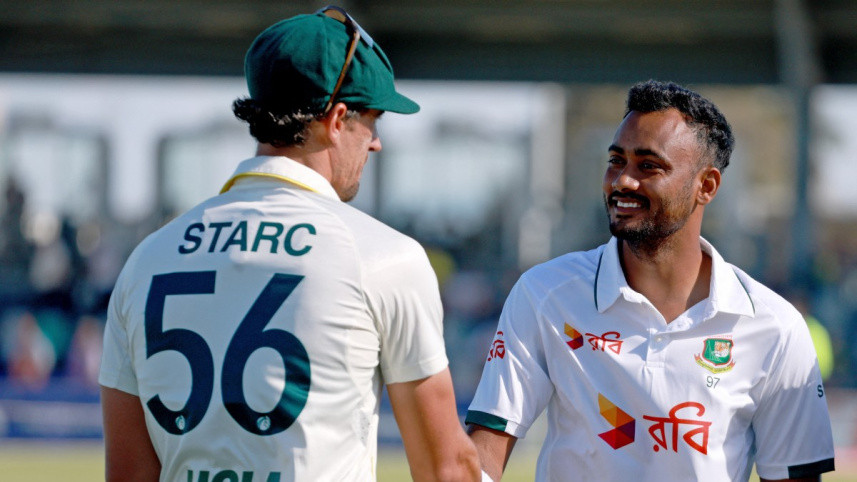
After the end of the Mackay Test, Mitchell Starc and Shoriful Islam stood together for a while, chatting after two days of extraordinary fast bowling. Two left-arm quicks had just shared 17 wickets between them. Starc finished with 10-51 in the match, while Shoriful, playing his first Test in Australia, had claimed a historic seven for 48.
Perhaps Starc was sharing a few thoughts with the young Bangladesh quick. Perhaps it was simply two fast bowlers reflecting on a remarkable Test. Later, Taskin Ahmed was seen having a chat with Josh Hazlewood.

It felt like a glimpse of a changing guard.
Shoriful had missed the Darwin Test with a hamstring injury. Nahid Rana was unavailable for the entire tour. Yet Bangladesh's pace attack arguably emerged as the most consistent part of their campaign.
Hasan Mahmud set the tone in Darwin with nine wickets as the Tigers stunned Australia by nine wickets. Shoriful returned in Mackay and produced the best figures by a Bangladesh bowler in an away Test.
And he did it when Bangladesh desperately needed someone to fight back.
After the Tigers had been bowled out for 64, Australia were 165/8 at stumps on the opening day. The deficit was already 101, but Bangladesh had a chance to keep Australia within reach.
Shoriful made sure of that.
Cameron Green had looked increasingly comfortable, having already scored a century in Darwin. Then Shoriful produced a brutal inswinging yorker, arguably the ball of the Test.
The ball crashed into Green's front pad and knocked the towering Australian off his feet. Green ended up on all fours as the ball ran towards the boundary. Green was gone for 67.
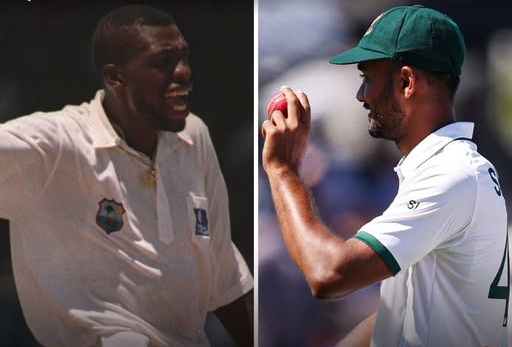
Former Australia left-arm quick Brendon Julian called it “Wasim Akram-like” in commentary.
The southpaw finished with seven for 48, the best figures by a Bangladesh bowler in an away Test and against Australia. He also became the first visiting bowler in 33 years to take seven wickets in a Test on Australian soil. More remarkably, he was the first left-arm quick since 1886 to take a seven-wicket haul against Australia.
It gave Bangladesh something to believe in. But the batters could not make his effort count.
They collapsed for 95 in the second innings. They failed to reach 100 in either innings for the first time in their Test history, becoming the first team in 21 years to be dismissed for under 100 twice in the same Test.
If Bangladesh's pace attack showed remarkable consistency, their batting showed the opposite.
They had made 426 in Darwin, batting for a record number of overs against Australia in Australia, and then produced one of their finest Test victories. A week later, the same batting unit disappeared almost completely.
The problem, then, was not whether Bangladesh could compete with Australia. Darwin answered that.
It was whether they could do it consistently. They could not in Mackay.
Before the tour, captain Najmul Hossain Shanto and chief selector Habibul Bashar spoke about Bangladesh earning respect in Australia.
 For all latest news, follow The Daily Star's Google News channel.
 Although the Tigers were brought crashing back to earth in Mackay, their pace attack ensured the two-Test series ended with something Bangladesh had been searching for before the tour: respect.
Starc, too, had seen enough to acknowledge what Bangladesh had done.
“We knew we were not at our best in Darwin. Bangladesh played really well. Take nothing away from them there.”
Comments