


‘The hard work starts now because they have set the standard’


Bangladesh’s impressive run in the ICC Women’s T20 World Cup Qualifiers in Nepal was built largely on the consistency and reliability of their batting unit throughout the tournament. In six of the seven matches, the Tigresses posted totals exceeding 150, underlining their dominance with the bat. Their lowest score came against Namibia, where they still managed a competitive 144 for seven.
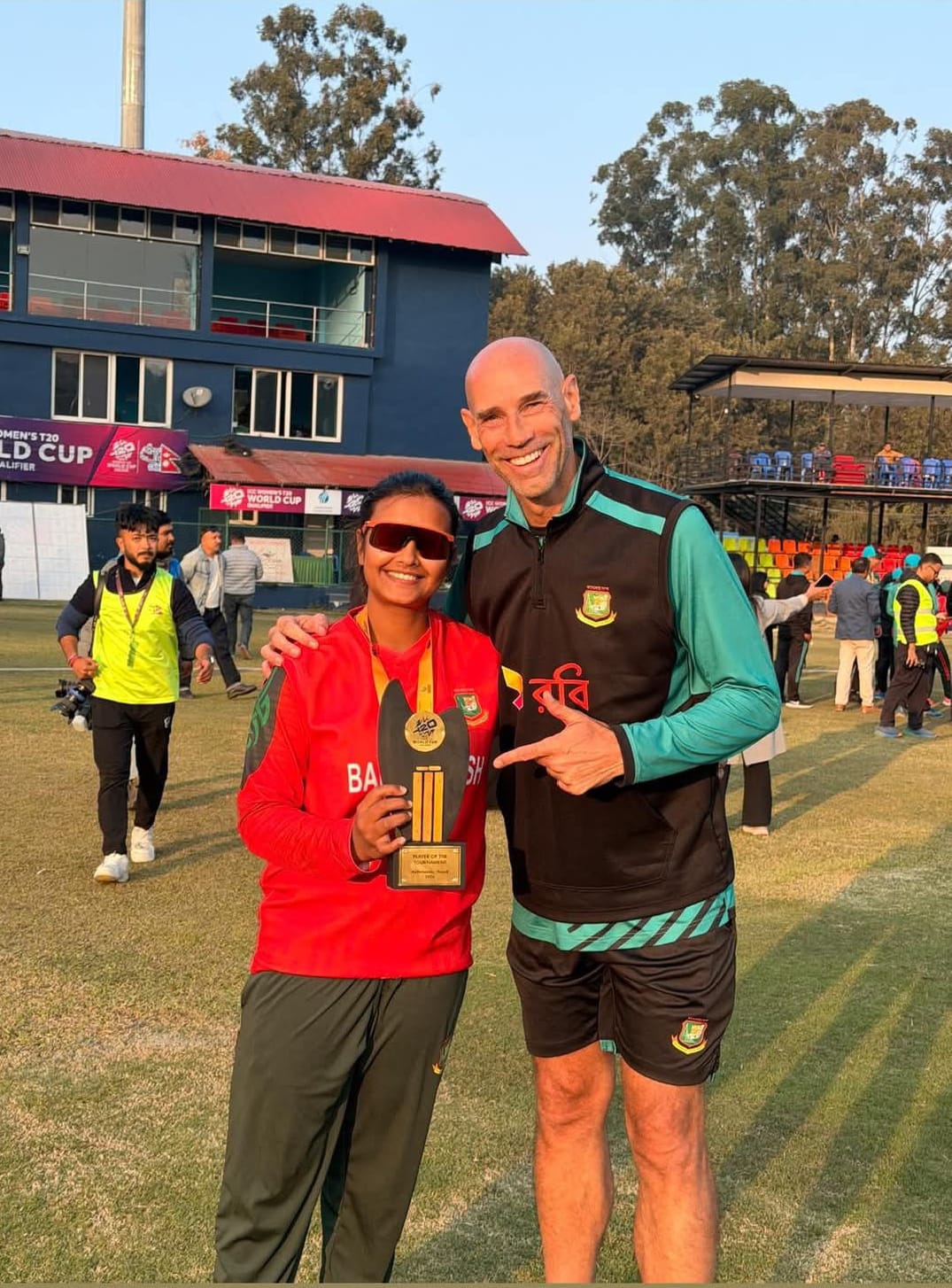
David Hemp, the batting coach during the Tigresses’ successful campaign in Nepal, shared his thoughts on the team’s performance in a conversation with The Daily Star’s Samsul Arefin Khan on Monday. Excerpts from the interview are as follows:

The Daily Star (DS): Bangladesh completed a brilliant run in the recently concluded T20 World Cup Qualifier by winning all seven of their matches. Throughout the tournament, the batters showed a level of consistency not seen for some time. How do you assess their overall performance?
David Hemp (DH): Across the board, with the batting, bowling, and fielding, we were very good throughout the tournament, which is a big positive to build on. Particularly with the batting before the tournament gets started, we worked on a couple of things like boundary striking and focused on taking the game on with the right approach. We encouraged players to play to their individual strengths, whether they were aggressive openers like Dola [Dilara] or in other roles, and emphasised that having 120 balls meant having 120 scoring opportunities. And that was the mindset and the players played that way.
It wasn't just about hitting boundaries; it was about aggressive running between wickets and maintaining shape when playing aggressive shots. The players held themselves accountable to this way of playing, leading to a very successful couple of weeks for the playing group and coaching staff.
DS: How do you evaluate Sobhana Mostary’s performance? How do you see her development and her winning the Player of the Tournament award?
DH: She has certainly grown as a player, specifically regarding her boundary options and the confidence to take those options when given the right ball to attack. She trusted her own game and played to her strengths across the tournament, performing different roles according to the situation. It’s not an easy place where she plays at the back of the innings whether she needs to rebuild or try to be aggressive. Her decision-making regarding which balls to attack and which to defend was particularly good.
DS: How do you view the overall batting transformation of the side? Was it influenced by better wickets compared to Bangladesh, or was it more about a change in approach in Nepal?
DH: I didn’t see the WBCL (Women’s Bangladesh Cricket League), so I can't comment on those wickets, but the wickets here were good and had trustworthy bounce and pace. However, a lot of it was down to mindset—seeing every ball as a scoring opportunity. It doesn’t mean we tried to hit six in every ball. This meant attacking length balls for boundaries or dropping good balls for singles to convert dot balls into runs. In the Scotland game, we got over 190, and I feel we batted well enough to have even surpassed 200. I think it’s the combination of all these things which have helped.
DS: With the World Cup only four or five months away, what would you like to see the BCB do to help the team build on this success and go beyond their previous World Cup performances?
DH: The players should take confidence from this, but actually the hard work starts now because they have set the standard. International games against other oppositions will be beneficial to help them deliver at the World Cup in the UK. It is important for each individual and the team to build on what they did well and remain consistent. The World Cup will be a different challenge due to the different types of wickets in the UK and the high quality of the teams there.
DS: In the past, the Bangladesh team often appeared to rely heavily on captain Nigar Sultana Joty’s batting. Do you feel other players are now stepping up and sharing that responsibility?
DH: Absolutely. This competition showed it wasn't just a reliance on one or two players; it was a collective effort with different players performing across different games. While Joty played well in the last two games and has been striking the ball well throughout the tournament, it was nice to see other players step up and take responsibility for their roles. It’s important you don’t rely on a single player. Winning competitions generally requires contributions across the board.
 For all latest news, follow The Daily Star's Google News channel.
Comments