


Anatomy of Cabrera era: Long reign, limited return
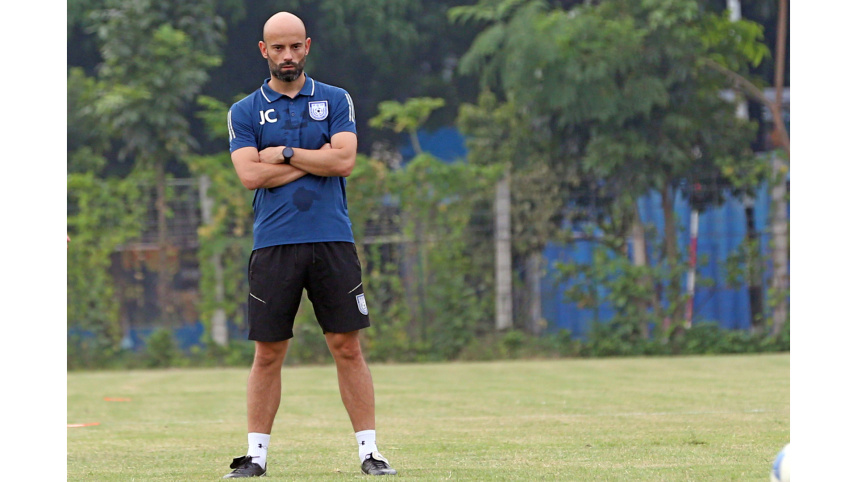
As the clock ticks down on Javier Cabrera’s contract, set to expire on April 30, the Spaniard leaves behind a legacy of historic longevity but conflicting results. Appointed in January 2022, he became Bangladesh’s longest-serving foreign coach, yet his tenure remains deeply debated.
In an era when Bangladesh coaches rarely lasted months, Cabrera oversaw 39 international matches across four years. The numbers, however, reflect stagnation: just 10 wins, most against minnows such as Bhutan (3), Cambodia (2), Seychelles (1) and Maldives (3), alongside a rare 1-0 victory over India that ended a 22-year wait.

If results raised concerns, expectations only grew with the influx of high-profile players. Backed by Leicester City midfielder Hamza Choudhury, Canada-based Shamit Shome, Italy-based Fahamedul Islam and USA-based Zayyan Ahmed, Cabrera had one of the strongest pools in recent years. Yet Bangladesh still failed to reach the AFC Asian Cup finals for the first time since 1980, finishing third in a four-team group with five points from six matches.
Despite improved personnel, a clear identity never emerged. Midfield quality through Hamza and Shamit, combined with the pace of wingers Rakib Hossain, Fahamedul and Faisal Ahmed Fahim, did not translate into a cohesive attacking unit. Cabrera’s approach drew regular scrutiny, with delayed and reactive in-game changes raising eyebrows.
Continuity remained elusive. Even after testing more than 30 players following his predecessor Jamie Day’s departure in late 2021, Cabrera failed to build a settled side. Experienced names like Topu Barman, Saad Uddin, Bishwanath Ghosh, Sohel Rana, Rahmat Mia, Rakib, Mohammad Ridoy and Mohammad Ibrahim remained central, while a handful of younger players -- Sheikh Morsalin, Mehedi Hasan Srabon, Mitul Marma, Shahrear Emon and Shakil Ahad Topu -- established themselves alongside overseas-based additions.
Defensive instability was a constant. The 41-year-old struggled to establish a reliable backline, particularly amid injuries, often deploying players out of position. This lack of stability proved costly, with Bangladesh committing late errors and dropping points in tightly contested matches.
Up front, the issues persisted. A rotating cast of strikers -- Aminur Rahman Sajib, Sazzad Hossain, Suman Reza, Arman Akash Faisal, Al Amin, Pias Ahmed Nova and Mirajul Islam --failed to solve the goal drought, with inconsistent selection undermining any cutting edge.
Cabrera’s tactical shift further highlighted the uncertainty. From high-intensity pressing in the 2022 Asian Cup Qualifiers, he moved towards build-up play and controlled possession. The approach peaked at the 2023 SAFF Championship in India, where Bangladesh reached the semifinals after 14 years -- a rare high in an uneven tenure.
Ultimately, Cabrera’s Bangladesh leaned too heavily on individual moments rather than a defined structure. This raised doubts over whether his system suited the squad’s physicality and experience. His failure to convert promise into sustained success -- particularly qualification for the 2027 Asian Cup, widely seen as attainable -- leaves his tenure less fulfilling than desired.
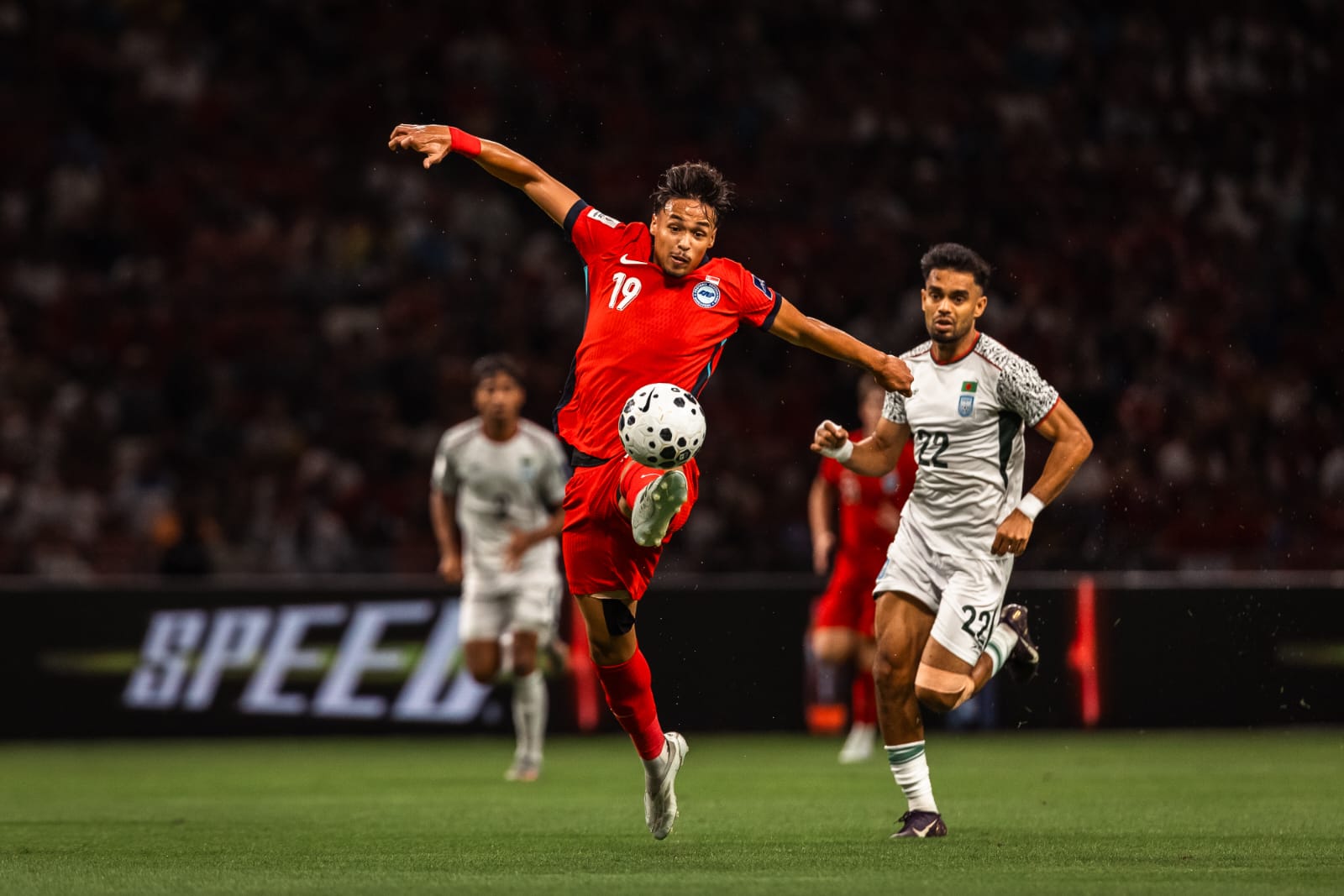
When he took over, Bangladesh were ranked 186. Over time, the ranking dipped to 192 before rising to 180 and currently stands at 181.
What Cabrera did establish was that Bangladesh could compete at the Asian level. What he could not prove, however, was whether they could win when it mattered most.
 For all latest news, follow The Daily Star's Google News channel.
Comments