


Italy’s World Cup woes trace back to Baggio’s ignored reform plan
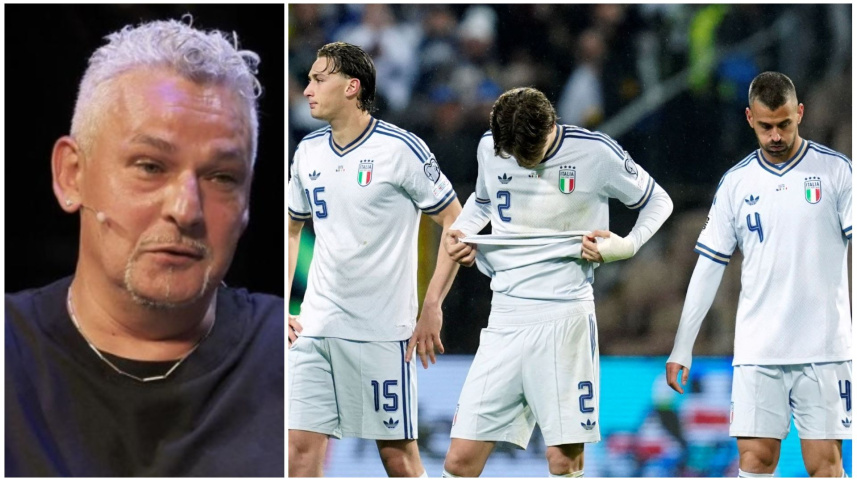
Italy’s failure to qualify for recent FIFA World Cups has reignited scrutiny over a series of missed opportunities — none more compelling than the reform blueprint once proposed by Roberto Baggio.
Long before the Azzurri’s unprecedented absence from three consecutive World Cups — most recently failing to qualify after a playoff defeat to Bosnia — Baggio had already outlined a sweeping vision for the future of Italian football.

His 900-page document, titled “Renew the Future,” was a comprehensive reform plan designed to rebuild the sport from its grassroots. Italy’s La Gazzetta dello Sport reported that the proposal, compiled with contributions from 50 experts, detailed structural, technical, and educational changes. It was never implemented.
Baggio’s legacy in the national team remains deeply intertwined with the drama of the 1994 FIFA World Cup. On July 5 in Foxborough, Italy teetered on the brink of elimination against Nigeria in the round of 16, reduced to ten men following Gianfranco Zola’s dismissal. With just minutes remaining, Baggio — the iconic “Divine Ponytail” — equalised before converting the decisive penalty in extra time. Yet, his career is often remembered for the missed spot-kick in the final against Brazil, a moment that handed the trophy to the South Americans and left a lasting scar.
Years later, Baggio sought redemption not on the pitch, but through reform. His blueprint was far from symbolic; it was a meticulously structured programme aimed at systemic transformation. Among its key proposals were the establishment of 100 federal training centres, major investment in modern facilities, and the creation of a nationwide system to track and develop young talent.
Central to the vision was education. Baggio emphasised the need for highly qualified instructors — not only tactically proficient but also equipped with strong academic and teaching capabilities. He warned against an overreliance on tactical systems at the expense of technical skill, echoing concerns raised by figures such as Massimo Mauro. His approach prioritised constant engagement with the ball and advocated for integrated assessments combining physical and technical performance, rather than isolated athletic testing.
Notably, the plan anticipated the digital evolution of football, calling for the computerisation of scouting and training data — an idea that has since become standard in elite systems worldwide.
The proposal emerged in the aftermath of Italy’s disappointing campaign at the 2010 FIFA World Cup, where the defending champions exited at the group stage. Further early eliminations followed in 2014, and in the years since, Italy’s absence from multiple World Cups has only deepened concerns over long-term decline. Strikingly, the Azzurri’s last World Cup knockout victory remains the 2006 final in Berlin.
Baggio’s reform also envisioned an extensive scouting network, dividing Italy into 100 districts overseen by federal coaches. These officials would collectively monitor tens of thousands of matches annually, feeding into a vast multimedia database of player development, training exercises, and performance metrics. The goal was a unified, merit-based system capable of nurturing talent on a national scale.
Despite its ambition and detail, the project was never adopted. Frustrated by institutional resistance, Baggio eventually stepped down.
“I tried to carry out the role entrusted to me, but I was not allowed to,” he said at the time, according to La Gazzetta dello Sport. “I worked to rebuild from the foundations — to create good players and good people. I submitted my project in December 2011, and it remained a dead letter.”
Today, as Italy grapples with the consequences of repeated failures on the global stage, Baggio’s unfulfilled vision stands as a stark reminder of what might have been.
 For all latest news, follow The Daily Star's Google News channel.
Comments