Two faces of Goa: From South’s serenity to North’s buzz
After arriving early at Netaji Subhash Chandra Bose International Airport in Kolkata on May 26, the wait for boarding felt endless. The atmosphere at the departure gate, however, offered a glimpse of excitement. An energetic group of young boys and girls, dressed in colourful outfits with striking make-up and brimming with enthusiasm, gathered nearby. Their lively presence instantly reminded me that I was heading to Goa; the glamorous western Indian state famed for its beaches and vibrant nightlife along the Arabian Sea.
That image of a bustling Goa, however, quickly faded. It took me some time to understand why. The reason was simple: South Goa and North Goa have distinctly different characteristics, offering contrasting experiences to visitors.


After nearly three hours in the air, the IndiGo flight landed at the modest Dabolim International Airport. From the aircraft window, the moss-covered runway and the dry, quiet surroundings presented a completely different picture. The airport appeared almost lifeless, far removed from the lively image many associate with Goa.
Leaving the terminal for Margao in South Goa, where my hotel was located between the Bangladesh women’s team’s base at Planet Hollywood Beach Resort and the Pandit Jawaharlal Nehru Stadium--the venue of the SAFF Women’s Championship--the first thing that struck me was the thick air carrying the scent of salt. That feeling stayed with me until I later encountered the more vibrant side of North Goa.
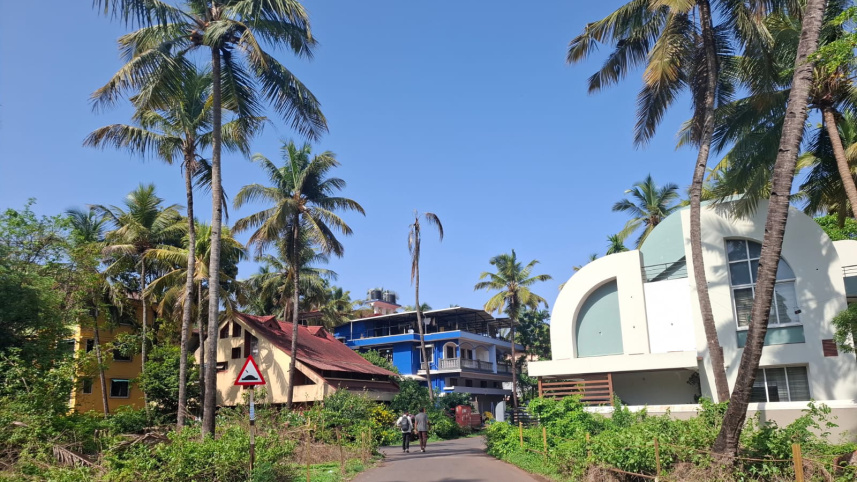
The nearly 45-minute drive from the airport offered another lasting impression. Along the roadside unfolded the architectural legacy of more than four centuries of Portuguese rule. Traditional Goan-Portuguese villas appeared seamlessly throughout the landscape, standing proudly amid manicured gardens and rolling hills. Their distinctive pastel colours--sky blue, pale yellow and deep ochre--created a charming visual contrast against the tropical surroundings.
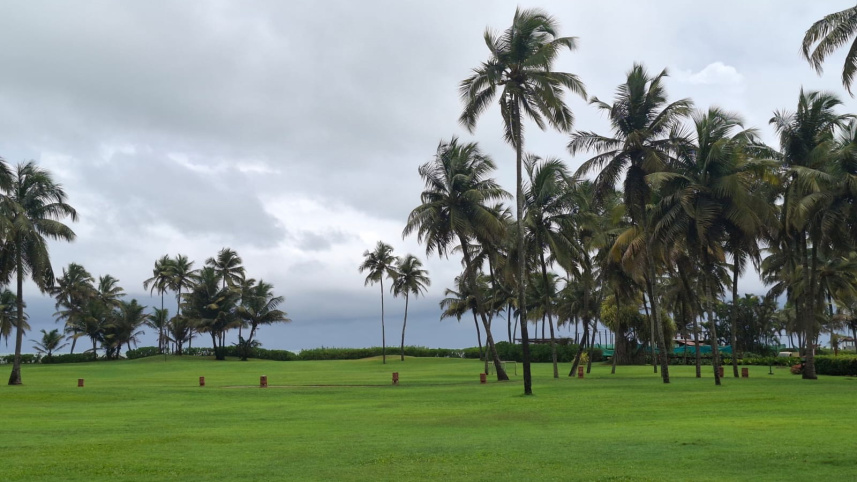
The sunlight filtering through rows of leaning coconut trees often looked magical. Traffic was remarkably light, and every so often small Christian shrines appeared beside the road. Such shrines can be found throughout Margao, the cultural and commercial heart of South Goa, offering visitors a unique and soulful introduction to the state.
Life in Margao, particularly in South Goa, moves at a slower pace. That was evident on the roads, where drivers showed little urgency to speed up or overtake one another--a striking contrast to the often chaotic traffic culture of Dhaka. Cars, motorcycles and scooters approached intersections patiently, frequently allowing others to pass first despite the absence of traffic police or signals.
The hot and humid weather kept many residents indoors during the day, but the streets became livelier after sunset. Evening walks through Margao's clean, dust-free air proved especially refreshing.
One challenge for visitors is transportation. Goa has no internet-based ride-hailing services, making taxis the primary option. Easily identified by their yellow registration plates, taxi drivers often demand high fares. Even short trips typically cost at least ₹500. During the tournament, a nine-kilometre journey between the Bangladesh women’s team hotel and my hotel in Margao frequently cost between ₹1,000 and ₹1,200.
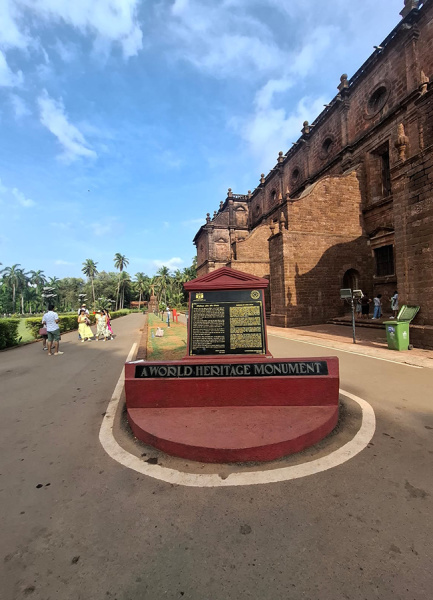
Finding transportation outside the city can be even more difficult. On one occasion, I waited nearly half an hour on the outskirts of Old Goa searching for a taxi, rickshaw (CNG) or "pilot" motorcycle ride. Eventually, a young local offered me a much-appreciated lift from Dempo Sports Club to the Basilica of Bom Jesus, located around 50 kilometres from Margao.
For visitors with a valid driving licence, self-driving remains the most convenient option. Numerous rental services offer cars and motorcycles for daily rates ranging from ₹300 to ₹500, excluding fuel costs. Renting a vehicle typically requires only a passport copy and a refundable security deposit.
For those without private transport, Goa’s bus network provides an affordable and well-connected alternative. One particularly interesting sight was passengers placing their backpacks in overhead compartments without concern. Such trust is uncommon in Dhaka, where fears of pickpocketing often make passengers keep their belongings close. Yet some similarities remained; at night, bus terminals in both places could be seen with drug users lying on footpaths and openly consuming substances.
Returning to the hotel after covering Bangladesh’s matches at Fatorda Stadium never raised concerns about robbery. Instead, the greater fear came from the numerous stray dogs that roamed the streets after dark. Sometimes 20 to 30 of them would gather together, creating an intimidating sight, though fortunately they never attacked.
While roads within Margao are relatively narrow, the major highways connecting South and North Goa are significantly wider, with six lanes in some sections. One surprising sight in Old Goa was the preservation of Portuguese-era houses, many of which remain untouched despite being squeezed between narrow roads.
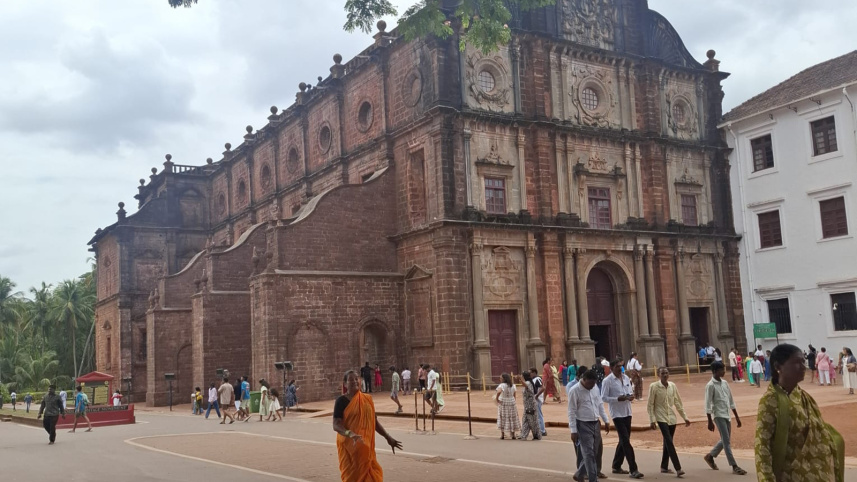
A visit to the 16th-century Basilica of Bom Jesus was among the highlights of the trip. The UNESCO World Heritage Site is renowned for its Baroque architecture and as the resting place of St. Francis Xavier. During my visit, I also had the opportunity to witness a bride participating in a wedding ceremony inside the historic church, adding another memorable moment to the journey.
The contrast between South Goa and North Goa is striking. North Goa is undoubtedly the more vibrant region, bustling with people, vehicles, shops, bars, restaurants, high-rise buildings and casinos lining the riverside.
Yet Goa is far more than just a beach destination. It is an adventure lover’s paradise, offering scuba diving in crystal-clear waters, trekking through forests, rock climbing on rugged terrain and a wide range of water sports.
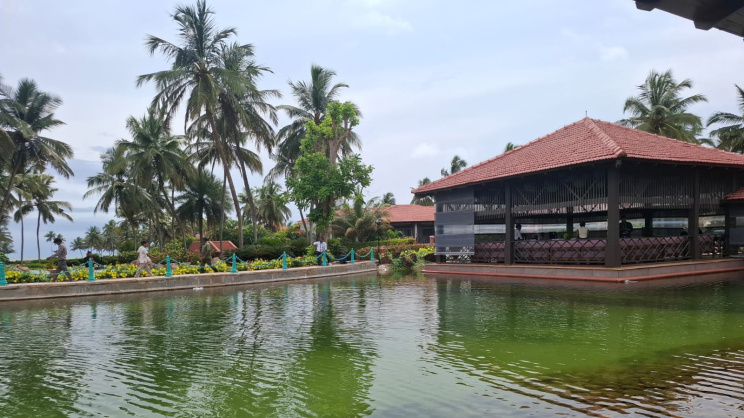
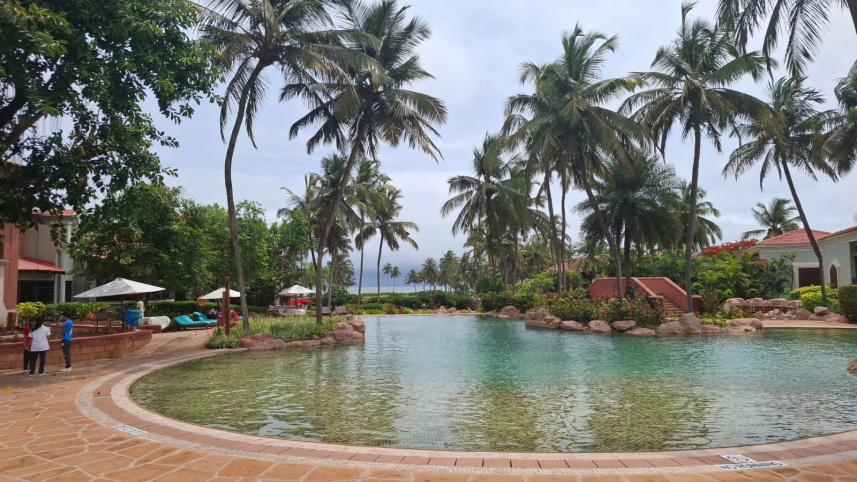
The beaches themselves reflect the state’s dual personality. Private beaches attached to international hotel chains are calm, serene and beautiful. In contrast, North Goa’s public beaches pulse with energy. Pubs, bars, discos and restaurants glow beneath neon lights as visitors flock there every evening to enjoy their leisure time. The atmosphere often resembles Thailand’s famous Pattaya Beach.
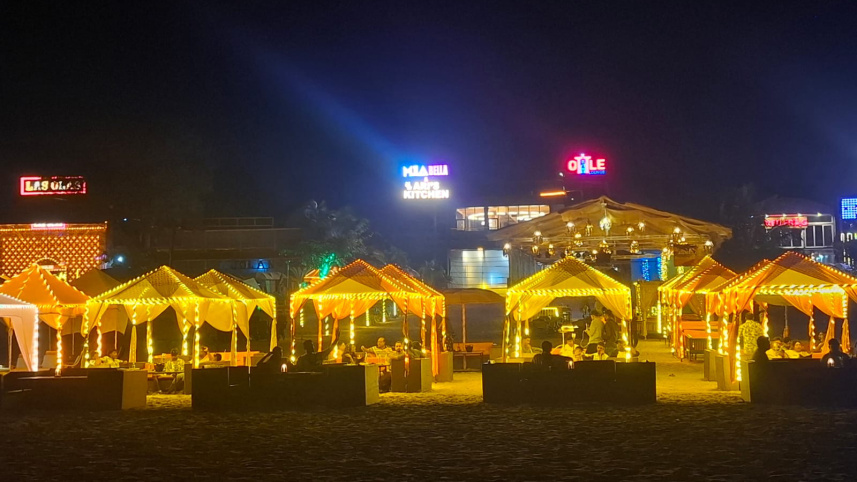
To truly understand Goa, one must recognise that the state possesses two distinct personalities. South Goa offers tranquillity, heritage and relaxation, while North Goa delivers energy, entertainment and excitement. Choosing where to spend time ultimately depends on what one is seeking.
My stay in Goa came to an end alongside the SAFF Women’s Championship. Bangladesh's hopes of securing a third consecutive title were dashed when they lost the final to India on June 6.
 For all latest news, follow The Daily Star's Google News channel.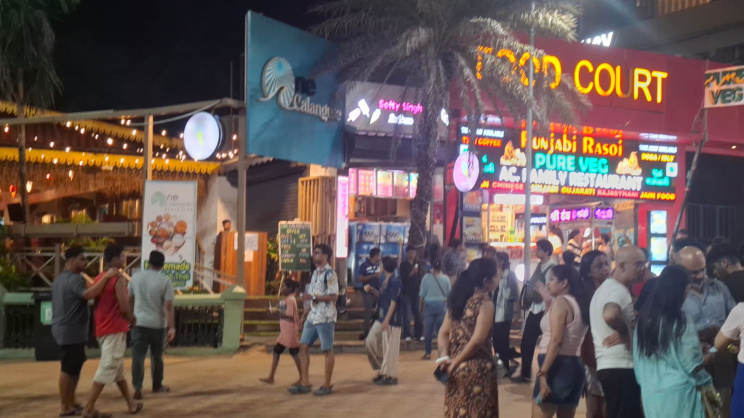
As the tournament concluded, so too did a memorable journey through a destination defined by contrasts--between history and modernity, calmness and vibrancy, South and North, competition and exploration.

Pochettino calls for Chelsea to be stripped of 2016-17 title

Chelsea turn it around in style to crush Leeds in League Cup

French Football Federation withdraws support for FIFA president Infantino

FIFA ASEAN Cup: Bangladesh face Malaysia in opening game

Can Ancelotti’s new faces give Brazil a fresh start?

Dooley drops six players, including two on trial, from ASEAN Cup camp

Ronaldo scores 979th career goal in quest for rare 1,000 milestone

From non-league football to the throne of a kingdom

Messi assists, Casemiro cancels Lewandowski lead in MLS stalemate