


Mabia’s doping ban: Does it expose system gaps?
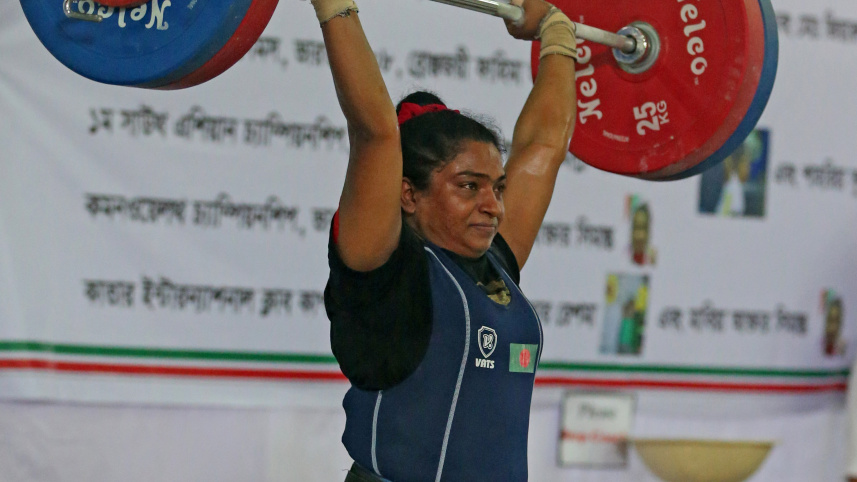
Weightlifter Mabia Akter Simanta has been handed a two-year suspension from both international and domestic competitions after the two-time South Asian Games gold medalist tested positive for banned substances in a doping test.
The ban of the 28-year-old athlete, who has competed internationally for the past 15 years and has undergone numerous anti-doping tests without any previous violations, has raised questions over whether the incident involved intentional use, negligence, or a lack of awareness of anti-doping regulations.

Following a report from the South Asian regional anti-doping organisation, the World Anti-Doping Agency (WADA) informed the Bangladesh Olympic Association (BOA), which on Thursday officially notified Mabia of her suspension. The ban is effective from October 29, 2025 -- the date when her sample was collected by BOA.
In preparation for the 2025 Islamic Solidarity Games in Riyadh, Saudi Arabia, scheduled for November 7-21, the BOA collected blood samples from 26 selected athletes based on performance criteria. Mabia’s test reportedly returned positive for the banned substances furosemide and canrenone.
Mabia maintains that she unknowingly took the medication on a physician’s advice while undergoing treatment for a knee injury. However, BOA anti-doping committee member Dr Shafiqul Islam said she did not take clearance from WADA through the committee prior to the test.
“I was undergoing treatment for a knee injury for seven to eight months when the sample was taken,” Mabia told The Daily Star, adding that she had submitted her prescription during the process but it was not given due consideration by the authorities.
She further explained: “I was on medication prescribed by a doctor and had no idea that furosemide is a banned substance. I was informed about this substance by the BOA anti-doping committee on January 15. I later searched online and learned that it is used to reduce water retention in the body.”
Dr Islam, however, emphasised the importance of compliance with anti-doping protocols. “As per WADA policy, athlete health comes first. However, there are restricted medicines in sports, and athletes must consult the anti-doping committee before taking them.
“If Mabia had obtained prior approval from WADA through BOA, there would have been no issue. She did not follow the same process as shooter Armin Asha did years ago, who was granted permission to use certain medications under legitimate medical conditions,” he said, adding that WADA follows strict rules in such cases.
The incident has also raised broader concerns about whether federations and BOA are adequately educating athletes about anti-doping regulations and banned substances.
“During anti-doping seminars, we were never told to consult the anti-doping committee before taking medication. We were only advised to keep doctor’s prescriptions. Even common medicines like paracetamol were said to be safe,” Mabia said. “Why would I knowingly take something that could ruin my 15-year career?”
Mabia has already served four months of her 24-month suspension but remains eligible to appeal the decision within 14 days.
She has confirmed that she will challenge the ruling, hoping for justice, and has called on BOA, her federation, and other concerned authorities to support her in seeking a reduction or reversal of the ban.
 For all latest news, follow The Daily Star's Google News channel.
Comments