


Argentina’s early exit and Beckham’s redemption

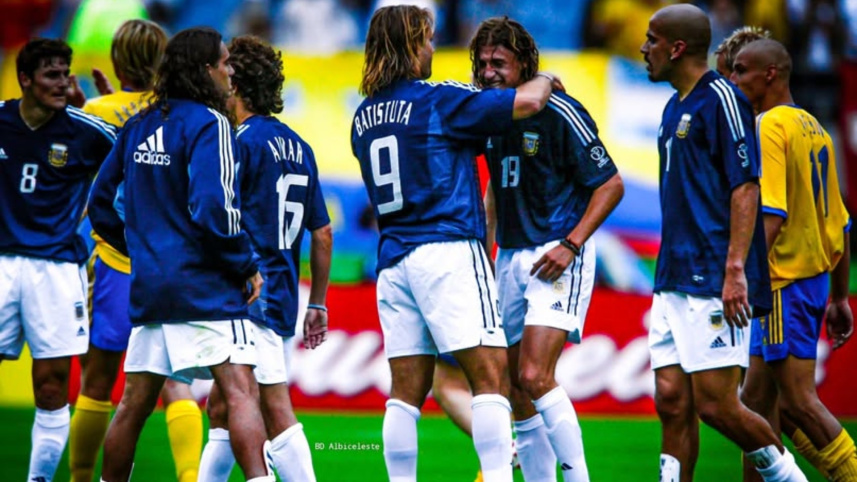
The year 2002 was widely tipped as Argentina’s moment to end their 16-year wait for a FIFA World Cup title. Few teams entered the tournament in Korea and Japan with greater expectation.
On paper, Argentina were arguably the most complete side in world football, having stormed through the South American qualifiers with authority. They finished comfortably at the top of the standings, scoring an impressive 42 goals, winning 13 of their 18 matches, and suffering just a single defeat. Ranked among the top three teams in the world at the time, they arrived at the global showpiece as one of the leading favourites.

Under the meticulous guidance of Marcelo Bielsa, Argentina assembled a squad brimming with quality, experience, and attacking depth. The roster featured a blend of proven stars and creative talents such as Gabriel Batistuta, Hernan Crespo, Ariel Ortega, Juan Sebastian Veron, Pablo Aimar, Claudio Lopez, and Diego Simeone. At the back, players like Roberto Ayala, Pablo Sorin, Walter Samuel, and Javier Zanetti provided defensive stability.
Drawn into Group F -- dubbed the “Group of Death” -- alongside Nigeria, Sweden, and England, Argentina still seemed well-positioned to advance. They began their campaign with a narrow but important 1-0 victory over Nigeria, with Batistuta heading home the decisive goal early in the second half. It was not a dominant performance, but it was a winning start that appeared to set the tone for a steady progression.
However, their tournament campaign soon took a dramatic turn. Argentina’s second match against England carried immense historical weight, serving as a rematch of their fiery 1998 World Cup encounter. That earlier meeting had seen a 23-year-old David Beckham sent off and subsequently vilified in England after their elimination on penalties. Four years later, Beckham returned to the same stage with a chance at redemption -- and he seized it.
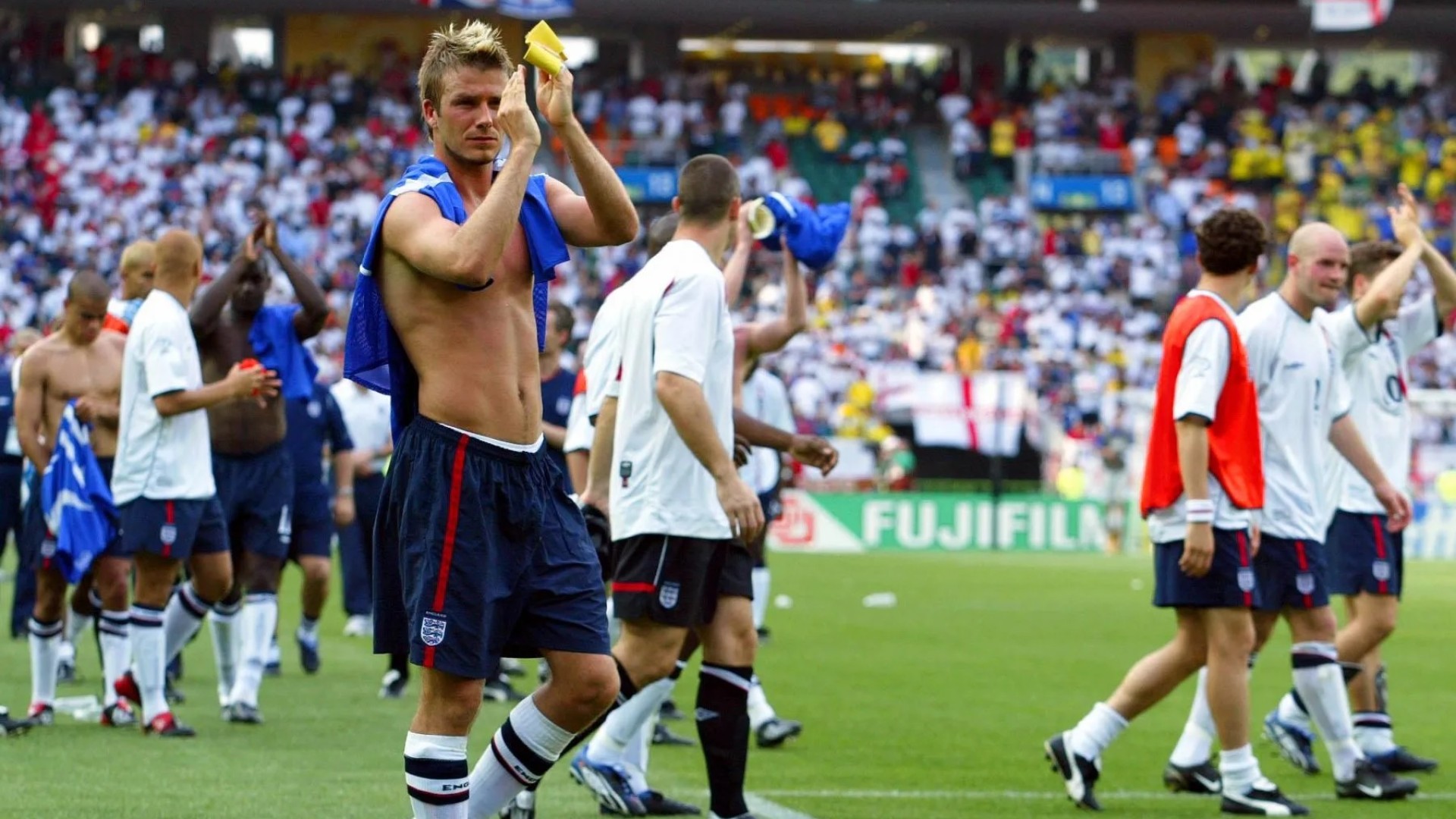
In a tense and tightly contested match, England were awarded a penalty after Michael Owen went down in the box following contact from Mauricio Pochettino in the latter stage of first half. While the decision by referee Pierluigi Collina was later debated -- with replays suggesting minimal contact and Owen himself admitting he had been looking for it -- the spot-kick stood. Skipper Beckham stepped up and calmly converted, scoring the only goal of the game. England held on for a 1-0 victory, and Beckham completed a personal redemption act that silenced many of his critics.
The defeat left Argentina in a precarious position. After two matches, both England and Sweden had four points, Argentina had three, and Nigeria were already eliminated after losing both their opening games. The equation was simple: Argentina had to defeat Sweden in their final group game to secure a place in the knockout rounds.
The first half ended goalless. Early in the second half, Sweden took the lead through a well-struck free-kick from Anders Svensson, placing Argentina under immense pressure.
Argentina pushed forward relentlessly in search of an equaliser. Their opportunity came when they were awarded a penalty, but Ortega’s effort was saved. Crespo reacted quickest to the rebound and slotted home to make it 1-1, briefly reigniting hope. However, despite sustained pressure in the closing stages, Argentina could not find the winning goal they desperately needed.
The final whistle confirmed a stunning outcome: Argentina were eliminated in the group stage, finishing third in the group. It marked only the third time in their history that they had exited a World Cup from group stage -- and the first since 1962. For a team widely regarded as one of the strongest in the competition, the disappointment was profound.
The statistics told a stark story. Despite their attacking talent, Argentina managed just two goals in three matches. The fluid, high-intensity football that had defined their qualifying campaign was largely absent on the biggest stage. Bielsa’s side, so dominant in South America, failed to adapt to the tactical challenges and pressure of the World Cup.
Argentina were not alone in their shock early exit. Defending champions France, who had entered the tournament as reigning world and European champions, endured an even more dismal campaign. They failed to win a single match and, remarkably, did not score a single goal, exiting at the group stage in one of the most surprising collapses in World Cup history.
In contrast, Brazil capitalised on the unpredictability of the tournament. With a revitalised squad led by Ronaldo, Rivaldo, and Ronaldinho, they went on to claim their fifth World Cup title, completing an unbeaten run and reasserting their dominance on the global stage.
Argentina’s failure in 2002 served as a powerful reminder that football is not decided on paper. Reputation, rankings, and past performances offer no guarantees once the tournament begins. Success at the World Cup demands not only talent but also consistency, adaptability, and the ability to deliver under pressure in every match.
For Argentina, it was a bitter lesson -- one that underscored the fine margins of international football. For Beckham, however, the tournament provided a moment of redemption that reshaped his legacy. And for the footballing world, the events of 2002 reinforced the enduring truth that the World Cup remains as unpredictable as it is unforgiving.
 For all latest news, follow The Daily Star's Google News channel.
Comments