


Cape Verde withstand Spanish inquisition


It was as if the Spanish Armada had descended upon Atlanta Stadium on Monday, where reigning European champions Spain took on World Cup debutants Cape Verde in their Group H opener widely billed as one of the biggest mismatches of the tournament.
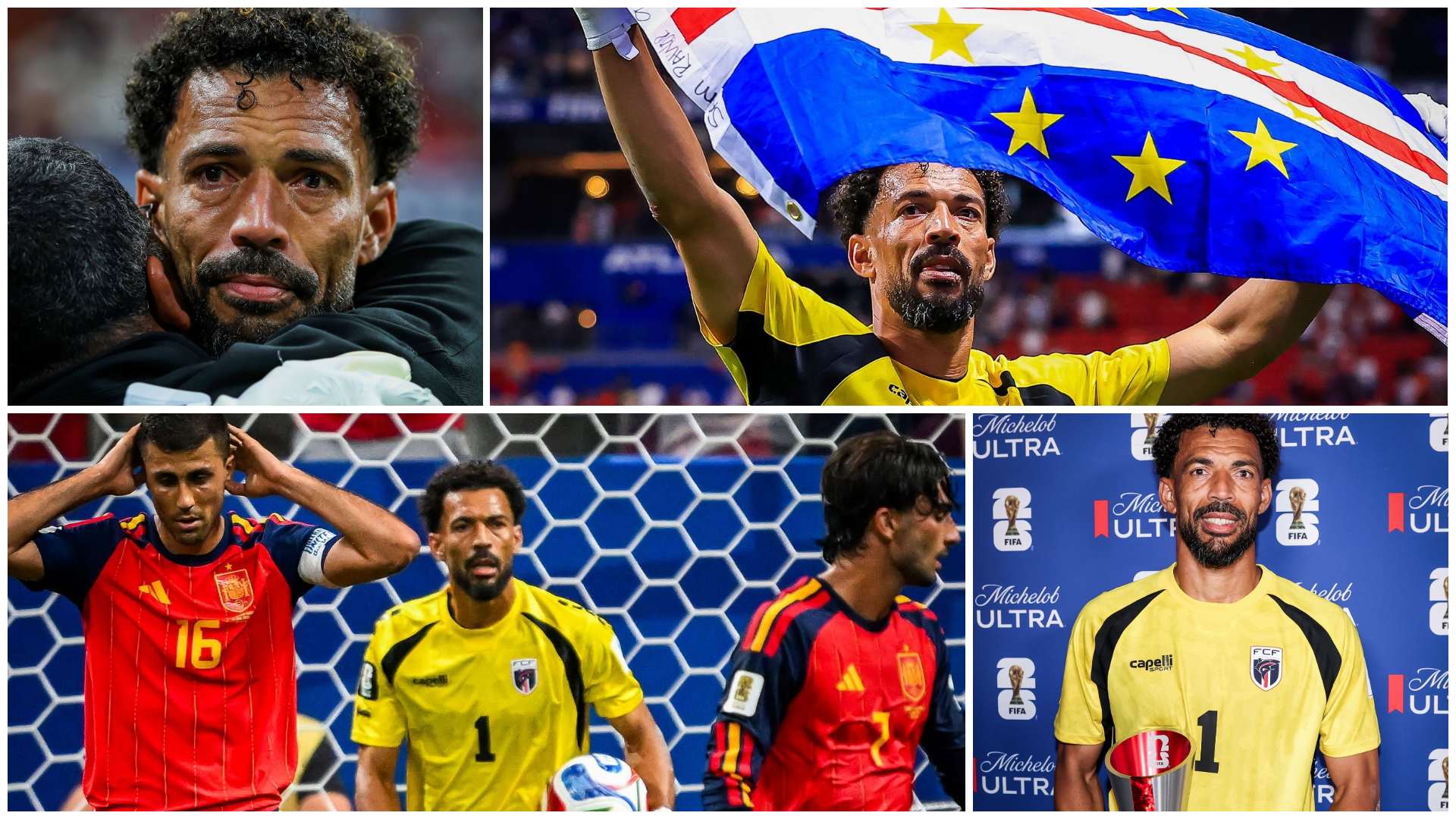
But the small African island nation -- the second-smallest country by land area and the third-smallest by population ever to qualify for a World Cup -- refused to bend to the Spanish inquisition, producing one of the most memorable performances of the tournament in a goalless draw.

Spain kept asking questions, but largely the same ones, and Cape Verde would not budge.
With 65 places separating the two sides in world rankings and, on the back of Germany's 7-1 thrashing of fellow debutants Curacao a day earlier, many expected Spain to impose themselves in similar fashion, especially after their dominant triumph at the 2024 Euros.
Instead, Spain endured bags full of frustration, brooding stares and exasperated sighs as they struggled to unlock the Blue Sharks. Pass. Pass. Pass. But to no avail. The ball flowed endlessly across La Roja's horseshoe pattern, boxing the newcomers into their own half. It was almost reminiscent of Spain's 1,000-pass debacle at the 2022 World Cup, when they monopolised possession but failed to overcome Morocco in the last 16. This time they completed 734 passes and enjoyed 74.2 percent possession, but only a small fraction of it caused their opponents any real problems.
So resolute was Cape Verde's defence that it prompted serious questions. Was this a Spanish misfire, or simply a defensive performance of the highest order?
The contrasting styles also served as a reminder to those often enamoured by Spain's hyper-possession-based football and convinced that their way is the only way to play. For the Barcelona-Pep Guardiola loyalists who hold tiki-taka close to their hearts, the contest offered a sobering lesson that possession without purpose is meaningless.
Yes, Cape Verde were minnows compared to second-ranked Spain but they demonstrated that there is another path to success -- one that does not require an obsession with possession or aesthetically pleasing football. Sometimes pragmatism, born partly of necessity in this case, is enough.
Teams that have enjoyed more possession than their oppositions have largely avoided defeat at this tournament so far, with Turkiye's loss to Australia the only exception. It was no different for Spain. However, this draw felt very much like a defeat. There were a couple of sobering stats. For all their possession, Spain created just two big scoring chances, one more than Cape Verde. The debutants also showed exceptional discipline, committing just one foul despite surrendering nearly 75 percent possession -- the fewest by any team in a World Cup match since records began in 1966. This showed how well they grew into the game and coped with everything Spain threw at them.
Cape Verde coach Bubista said there were other ways of controlling a game besides dominating possession. "Of course, we can say that Spain had possession of the ball almost all of the time, but controlling the match is not just possession of the ball," Bubista told reporters.
"We did it in a different way. Of course, we would have wanted to have more transitions for attack, but the Spanish team is quite difficult, so we are happy with this,” added the 56-year-old who had nearly guided the islanders to a World Cup entry in 2022.
There is another reality behind Spain's setback. In the starting eleven, La Roja were without pivotal figures on either flank: teenage sensation Lamine Yamal and Nico Williams. Both are central to the way Spain create chances and often provide the individual moments of brilliance required when breaking down stubborn opponents. Although the pair were eventually introduced, frustration had already set in and Spain could not conjure up a breakthrough.
Luis de la Fuente deployed Gavi and Ferran Torres out wide, with neither players being a natural winger. They were never likely to repeatedly take on defenders and whip crosses into the box. Instead, they often did what came more naturally to them in their unnatural positions -- recycle possession, robbing Spain of much of their imagination.
Spain might have benefited from greater rotation; creating space by dragging players, but the 2010 winners struggled to create overloads and showed little appetite for constant positional exchanges. That allowed Bubista’s charges to camp deep, remain compact and avoid being dragged out of position.
Cape Verde did try to attack, but they struggled to retain possession long enough to threaten Spain with any regularity. Before stoppage time, they had managed just four shots, but by then Spain had lost all structure as they threw bodies forward in search of a winner. Cape Verde centre-back Diney Borges even had a chance to steal victory from a late corner, but headed straight at goalkeeper Unai Simon.
Spain eventually found more openings and finished with 27 shots, although too many were hopeful efforts from distance. When clear chances did arrive, poor finishing -- particularly from Mikel Oyarzabal and Ferran Torres -- let them down.
The match extended Spain's scoreless run at the World Cup to almost three full games. Their last goal came 11 minutes into their penultimate match at the 2022 tournament against Japan. They then failed to score against Morocco in the last 16 and have now taken 49 shots and completed around 2,500 passes since their last World Cup goal.
It would be unfair to suggest that Spain's shortcomings alone were responsible for the result. Cape Verde's defenders were magnificent. Borges made a match-high five tackles, centre-back partner Pico Lopes recorded a game-high 11 clearances, and 40-year-old goalkeeper Vozinha emerged as the hero with seven saves.
The alarm bells have not yet started ringing for Spain, who remain among the favourites, but the result should dampen suggestions that the expanded World Cup would inevitably lower the tournament's quality by producing too many one-sided contests.
 For all latest news, follow The Daily Star's Google News channel.
Comments