


Colombia: The only host to say no to the World Cup

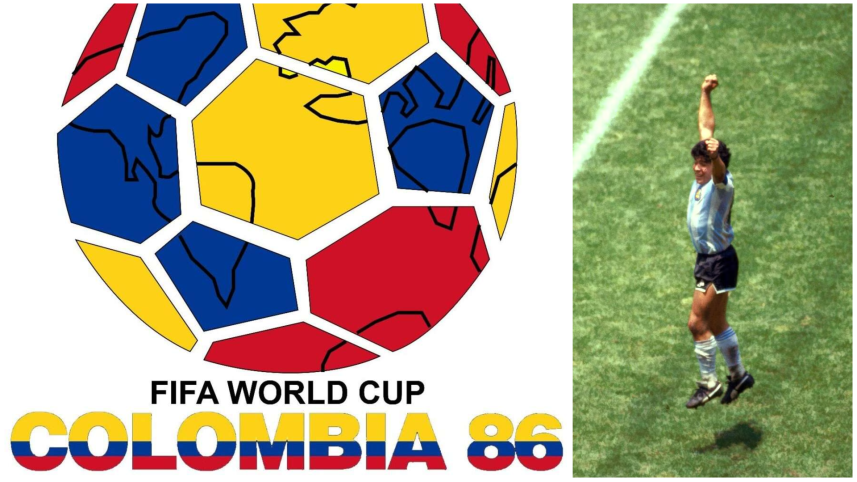
Whenever the 1986 Mexico World Cup is mentioned, the Azteca Stadium immediately springs to mind. One visualises Diego Maradona, the 'Football God', descending to earth in his light blue and white jersey, hoisting the coveted golden trophy amidst the deafening roars of Mexico City. But what if the wheels of history had turned ever so slightly differently?
Could the scene not have been Maradona scoring his 'Hand of God' goal at the Atanasio Girardot Stadium in Medellín? Or a victory parade for Maradona snaking through the streets of Bogota?

While the imagination is a thrill, the reality of history is far more cold-blooded. In the FIFA archives, a tournament titled 'Colombia 86' simply does not exist. There is no video footage, nor are there photos of a trophy presentation. This was the 'ghost' World Cup of football history -- a tournament that, a decade after being finalised, was simply struck off the books. Colombia remains the only country in footballing history to be granted host status, only to turn around at the last minute and give FIFA a flat 'no'.
The primary architect behind the bid to make Colombia the host was Alfonso Senior Quevedo. A legendary Colombian football administrator, founder of the famous club Millonarios, and an influential member of the FIFA Executive Committee, his personal, sky-high ambition was to showcase his motherland on the world stage. At the 1974 FIFA Congress in Munich, Colombia was declared the host for the 1986 edition without a single rival challenger.
The then-Colombian President, Misael Pastrana, remarked with pride: "I am truly satisfied. This proves that when a country sets a goal and remains committed, it can achieve it." Little did Pastrana know that FIFA’s promise would eventually become a noose around his country’s neck.
When Colombia won the bid, the World Cup consisted of 16 teams. However, in 1974, Brazil’s João Havelange ascended to the FIFA presidency. He was the man who transformed football from a mere sport into a billion-dollar corporate product. It was under his reign that the number of teams was increased from 16 to 24, starting with the 1982 World Cup.
As the number of teams grew, the financial burden on the host country increased exponentially. Infrastructure that was sufficient for 16 teams became a mountain of a task for 24. Havelange’s FIFA presented Colombia with a list of conditions that looked less like a football tournament and more like the coronation of an empire. The potential cost of hosting soared from 5 billion Colombian pesos to somewhere between 70 and 100 billion.
FIFA slapped Colombia with 12 demands that were nearly impossible to meet given the country’s situation at the time. Their extravagant wishlist included:
- 12 stadiums with at least 40,000 capacity for the first round.
- 4 stadiums with at least 60,000 capacity for the knockout stages.
- 2 stadiums with at least 80,000 capacity for the opening and final matches.
- The construction of a massive communications tower in Bogotá.
- A decree legalising the free movement of international currency.
- A fleet of limousines at the ready for FIFA directors.
- A railway network and modern airports connecting all venues.
- An advanced road network for spectator travel.
By 1982, it was clear that Colombia hadn't come anywhere close to meeting these terms. There were no signs of infrastructure construction. As pressure from FIFA mounted, the Colombian government realised this luxury was beyond their means.
Colombia’s domestic situation was dire; hosting a World Cup amidst a staggering economy was pure fantasy. The country was embroiled in civil war, daily life was ravaged by drug cartel violence, and the economy was on the brink of collapse due to falling global prices of coffee -- their primary export. The newly elected President, Belisario Betancur, realised that building hospitals for the common man and feeding the hungry was far more urgent.
On 25 October 1982, Betancur stunned the world with a televised address. In a stern yet patriotic tone, he announced: "Because we value the public interest and know that waste is an unforgivable crime, I inform my fellow citizens that the 1986 FIFA World Cup will not be held in Colombia... We have a great deal of urgent work to do here, and we do not have enough time or money to indulge the extravagances of FIFA and its members."
Alfonso Senior was devastated. He lamented: "Colombia is a small country that cannot handle big things. I wanted something grand for Colombia, but Colombia has let me down."
With Colombia’s withdrawal, Canada, the United States, and Mexico entered the race to become the new host. In the end, FIFA handed the responsibility to Mexico in 1983. Having previously hosted in 1970, Mexico made history as the first country to host the World Cup twice. Although a catastrophic earthquake in 1985 cast dark shadows of uncertainty over the tournament, they ultimately managed to host it successfully.
The ultimate irony was that Colombia failed even to qualify for the 1986 tournament that was supposed to take place on their soil. They were knocked out of the South American qualifiers after a 4-2 aggregate defeat to Paraguay in the play-offs.
However, four decades later, analysts view President Betancur’s decision as one of supreme wisdom. Refusing to bow to FIFA’s corporate pressure and choosing instead to spend taxpayers' money on education, health, and security was an act of genuine patriotism. In a modern era where countries often host World Cups only to be left drowning in massive debt, Colombia’s historic 'no' in 1986 remains a shining example of prudence.
 For all latest news, follow The Daily Star's Google News channel.
Comments