


France reveal frailties, Morocco show resolve

World Cups are rarely won by the team playing the most attractive football. More often, they are won by those who solve problems quickest when the tournament begins with uncomfortable questions.
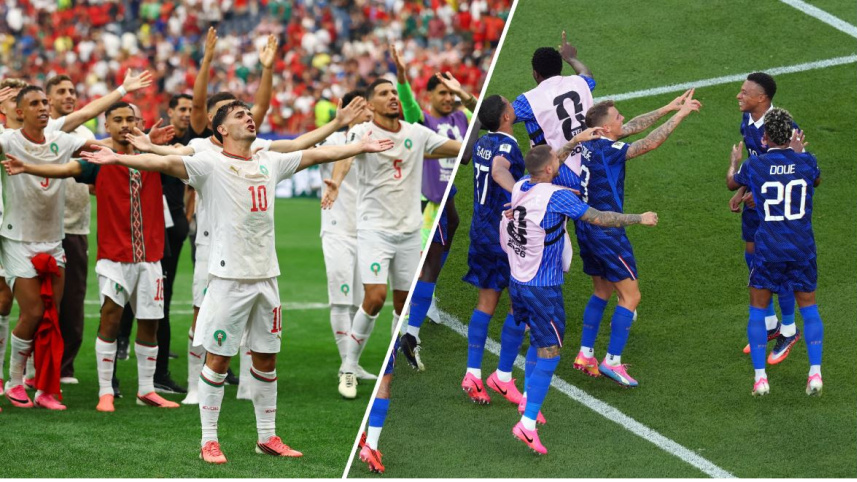
France and Morocco head into their quarterfinal meeting having provided very different answers.

France progressed, but their narrow 1-0 win over Paraguay resembled an early stress test more than a declaration of title credentials. Morocco, meanwhile, strengthened the impression during their commanding 3-0 victory over Canada that they have evolved from ambitious outsiders into a side fully aware of what it takes to navigate the latter stages of major tournaments.
The contrast is significant because knockout football is less about aesthetics and more about sustainability.
Paraguay exposed a potential weakness that future opponents will undoubtedly study. By compressing spaces around Kylian Mbappe and Michael Olise, doubling up in wide areas and turning the contest into a series of physical duels, they disrupted the rhythm upon which much of France's attacking play depends.
The issue for coach Didier Deschamps is not that France struggled against a disciplined defensive side. Elite teams routinely encounter stubborn resistance in knockout football. More concerning was the lack of variation once their preferred patterns were denied.
Mbappe remains devastating in transition and France still possess an enviable array of attacking talent, but the Paraguay encounter suggested that their attacking structure can become predictable when opponents refuse to engage in open exchanges.
At times, France appeared reactive rather than assertive.
Their breakthrough stemmed not from sustained tactical superiority. It required a cohesive persistence and finally the individual quality of Desire Doue to earn a penalty.
That ability to grind out results is a hallmark of champions, but it also highlights vulnerabilities that stronger opponents may be better equipped to exploit.
There is, however, another reading.
Successful tournament sides often emerge stronger from precisely these kinds of examinations. France have repeatedly shown an ability to withstand adversity without losing composure, and their encounter with Paraguay may yet serve as a timely reminder that adaptability matters as much as talent in do-or-die situations.
Morocco, meanwhile, appear to be moving in the opposite direction.
Against Canada, they displayed something beyond technical quality or tactical discipline. They displayed certainty.
Four years ago, Morocco's remarkable World Cup run was built largely on resilience and defensive organisation. This version appears more complete, carrying an assurance that suggests a team increasingly comfortable with its status among the elite.
Canada enjoyed spells of control and created opportunities, especially in the opening minutes. But what set the 2026 Morocco apart from the one in Qatar is that they showed what elite teams must possess in tournaments. They remained committed to their approach, trusting that opportunities would eventually arrive and, more importantly, believing they would take them.
That composure is often the final stage in a team's evolution from challenger to contender.
International tournaments are increasingly decided by efficiency rather than territorial dominance, and Morocco's conversion rate against Canada -- three goals from four shots on target -- reflected a side comfortable operating within fine margins.
For France, victory reinforces the belief that their difficulties against Paraguay represented an isolated challenge rather than an emerging trend. Their ceiling remains exceptionally high because few nations can match their blend of pace, experience and game-changing talent.
Another unconvincing display, however, would intensify concerns that opponents have identified a blueprint for unsettling them.
 For all latest news, follow The Daily Star's Google News channel.
 Morocco's prospects are equally compelling.
They possess the tactical discipline to frustrate elite opposition, but unlike Paraguay, they also have the attacking sophistication to punish moments of vulnerability. That balance makes them particularly dangerous in knockout football.
More importantly, Morocco increasingly carry the aura of a team that understands tournament football -- when to absorb pressure, when to manage tempo and when to strike decisively.
Morocco may have the momentum. But France still have the pedigree.
Their meeting could reveal whether France remain firmly on course for another World Cup challenge or whether Morocco's transformation into one of football's emerging heavyweights is now complete.
Comments