


A kiss eight years in the making

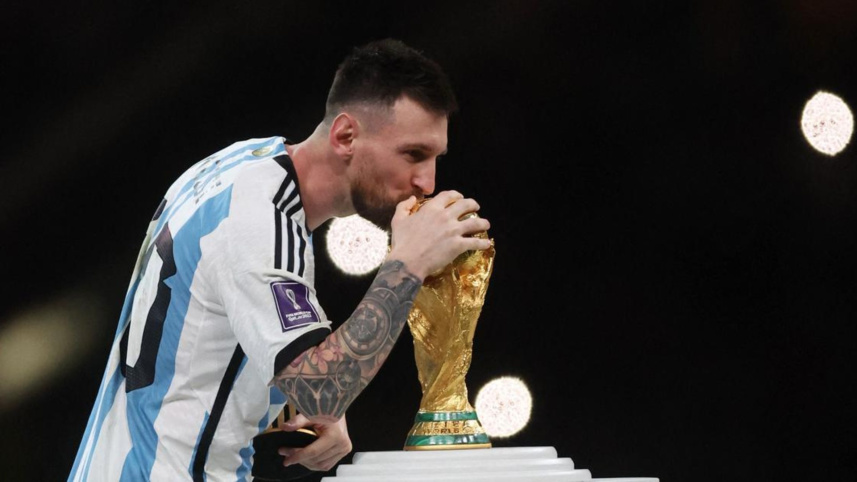
Lionel Messi stepped onto the stage. The Golden Ball was placed in his hands -- the award for the tournament’s best player. He had received it before, in 2014. But this was different. There is a difference between walking up to collect a trophy and walking onto a stage on the greatest night of your life.
He took the award. Turned around.

And then his eyes found it.
The trophy: golden, gleaming. At that moment, perhaps the most coveted object on earth.
Officially, it would be handed to him in a matter of minutes. Just a few minutes more. But even that brief wait felt too long.
Messi leaned forward. He touched it gently. A kiss. Then another. Two kisses.
To understand those kisses, you have to go back eight years.
Brazil, 2014.
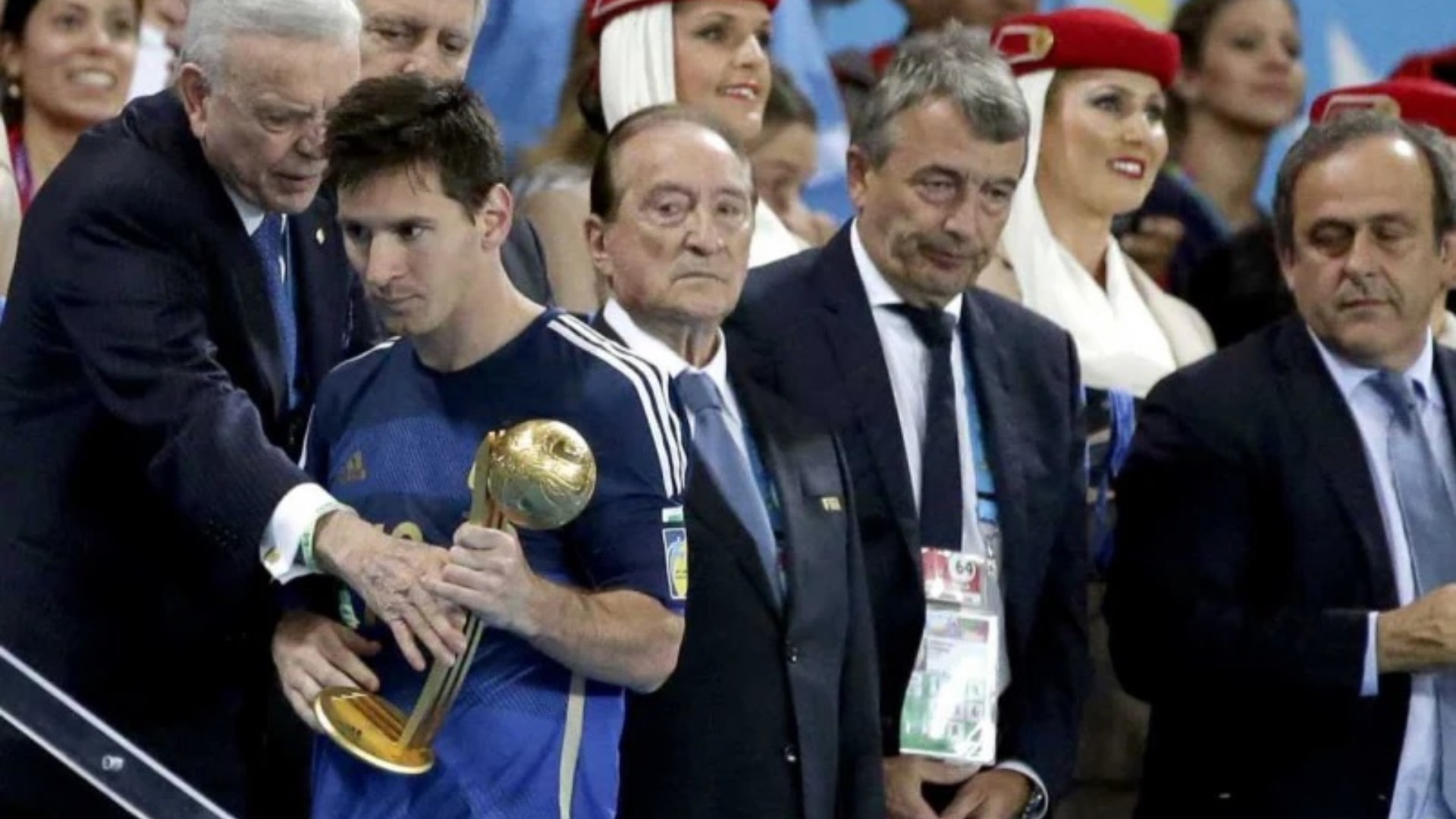
Argentina had just lost the World Cup final to Germany. Messi stood on the podium, the Golden Ball in his hands. Right in front of him sat the World Cup trophy.
So close, yet impossibly far away.
The rules were clear. Only the champions could touch it. Messi looked at the trophy. Perhaps he wanted to reach out. Perhaps he imagined what it would feel like. But he never stretched out his hand.
The image from that night remains one of the defining photographs of his career.
Messi walking away with the Golden Ball, eyes empty, shoulders heavy, carrying an award that seemed meaningless because it was not the one he truly wanted.
Nobody knows what he was thinking that evening.
But eight years later, on the podium at Lusail, as he leaned towards the trophy, perhaps that memory returned.
Before Messi arrived, two of his teammates had already walked that same path.
First came Enzo Fernandez, only 21 years old, collecting the Young Player Award. The trophy stood before him. Whether temptation crossed his mind, nobody knows. But he did not stop. He did not touch it.
Then came Emiliano Martínez with the Golden Glove. The goalkeeper who had become Argentina’s wall throughout the tournament and transformed the final through his heroics in the shootout.
He, too, resisted.
 For all latest news, follow The Daily Star's Google News channel.
 Perhaps both men understood that this trophy belonged to someone else. That the first touch should belong to him.
Then Messi arrived. And restraint disappeared. Two kisses. This is where the story pauses for a moment.
Because those kisses were not merely an emotional gesture. They carried the weight of an entire life.
They carried the dust of Rosario, the corridors of Barcelona, four broken World Cup dreams, a retirement announcement, and the story of a man who came back when many thought he had nothing left to prove.
Without that journey, the significance of those kisses cannot truly be understood.
Rosario, 1987.
A boy was born on the banks of the Paraná River. Whenever a football reached his feet, he seemed impossible to stop. Street corners, school playgrounds, neighbourhood pitches -- wherever there was space, he played.
But his body was betraying him. At eleven years old, he was diagnosed with growth hormone deficiency. Treatment existed, but it cost nearly 900 dollars a month, far beyond what his family could afford. Argentine clubs hesitated to take the risk.
Then Barcelona arrived. A contract reportedly scribbled on a napkin.
We will pay for the treatment. Just come. He went. And because he went, the football world would never be the same again.
At Barcelona, Messi evolved into something extraordinary.
Almost everything he touched turned to gold. He became the symbol of an era. A nightmare for defenders, a marvel for supporters and a blessing for teammates.
Records fell relentlessly. Goals arrived in impossible numbers. Ballon d’Ors accumulated. Champions League trophies followed. La Liga titles became routine.
Yet one question never disappeared. One void remained.
“Where is the World Cup?” Whenever he exchanged Barcelona’s colours for Argentina’s blue and white, the burden returned. The question was always waiting. Four World Cups. Four different heartbreaks.
In 2014 he came closest. Ninety minutes away. One final hurdle. One cruel defeat to Germany.
The image from that night remains unforgettable.
Messi holding the Golden Ball with clenched jaw and hollow eyes, as though his body stood on the podium but his spirit had already left.
Where was that face now?
Lusail Stadium, December 18, 2022.
History exhaled.
The final against France contained everything football can offer -- drama, fear, disbelief, redemption and chaos. One moment Argentina seemed champions. The next, everything appeared lost.
Every minute felt like an hour. Then came the penalty shootout. Billions watched. One save. Another successful penalty. Then the final whistle.
At last. Thirty-six years of waiting were over. Messi’s longest wait was over too.
He dropped to his knees. His eyes filled with tears. Teammates sprinted towards him. The stadium erupted. The roar felt large enough to shake the world. And shortly afterwards came the moment.
The moment an entire lifetime had been building towards.
The World Cup trophy was finally lifted in both hands. Golden light exploded around him. But this story is not simply about one final.
For years, critics claimed Messi could never replicate his Barcelona greatness for Argentina. Whether that judgement was fair is another debate entirely. What matters is that he heard it.
He felt it. His tears after winning the Copa América revealed as much. The World Cup was the final piece of proof.
The final answer. When he raised the trophy, the sound inside Lusail was more than celebration.
It was the emotional release of an entire generation. Millions flooded the streets of Buenos Aires. They celebrated in Dhaka. They celebrated anywhere a sky-blue and white flag could be found. Because Messi winning the World Cup was never only Argentina’s story.
It became the story of anyone who has ever dreamed, failed, waited, and refused to stop believing. The World Cup had been waiting for his kiss. At long last, it received it.
Comments