


An unrealised dream and one lingering question
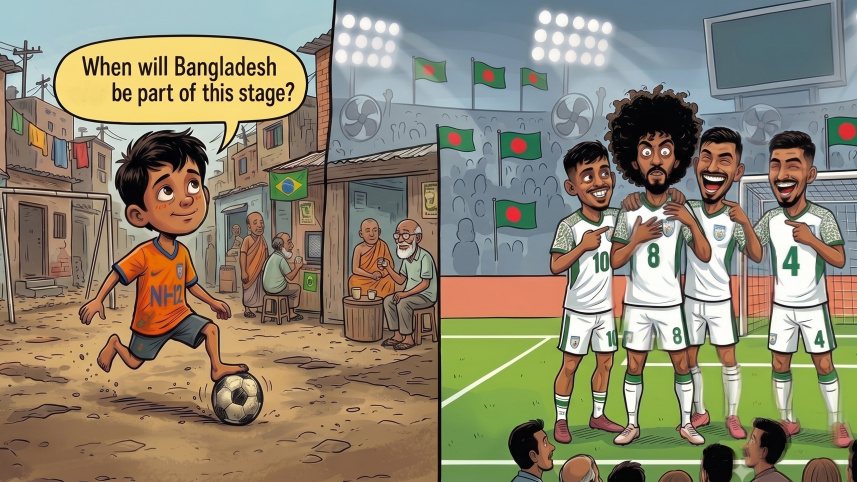
Growing up in the mid-1980s, football in Bangladesh was never merely a sport. It was emotion, identity, and everyday life stitched into dusty neighbourhood fields and crowded tea stalls.
In our locality, children divided their afternoons between cricket, badminton, marbles, carrom, chess, or football. I chose the latter without hesitation.

Back then, the country itself seemed split into two camps -- Mohammedan and Abahani. You were either loyal to the Black and Whites or devoted to the Sky Blues.
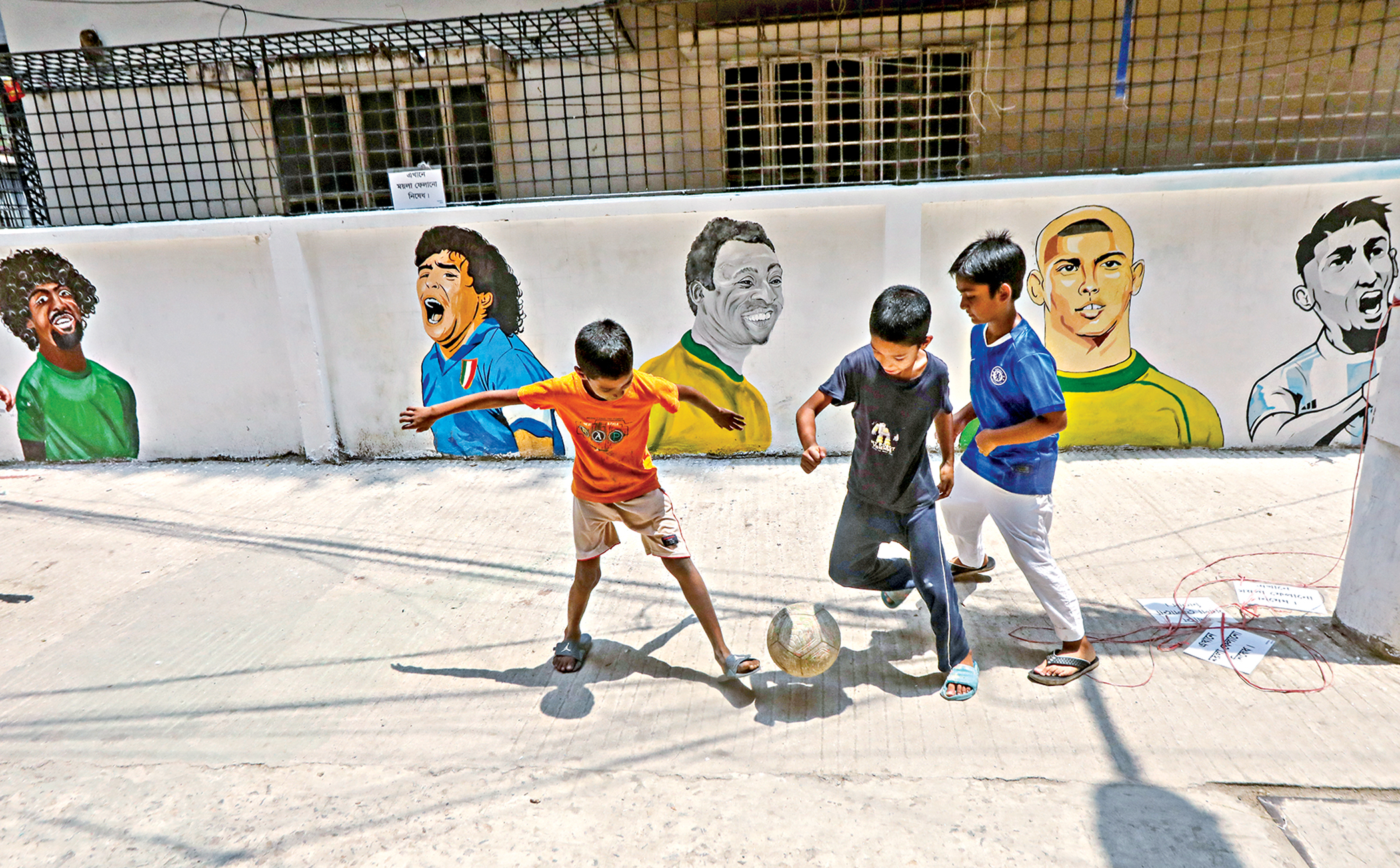
Yet, despite the obsession with football, the wider world of the game remained strangely distant. Television sets were still rare in many neighbourhoods, and international football felt like another universe. For a young boy growing up in Bangladesh, football meant local derbies and neighbourhood games.
Then came 1986.
I still remember hearing two words repeatedly during our regular evening football sessions: “Mexico” and “World Cup.”
My true introduction to the global game came four years later during the 1990 FIFA World Cup in Italy. By then, I was in high school, and television had started creeping into our lives more regularly. The promotional videos before the tournament mesmerised me. The Dutch trio of Marco van Basten, Ruud Gullit, and Frank Rijkaard looked larger than life. Their style, flair, and confidence made football feel cinematic.
As the tournament approached, older brothers in the neighbourhood launched aggressive recruitment campaigns for their favourite nations. Brazil supporters boasted about samba football. Argentina fans worshipped Diego Maradona. Germany loyalists talked about discipline and power. England supporters carried hope like religion.
But my decision had already been made. Captivated by the Dutch trio, I proudly chose the Netherlands and wore orange with unwavering loyalty.
Still, amid the carnival of the World Cup, one innocent question lingered in my mind: when would Bangladesh ever be part of this stage?
That question, asked by a child on a dusty neighbourhood pitch, has stayed with me for around four decades.
Ironically, football eventually shaped my profession as much as my childhood. After completing my post-graduation in journalism, I became a sports reporter. For the last 22 years, I have covered Bangladesh football closely -- from press boxes, training grounds, federation corridors, and countless disappointing campaigns.
And from that privileged vantage point, one reality has become impossible to ignore: Bangladesh has never truly built a roadmap toward the World Cup.
There have been slogans, promises, and dreams. In 2014, former Bangladesh Football Federation (BFF) president Kazi Salahuddin announced “Vision 2022,” speaking ambitiously about playing in the Qatar World Cup. But ambition without planning remains fantasy. There was no sustainable blueprint, no coherent football philosophy, no grassroots revolution to support such a dream.
The results reflected that emptiness. Bangladesh have not even reached the SAFF Championship final since 2005. While neighbouring nations like India modernised structures and invested in player development, Bangladesh football drifted into decline.
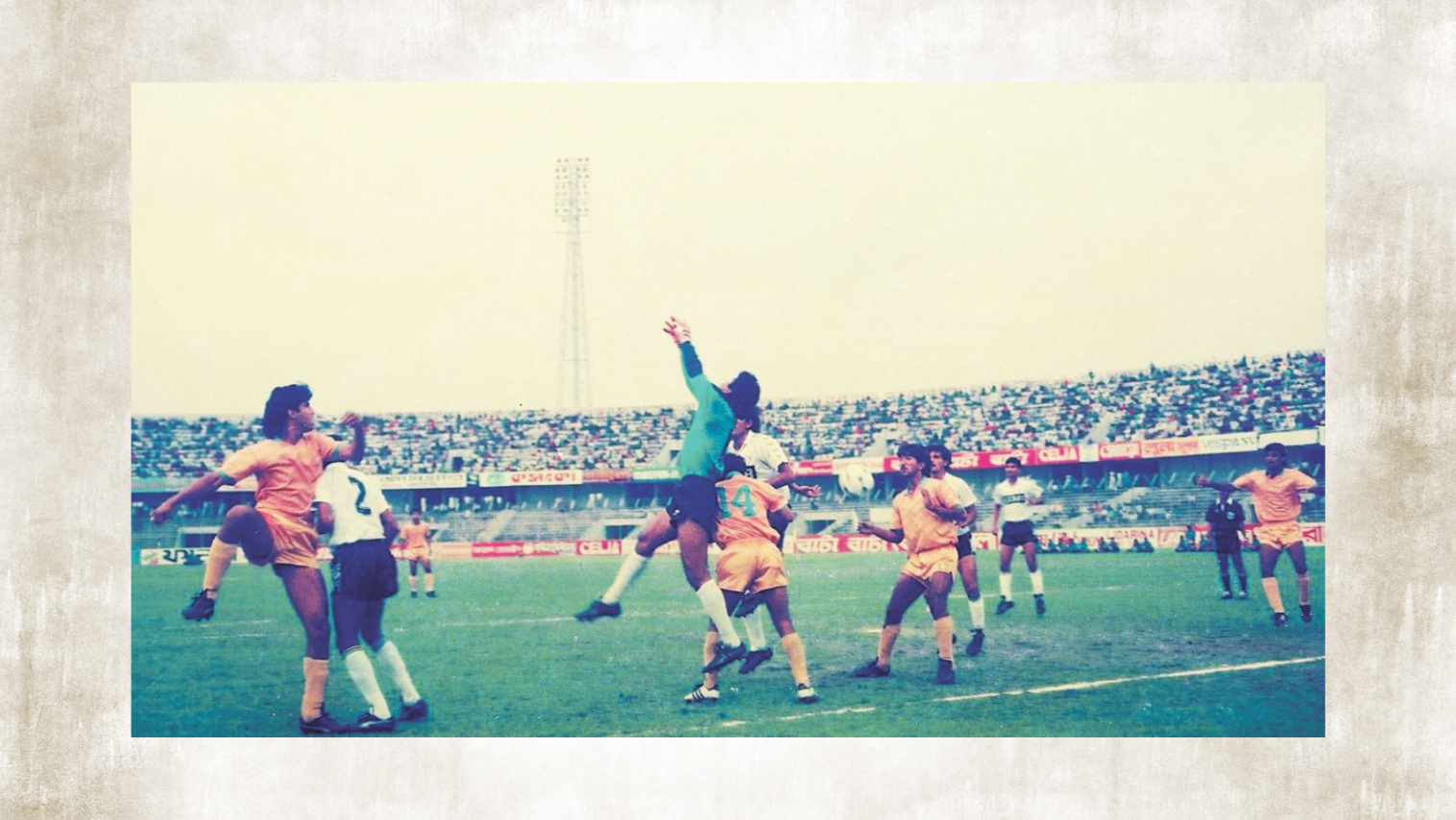
Even after 17 years of professional football, most domestic clubs still operate without meaningful youth academies or long-term development programmes. The obsession has remained with quick fixes -- signing ready-made foreign recruits each season rather than nurturing local talent. At the district level, football infrastructure has steadily deteriorated, shrinking the player pool alarmingly.
Foreign coaches often express disbelief that such a densely populated nation cannot produce a competitive football team. But population alone means little without systems. A country of nearly 180 million barely have around 18,000 professional footballers -- a startlingly low number for such a football-crazy country.
Yet, just when the game here seemed trapped in permanent decline, a new possibility emerged.
 For all latest news, follow The Daily Star's Google News channel.
 In 2025, England-born Leicester City midfielder Hamza Choudhury chose to represent Bangladesh. His arrival electrified local football in ways unseen for years. Stadiums filled again. Supporters returned with renewed excitement. Soon, Canada-based Shamit Shome, USA-based Zayyan Ahmed, Italy-based Fahamedul Islam and others followed the same path.
For the first time in years, Bangladesh football felt connected to the global game rather than isolated from it.
And perhaps that connection offers the country its most realistic route toward international competitiveness.
This expanded 48-team World Cup offers cases of how smaller teams have been shaped by diaspora talent -- strategically using foreign-origin players to bridge competitive gaps.
Cape Verde are one of the most fascinating examples. The island nation only began participating in World Cup qualifiers in 2002. 24 years later, they have reached the World Cup for the first time -- powered entirely by a squad effectively built on 100 percent foreign-origin footballers.
They are not alone.
Curacao also rely entirely on foreign-based players, while Panama and Haiti feature squads with more than 90 percent overseas-developed footballers. These nations recognised a fundamental truth early: in a globalised football landscape, diaspora communities are not shortcuts -- they are strategic assets.
Bangladesh appear to be arriving at that understanding much later.
BFF continues searching for more eligible foreign-based players, hoping to strengthen the national side quickly. Whether Bangladesh eventually resembles Cape Verde remains uncertain. But the logic behind this approach is increasingly difficult to dismiss.
However, there is also a danger in viewing overseas talent as a magic solution.
Cape Verde’s success did not happen overnight simply because they recruited foreign-origin players. Their football authorities gradually built structure, continuity, and long-term planning around that talent pool. Bangladesh cannot merely collect overseas footballers while ignoring grassroots collapse at home.
The deeper crisis remains unchanged. School football has weakened. District competitions have faded. Youth academies are scarce. Coaching structures remain inconsistent. Without rebuilding the football pyramid from the ground up, Bangladesh risk creating a national team disconnected from its own football ecosystem.
And yet, despite all the failures, the dream stubbornly survives.
Every four years, Bangladesh transforms into one of the world’s most passionate World Cup audiences. Streets turn into seas of Argentina, Brazil, Germany, and France flags. Children still gather on neighbourhood fields after sunset, arguing over goals and heroes exactly as we once did.
Somewhere among them is another young boy hearing words like “World Cup” and “Mexico” or “United States” for the first time. Somewhere, another child is probably asking the same innocent question I once asked in 1986.
For now, the answer still feels distant. But perhaps, with realistic planning, proper grassroots investment, and intelligent integration of diaspora talent, that dream no longer has to remain impossible.
Comments