


When a prince stopped play: The World Cup’s most bizarre intervention


The FIFA World Cup is not only about battles on the pitch, goals, and the roar of the crowd. At times, the drama off the field also secures a permanent place in history.
But what happened at the 1982 World Cup in Spain goes far beyond mere drama -- it was one of the most bizarre, unprecedented, and controversial episodes in football history, where a country’s prince walked onto the pitch to influence a referee’s decision.

That astonishing incident took place during a group-stage match between France and Kuwait in Valladolid, an episode that still fuels discussion among football fans.
For Kuwait, 1982 was a historic year. The small Gulf nation had qualified for the World Cup finals for the first time. In their opening match, they surprised the world by holding Czechoslovakia to a 1–1 draw. Their next challenge, however, was against a formidable French side led by Michel Platini -- a task akin to scaling Everest.
As expected, France dominated proceedings from the outset. Relentless attacking pressure left Kuwait’s defence in disarray.
With France leading 3-1 in the 79th minute, French midfielder Alain Giresse burst into the penalty area and fired the ball into the net. By all normal standards, the score should have become 4-1. But that is when the chaos began.
At the moment of the goal, Kuwait’s defenders suddenly stopped, almost frozen in place, making no attempt to challenge Giresse. They believed the referee had stopped play -- thinking they had heard a whistle. The confusion, it later emerged, was caused by a “mysterious” whistle sound coming from the stands.
The match referee, Miroslav Stupar of the Soviet Union, initially ignored the protests and awarded the goal. But Kuwaiti players immediately surrounded him, insisting they had been misled by the whistle and had stopped playing in good faith.
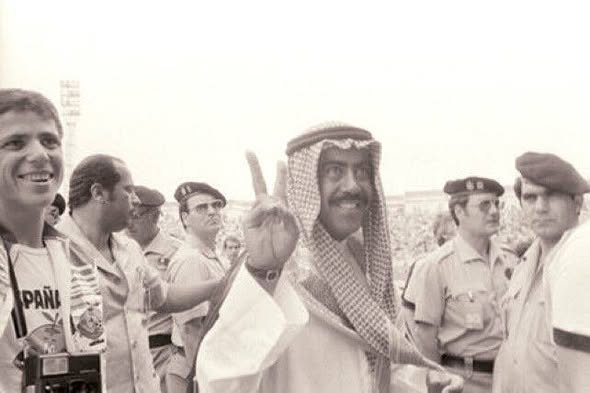
As tensions escalated, an extraordinary and highly inappropriate scene unfolded -- one rarely, if ever, witnessed in football. Sheikh Fahad Al-Ahmed Al-Jaber Al-Sabah, then president of the Kuwait Football Association and a member of the royal family -- popularly known as Prince Fahad -- descended from the stands and walked directly onto the pitch.
French defender Manuel Amoros later recalled, “We saw the Kuwaiti prince coming onto the field, accompanied by his security guards.”
Prince Fahad confronted the referee and engaged in a heated argument, even threatening to withdraw his team if the goal was not disallowed. Play was halted for several minutes as the world watched in disbelief -- at a World Cup match, a football official and royal figure openly pressuring the referee.
In an even more astonishing turn, referee Stupar yielded to the pressure. He controversially disallowed Giresse’s legitimate goal and restarted play with a dropped ball. Furious French players could hardly believe what they had witnessed. Amoros later quipped, “He behaved as if he were the FIFA President himself.”
However, Kuwait’s temporary reprieve did not last long. Within 10 minutes, France scored again and ultimately secured a 4–1 victory. Yet the incident raised serious questions about the integrity of the game.
After the match, FIFA took strict action. Stupar was banned for life from officiating international matches for allowing such unprecedented interference. Prince Fahad, meanwhile, was fined. Kuwait went on to lose their final group match 1-0 to England and were eliminated from the tournament.
While Prince Fahad may have briefly prevented a goal, he could not alter football’s enduring truths. Since 1982, Kuwait have never returned to the World Cup stage -- a long absence that many still associate with that infamous and ill-fated moment.
 For all latest news, follow The Daily Star's Google News channel.
Comments