


Endoscopy, early warning signs and the future of digestive care

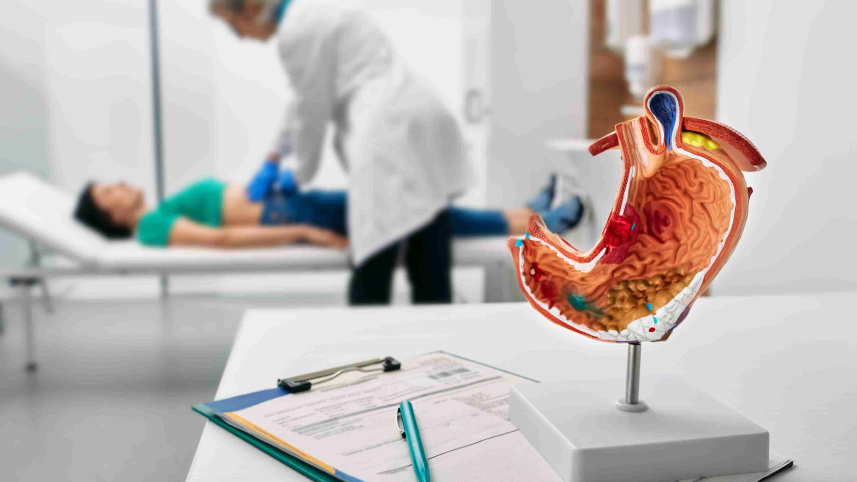
Digestive diseases range from common problems such as acidity and ulcers to life-threatening cancers of the stomach, pancreas and colon. During a recent visit to Dhaka, Clin Associate Professor Christopher Khor Jen Lock, Senior Consultant Gastroenterologist at Singapore General Hospital, spoke to The Daily Star about modern endoscopic procedures, cancer prevention, lifestyle risks, and how artificial intelligence is reshaping gastroenterology.
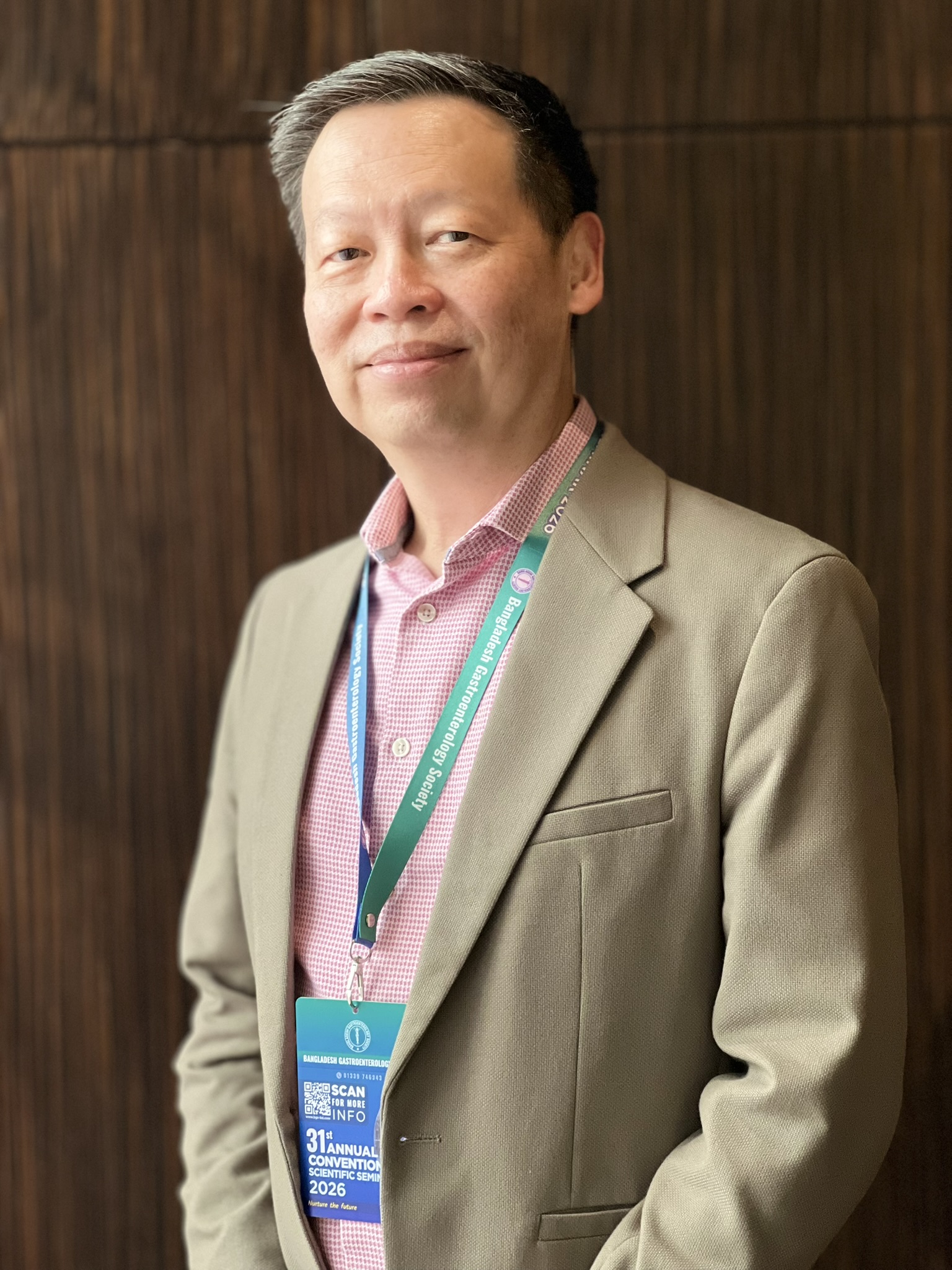

For general readers, could you explain what ERCP is and how it helps patients?
ERCP, or endoscopic retrograde cholangiopancreatography, is a highly specialised endoscopic procedure used to treat diseases of the bile duct and pancreatic duct. A flexible tube with a camera is passed through the mouth, stomach and into the small intestine. From there, we can access the bile duct or pancreatic duct using fine instruments.
Although ERCP carries higher risks than routine endoscopy, its benefits are substantial. Conditions that once required major surgery—such as bile duct stones, blockages caused by cancer, or infections of the bile ducts—can now often be treated internally, without any external cuts or scars. In many cases, this means faster recovery and fewer complications.
In countries where advanced endoscopic facilities are limited, what happens to patients?
In less well-resourced settings, patients often undergo surgery for conditions that could otherwise be managed endoscopically. While surgery can be effective, it generally carries higher risks than endoscopic treatment. Across many parts of Asia, endoscopy has replaced surgery for these problems without any loss of effectiveness—and often with better safety. Expanding access to quality endoscopy is therefore an important public health goal.
Digestive diseases range from acid reflux to cancer. What warning signs should people not ignore?
In Bangladesh, cancers of the stomach and oesophagus are relatively common. People should seek medical advice promptly if they experience:
- Difficulty or pain when swallowing
- Food getting stuck while eating
- Persistent upper abdominal pain that does not improve
- Unexplained weight loss or loss of appetite
- Blood in the stool or black stools
- A lasting change in bowel habits
These symptoms do not always mean cancer, but they should never be ignored.
How effective is colon cancer screening, and should people in Bangladesh consider it?
Colon cancer is one of the most preventable cancers. It usually develops slowly, over 10–15 years, from small growths called polyps. If these are detected and removed early, cancer can be prevented altogether.
There are two effective screening methods. One is an annual stool test known as the faecal immunochemical test (FIT), which detects hidden human blood in the stool. It is inexpensive, simple, and does not require dietary restrictions. If the test is positive, a colonoscopy is performed.
The second option is colonoscopy itself, which is more expensive upfront but does not need to be repeated annually. For countries like Bangladesh, FIT-based screening may be a practical and cost-effective starting point, provided there is capacity to follow up positive cases.
Why is colon cancer more common in Western countries?
Diet plays a significant role. Low fibre intake, high consumption of animal fats, processed foods, and preservatives such as nitrates all increase risk. A lack of fresh fruits and vegetables—and therefore antioxidants—also contributes. Genetics matter too. For example, rates are high among Western populations but also among Japanese and Singaporean Chinese communities.
You place strong emphasis on quality in endoscopy. Why does this matter to patients?
Quality ensures trust. A negative endoscopy should truly mean there is no disease. Poor-quality examinations risk missing serious conditions. High standards also ensure that when disease is detected, treatment is timely and effective.
Education is equally important. We are training the next generation of gastroenterologists, and sustainable healthcare depends on having enough well-trained specialists who can deliver safe, high-quality care.
How has gastroenterology evolved over the past decade, particularly with new technologies?
Globally, the most transformative development has been the introduction of artificial intelligence (AI) into endoscopy. AI systems can help detect small polyps, assess whether they may become cancerous, and even monitor examination quality—such as identifying blind spots or warning doctors if they are moving too quickly.
In Singapore, AI is still being introduced gradually, but its potential is enormous. Unlike humans, AI does not get tired. It helps ensure that examinations performed late in the day are as thorough as those done in the morning.
Does reliance on AI risk weakening doctors’ clinical skills?
This concern—known as de-skilling—is valid. Some early studies suggest that when doctors suddenly work without AI after using it extensively, performance may dip. However, AI should be a supplement, not a substitute, for sound training and clinical judgement. Doctors must first be trained to perform well without AI and then use it as an additional safety net.
What are the latest advances in managing pancreatic and biliary diseases?
Beyond ERCP, endoscopic ultrasound (EUS) has transformed care over the past 10–15 years. Using EUS, we can create internal drainage pathways between the bile ducts, stomach and intestine, allowing us to treat blockages caused by cancer without surgery. We can also drain infected gallbladders internally in patients who are not fit for surgery. These minimally invasive approaches significantly reduce risk and discomfort for patients.
You have trained and worked in different countries. How does Southeast Asia compare with the US or Japan?
The United States has some of the most advanced medical technologies, but access is unequal due to insurance and cost barriers. Singapore’s strength lies in its healthcare financing system, which ensures that citizens and permanent residents are never denied essential care. Advanced treatment is available, but within a strong safety net. For wealthy patients, differences between countries are minimal—they can access care anywhere in the world.
In Bangladesh, Helicobacter pylori infection and gastric ulcers are common. What practical advice would you give?
Helicobacter pylori is the single most important cause of stomach cancer worldwide. Anyone with persistent digestive symptoms—such as ongoing pain, vomiting, difficulty swallowing, or unexplained weight loss—should seek medical evaluation early. Avoid smoking, maintain food hygiene, and do not delay investigations when symptoms persist.
Looking ahead, what excites you most about the future of gastroenterology?
It is difficult to look beyond AI because its impact is so broad. Many major discoveries—such as identifying H. pylori as the cause of ulcers and stomach cancer—have already transformed patient care. That discovery was once dismissed as impossible, yet it eliminated much of ulcer disease worldwide.
 For all latest news, follow The Daily Star's Google News channel.
 Over the next decade, AI will continue to improve detection, standardise quality, reduce human error, and free doctors’ time for patient care. The challenge is to use it wisely, ensuring that technology enhances—not replaces—good clinical practice.
Comments