


“Glaucoma damage is irreversible — Early detection is critical”

During his recent visit to Bangladesh, Assoc Prof Shamira Perera, Head of the Glaucoma Department at the Singapore National Eye Centre (SNEC), spoke to The Daily Star about the silent nature of glaucoma, advances in cataract treatment, and how countries like Bangladesh can strengthen their eye-care services. Prof Perera, who also leads cataract research at the Singapore Eye Research Institute (SERI), shared his insights during a humanitarian and professional engagement programme in Dhaka.
 For all latest news, follow The Daily Star's Google News channel.
Glaucoma: The "silent thief of sight"
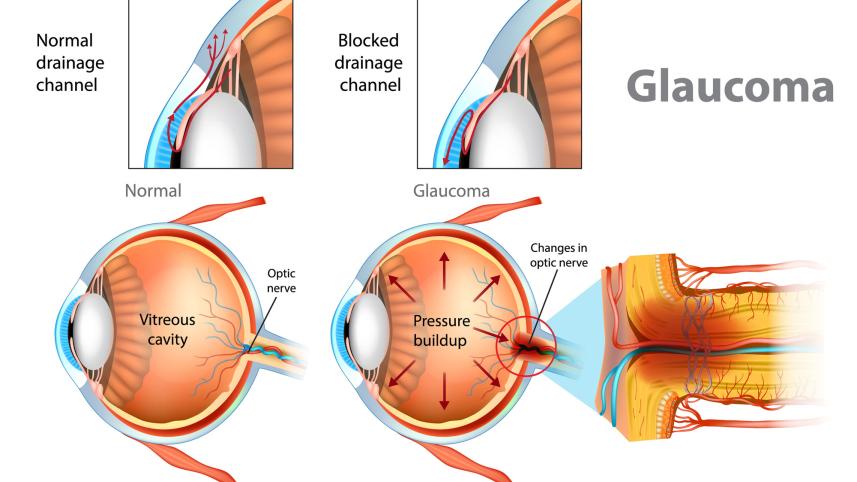
Prof Perera emphasises that glaucoma remains difficult to detect early because it is largely asymptomatic in its initial stages. "You lose vision only in the far periphery, and most people do not realise it is happening. Even when we show patients the visual field loss on testing, they often still feel normal," he explains. The disease usually affects both eyes, although sometimes asymmetrically.
The greatest danger lies in the fact that "all damage to the optic nerve is permanent. Unlike cataracts, the vision lost from glaucoma does not return." He notes that only one form of glaucoma presents early warning signs: acute angle-closure, when eye pressure rises suddenly, causing severe pain.
Who is at risk?
Understanding risk factors is crucial. Family history significantly increases risk, as do certain racial and medical profiles.
"Different populations have different types of glaucoma," he says. "The Chinese tend to have angle-closure due to smaller eye anatomy; Afro-Caribbeans get very aggressive glaucoma; Japanese and Koreans often have normal-tension glaucoma, where pressure is normal, but the blood supply to the nerve is poor. Diabetics can develop neovascular glaucoma."
He stresses that people with first-degree relatives affected by glaucoma should be routinely screened, as their risk is six times higher than the general population.
Challenges in Bangladesh and similar settings
Although he found the standard of care in major facilities in Dhaka "quite impressive", Prof Perera points out that the rural–urban divide remains stark. "In rural areas, access is poor, education levels are lower, and doctors may not have extensive specialist training," he observes.
He contrasts Bangladesh with India, where large-scale community outreach services—mobile vans, charity-supported cataract camps—have become well established. "In Bangladesh, such systems have not taken off in the same way."
He adds that stigma, misconceptions, and fear around eye surgery also play a significant role. "Complication rates for cataract surgery are actually extremely low, but communities may not be aware of that. Education is essential."
Advances in glaucoma treatment
Over the past decade, Prof Perera says the most significant improvements have been in diagnostics, medications, laser therapies, and minimally invasive glaucoma surgeries (MIGS).
Laser treatment, once a labour-intensive process, has become dramatically simpler. He describes a new automated SLT (Selective Laser Trabeculoplasty) system: "You stand at the machine; no contact lens on the eye is needed. It numbs the eye, identifies where to fire using landmarks, and delivers all 120 laser shots in one go—even remotely over Wi-Fi."
New drug classes and safer, quicker surgical options offer further hope, although many of these technologies are not yet available in all countries.
Diabetic eye disease: major progress with anti-VEGF therapy
Speaking about diabetes-related eye conditions such as diabetic macular oedema and neovascularisation, Prof Perera highlights the transformative role of anti-VEGF injections. "These drugs stop abnormal blood vessel growth and reduce fluid build-up. But once the effect wears off, the disease can recur—so ongoing monitoring is essential."
Is technology and AI reshaping eye care?
Artificial intelligence, he says, has made meaningful contributions, although the hype must be tempered with realism. "Some ideas, like Google's smart contact lens for glucose monitoring, simply did not work. But AI has been useful in other areas."
His team has used AI to:
- Upgrade lower-cost imaging machines to match the performance of high-end devices
- Clean up noisy scans, removing artefacts such as eyelashes or motion blur
- Identify new diagnostic markers not visible to the human eye, including structures behind the optic nerve
"This allows us to expand access to high-quality diagnostics," he adds.
Cataract surgery: safer, faster, more precise
Cataract remains the world's leading cause of reversible blindness, and surgery has advanced remarkably. "The latest phacoemulsification machines use less energy, cause less collateral damage, and give faster recovery. New lenses also provide better optics, improved materials, and options like blue-light filtering."
He highlights extended depth-of-field (EDOF) lenses and multifocal lenses, which improve distance and near vision with fewer side effects. Laser-assisted cataract surgery has also enhanced precision: "The laser creates perfect incisions and pre-softens the cataract, allowing us to remove it more gently."
Do lifestyle changes help prevent glaucoma or cataracts?
For glaucoma, lifestyle interventions are limited. "Most of it is genetic—you cannot change your parents," he says, half-jokingly. Regular exercise may help slightly lower eye pressure, but diet and blood pressure have no proven protective effect.
Cataracts, however, can be accelerated by trauma, excessive UV exposure, and high myopia. He recommends protecting the eyes from ultraviolet light and managing children's myopia early, including with atropine drops.
When the disease is detected too late
Patients who present with advanced glaucoma pose a complex challenge. "If someone has already lost 80 per cent of vision, outcomes depend heavily on their age and remaining life expectancy. We will treat aggressively in younger patients, but for elderly, bed-bound individuals, the priorities are very different."
Strengthening Bangladesh's eye-care ecosystem
Prof Perera believes Bangladesh has strong foundations in its tertiary centres, but expanding community-level access, early detection, and public education should be priorities. "In major hospitals, the treatment plans I reviewed were appropriate and high quality. But improving rural services remains essential."
A final note on eyewear innovation
While eyewear has seen incremental change, he mentions new technologies such as phone-controlled tint-adjusting glasses and Stellest lenses that help slow myopia progression in children.
Comments