


How Nature, Humans and Climate Shape the Next Global Threat
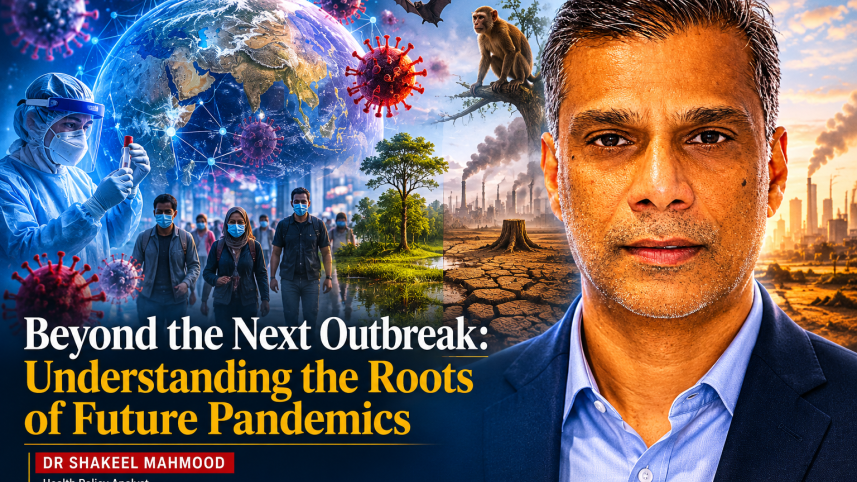
The origins of pandemics have become a defining concern in global health, extending far beyond the experience of COVID-19. Increasingly, scientists and policymakers recognise that the emergence of infectious diseases is deeply connected to the relationship between humans, animals and the environment.
Long before the concept gained global prominence, the late Major General Emeritus Professor M R Choudhury of Bangladesh warned in 1999 that disruption of ecological balance could trigger the emergence and re-emergence of dangerous microbes. His observation that “microbes can strike back when ecological balance is disturbed” now resonates strongly with contemporary pandemic science, where ecological integrity is regarded as a critical pillar of global health security.

Modern research suggests that most emerging infectious diseases originate through zoonotic spillover — a process in which pathogens pass from animals to humans. These spillover events are increasingly linked to deforestation, unplanned urbanisation, climate change, biodiversity loss, and intensified contact between humans and wildlife.
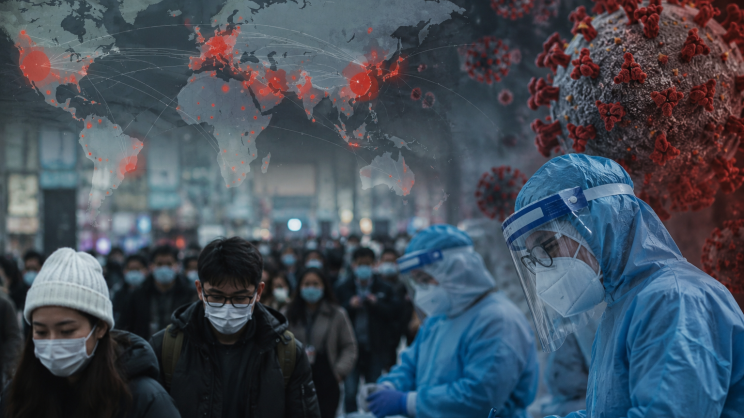
Historical outbreaks including SARS, MERS, Ebola, H1N1 influenza, avian influenza, and Nipah virus disease reveal a recurring pattern rather than isolated episodes. Together, they illustrate how environmental degradation and social transformation can create ideal conditions for pathogens to emerge and spread.
Recent developments further reinforce this concern. The 2026 Ebola outbreak caused by the Bundibugyo virus strain in the Democratic Republic of the Congo and Uganda, declared a Public Health Emergency of International Concern, highlights the persistent threat posed by emerging infectious diseases. At the same time, reports of multi-country clusters of hantavirus cardiopulmonary syndrome associated with cruise ship travel demonstrate how rapidly infectious threats can cross borders in an interconnected world.
In response to these growing risks, global health institutions, including the World Health Organization, are increasingly promoting the “One Health” approach. This framework recognises that human health, animal health and environmental health are inseparably linked, and that effective pandemic prevention requires coordinated action across all three domains.
International scientific bodies such as the Scientific Advisory Group for the Origins of Novel Pathogens (SAGO) have also emphasised the need for stronger disease surveillance, greater transparency, improved data sharing, and deeper international collaboration to identify and respond to emerging pathogens before they escalate into global crises.
Alongside scientific and institutional efforts, there is growing recognition of the value of Indigenous ecological knowledge in understanding environmental change and strengthening community resilience. Instruments such as the United Nations Declaration on the Rights of Indigenous Peoples (UNDRIP) support the inclusion of traditional ecological practices within broader global health and sustainability frameworks.
Pandemics, therefore, should not be viewed as random or isolated biological accidents. Rather, they are increasingly understood as the outcome of complex interactions among environmental disruption, climate pressures, ecological imbalance, and human behaviour. As these pressures intensify, the likelihood of future pandemics may also rise.
Understanding the origins of pandemics is no longer merely a scientific question; it is a global imperative. Protecting ecosystems, strengthening public health systems, and fostering international cooperation may prove just as essential to pandemic prevention as medical innovation itself.
Dr Shakeel Mahmood is a Health Policy Analyst with the Rural Health Research Project at Charles Sturt University, Australia. The opinions expressed are solely those of the author and do not necessarily reflect the views of the affiliated institution or university. Email: shmahmood@csu.edu.au
 For all latest news, follow The Daily Star's Google News channel.
Comments