


Into the blue
In one way or another, we are all addicted to life. Over billions of years, from simple atoms to conscious beings, non-existence slowly turned into existence.
As humans, our fundamental quest began with the search for meaning and purpose. Our emotions, filtered through ego, often chase happiness in familiar forms -- wealth, power, fame, and above all, love. We want to be seen. We want our presence to matter. Accepting our own insignificance is hard.

But what is life truly about? Wish there were a clear answer. Each of us arrives at our own version, shaped by experience. Yet along this uncertain path, one truth remains universal -- life has a beginning and an end. Between these two points lies the journey. What fills it depends largely on our choices. It can be quiet or eventful. That’s it.
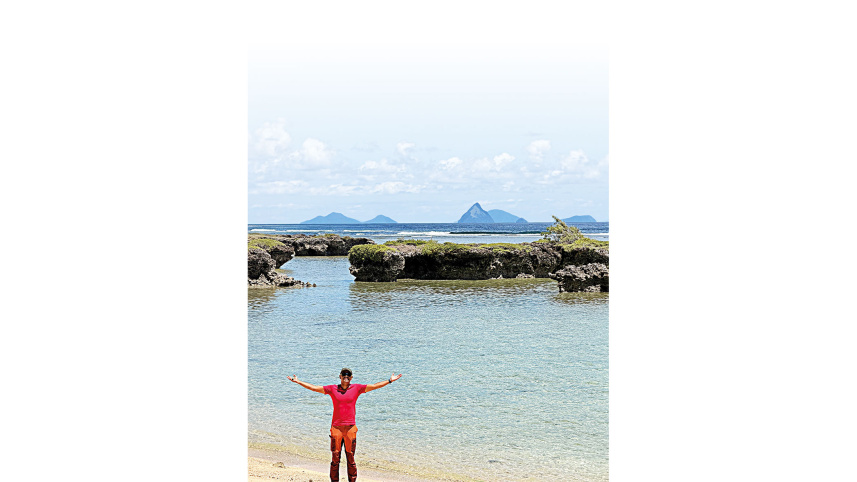
Our last journey took us to the South Pacific -- Fiji, Tonga, Samoa, and Vanuatu. These islands marked the last unexplored corner of the world for us. And there, at the edge of the map, surrounded by endless ocean, we were reminded once again that life is more than just being there.
We form attachments. We want our voices to be heard. We crave validation at every step. And slowly, complexity grows. Momentary clarity turns opaque, and then again, we find another thread leading to the hope of finding some meaning to it. The cycle goes on till we fade into oblivion.
As conscious beings aware of our mortality, we fear death. We struggle to accept that one day we will be gone -- just as we were before we were born. No existence. No memory. Only a silent return to the vast unknown.
If you have read this far, you are hearing from two people who are still trying -- still learning -- to see life and the world through a slightly different pinhole. We are a Bangladeshi couple, married for over 20 years, who found joy and purpose through travel and exploration. On this tiny speck of dust called Earth, floating in an immense ocean of space and darkness, certainty is rare. Beyond this, we simply do not know.
What we do have is life -- conscious minds and a small world to explore.
Over the past 18 years, we have slowly and deliberately turned travel into a way of life. We have visited 132 countries across all seven continents. Along the way, we have seen beauty that felt like heaven, encountered cultures vastly different from our own, met people who reshaped our understanding of humanity, and realised how fortunate we are simply to be alive.
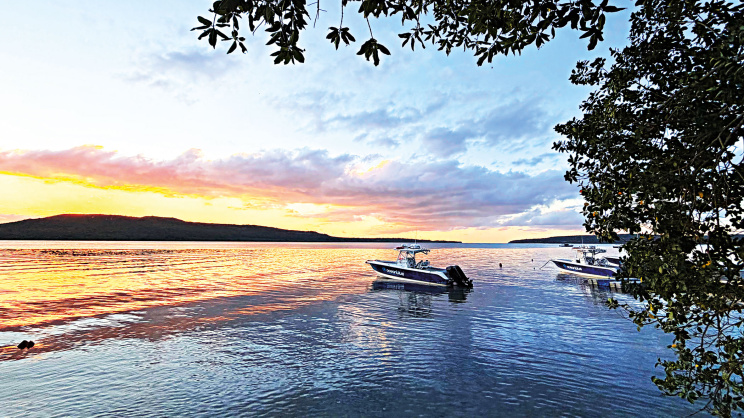
Our most recent journey took us to the South Pacific -- Fiji, Tonga, Samoa, and Vanuatu. These islands marked the last unexplored corner of the world for us. And there, at the edge of the map, surrounded by endless ocean, we were reminded once again that life is more than just being there. Exploring, experiencing, and letting go, while moving gently through the space between Point A and Point B, makes it more colourful.
The journey began with a long chain of flights -- New York to Dallas, then onward to Nadi, Fiji. Nadi became our hub. We rented a modest Airbnb where the host took care of our airport transfers, a small kindness that mattered after arriving from such a distance. From Fiji, we planned several short trips to neighbouring islands, which are within one to two-and-a-half hours by air. Fiji Airways acts as the main lifeline across the South Pacific.
Our first destination was Tonga.
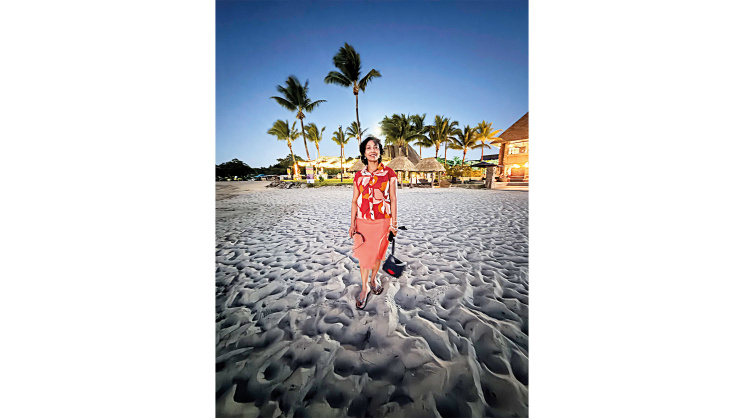
To be honest, Tonga felt small and underdeveloped. Heavy rain greeted us upon landing. Renting a basic, compact vehicle with no air-conditioning turned into an unexpected challenge. Anyone who has driven in tropical rain knows what comes next: the windshield fogs almost instantly. With rain pounding down and fog spreading across the glass, visibility shrank to little more than arm’s length.
This was unfamiliar land. New roads. No reference points. Trusting Google Maps, we followed directions to what we hoped would be a nearby restaurant for a quick meal before heading to our accommodation. Instead, the GPS led us to a desolate patch of land -- broken huts, half-standing structures, possibly an abandoned repair yard. Rain fell relentlessly. No people. No lights. No signs of life.
Then we noticed them.
A pack of stray dogs slowly surrounded the car. Their barking filled the silence -- loud, territorial, unsettling. There were no other buildings nearby, nowhere to turn. The road was muddy, reversing felt risky, and the car suddenly seemed far too small. For a brief moment, fear crept in. We sat still, windows tightly closed, breathing shallowly. Slowly, carefully, we managed to back away and escape our very first -- and unforgettable -- encounter with Tonga’s street dogs.
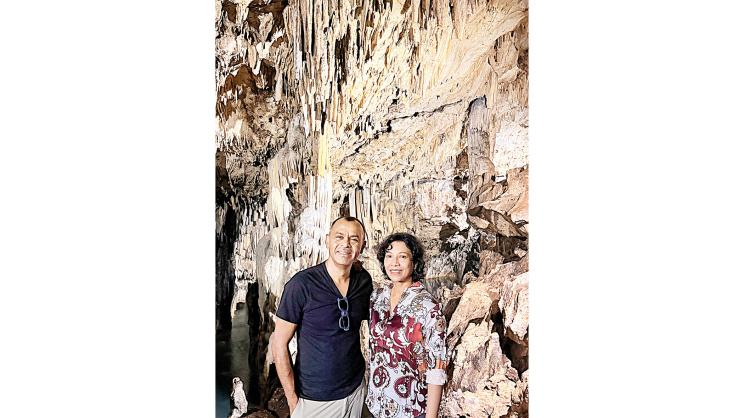
Relief followed us to our next stop: a forest treehouse Airbnb that looked stunning at first glance. Picturesque. Serene. Almost unreal. But beauty can be deceptive. Within an hour, reality set in. Mosquitoes -- relentless, invisible, merciless. We were deep inside a hot, humid rainforest. The elegant treehouse, so charming in photographs, offered no defence against one of nature’s smallest residents. For perhaps the first time in our long travel life, we found ourselves counting the hours until checkout.
Still, travel always gives something in return.
While driving around the island, we came across something rare -- a full-grown coconut tree with three heads. One main trunk, branching into two separate crowns, each bearing coconuts. Nature, quietly experimenting. Was it an imperfection? Or evolution testing a new idea? Over billions of years, such experiments shaped life itself -- including us.
The next time you see something unusual, pause and wonder. Not everything unfamiliar needs to be labelled a mystery or credited to supernatural forces. Sometimes, it is simply nature doing what it has always done -- trying, adapting, and seeing what survives.
 For all latest news, follow The Daily Star's Google News channel.
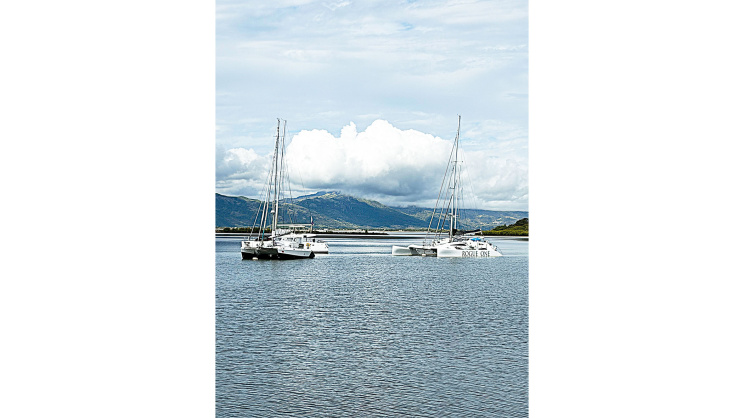
 From Tonga, we returned to Fiji, then continued onward to Samoa and Vanuatu. Each island carried its own rhythm. Endless blue ocean framed the land, and everywhere we went, people moved with an ease that felt unhurried, as if time itself flowed more gently here.
Samoa stayed with us the most. It was remarkably neat, colourful, and alive with care. Along the roads, homes were lovingly maintained. Teenagers swept yards, trimmed plants, and preserved beauty not because someone demanded it, but because it mattered. Driving through Samoa was the most pleasant experience of our South Pacific journey -- not just because of smooth roads, but because of what they reflected: pride, responsibility, and belonging.
Vanuatu was different -- raw and honest. Its beauty came with difficulty. Roads were riddled with potholes, forcing us to zigzag constantly, as if the island itself was asking us to slow down and pay attention. Travel does that. It removes convenience and replaces it with awareness.
As we moved through the South Pacific, comparisons naturally arose with the Caribbean islands we had visited before. Two different regions, shaped by different influences. The Caribbean bears the marks of American and European presence, while the South Pacific reflects ties to Australia and greater China. Economies, infrastructure, and even daily life quietly reveal these connections. Travel teaches these lessons without lectures. You see them, feel them, and understand.
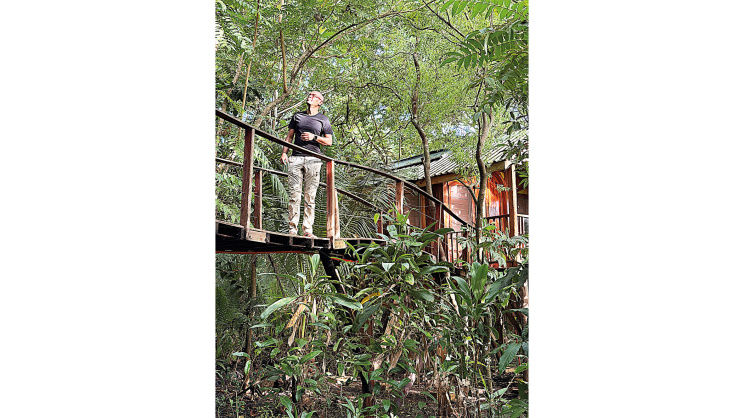
And this is why travel matters.
It is not always about comfort or beauty. Often, it is about uncertainty. About stepping away from what is familiar and allowing experiences to shape us in ways we cannot always explain.
We returned home carrying memories of distant islands and familiar human truths. Even on isolated landmasses floating in vast oceans, people hope, care, struggle, love, and endure.
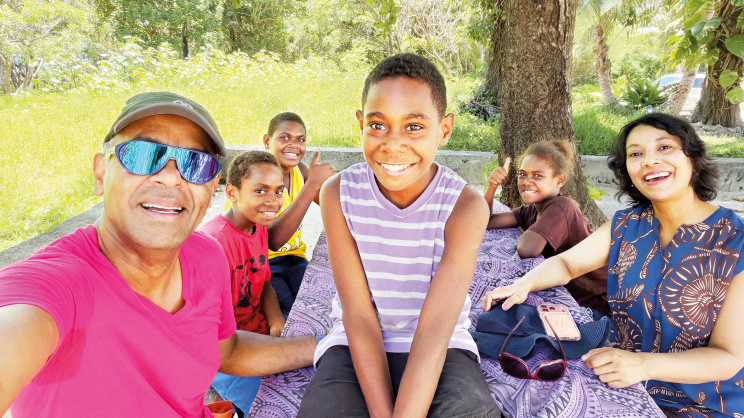
If it is possible, loosen your attachments. You don’t need to abandon life -- just make space within it. Reduce what weighs you down. Allow yourself to explore something new.
This planet may be the only heaven we ever know -- experienced between Point A, our awakening into existence, and Point B, the breathless end. What we do in between is our choice.
We choose to experience.
Comments