


MAILBOX
Existing Crisis in Public Transport
Movement for common people in Dhaka has become very difficult owing to lack of affordable, comfortable and easy means of transport. A few thousand affluent people having own or employers-provided motor vehicles can move to their desired destinations confronting traffic jam. But the rest of the ten million commuters are helpless. They have to depend on very limited available public transport. Shortage of public transport contributes to the increasing harassment of commuters in the streets. And, for women and children, the situation is even worse. Usually six to eight seats are kept reserved for female passenger theoretically; in practice male passengers mostly occupy those seats. Transport workers discourage women and children passengers take the bus. Bangladesh Road Transport Authority should take measures to increase double decked buses in the city which can carry more passengers and create less congestion.

Md Ashraf Hossain
Central Bashabo, Dhaka
Remembering Dr M R Khan
The veteran physician M R Khan, who is widely known for his endless love for children, has breathed his last at the age of 88. He is a pioneer in facilitating child treatment across the country within affordable costs. He also established children's wards and treatment facility in the government hospitals. He established much needed Government Children's Hospital to ensure better medical treatment for children and mothers. He introduced an immunisation programme in the country and with his arduous effort polio was uprooted from Bangladesh. He not only played his role as a physician but also he was a social activist. Unlike many physicians, he was known for his smiling face and soothing voice. He used to give time to his patients and attentively listen to their case stories. He rendered his services for children for months until his death. He is a role model for our physicians. May his soul rest in peace!
Md Zonaed Imran
Banasree, Dhaka
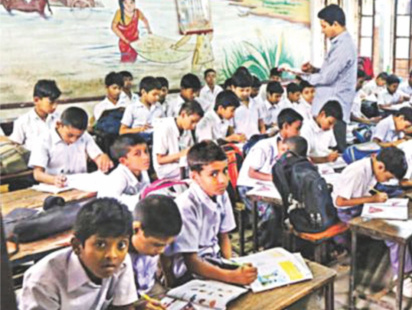
Curing the Fear of English
In a developing country like Bangladesh, learning English is considered as one of the most necessary skills in the job market. However, a fear of English is also very widespread among the learners. Certainly the article titled "Curing the fear of English" dated November 11, 2016 reveals the reasons behind this phobia. From my experience, I have seen that the teachers do not speak in English in the classroom. As a result, the students cannot nurture listening or speaking skills. Besides, our teachers are not well trained about how to teach English in a communicative manner. As long as our teachers are not adequately trained, solving this crisis will be very difficult. Moreover, besides training, the teachers should also be paid well so that they become motivated to give their best output in the classroom. I would like to thank the writer for bringing in these issues.
Swapan Chandra Borman
Government Sadat College, Tangail
 For all latest news, follow The Daily Star's Google News channel.
Comments