


Scientists manipulate consciousness in rats

Scientists showed that they could alter brain activity of rats and either wake them up or put them in an unconscious state by changing the firing rates of neurons in the central thalamus, a region known to regulate arousal. The study, published in eLIFE, was partially funded by the National Institutes of Health.
"Our results suggest the central thalamus works like a radio dial that tunes the brain to different states of activity and arousal," said Jin Hyung Lee, PhD, assistant professor of neurology, neurosurgery and bioengineering at Stanford University, and a senior author of the study.

Located deep inside the brain the thalamus acts as a relay station sending neural signals from the body to the cortex. Damage to neurons in the central part of the thalamus may lead to problems with sleep, attention, and memory. Previous studies suggested that stimulation of thalamic neurons may awaken patients who have suffered a traumatic brain injury from minimally conscious states.
Dr Lee's team flashed laser pulses onto light sensitive central thalamic neurons of sleeping rats, which caused the cells to fire. High frequency stimulation of 40 or 100 pulses per second woke the rats. In contrast, low frequency stimulation of 10 pulses per second sent the rats into a state reminiscent of absence seizures that caused them to stiffen and stare before returning to sleep.
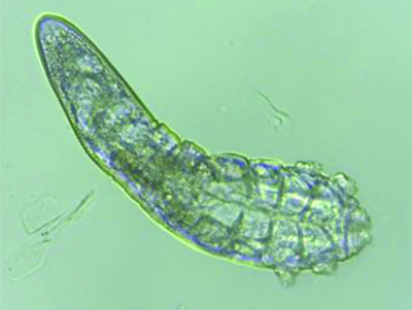
EVOLUTION OF FACE MITES
Scientists have discovered a universal human truth about our bodies: they all, without exception, have mites. A landmark new study, led by scientists at Bowdoin and the California Academy of Sciences, explores the fascinating, little-known natural history of the face mite species Demodex folliculorum, using genetic testing to link the microscopic animal's evolution to our own ever-evolving human story. By zooming in on a type of genetic material (called mitochondrial DNA) in mite samples from around the world, scientists discovered that different human populations have different mites, that those mites follow families through generations, and that they are not casually transferred between humans. The study is published today in the Early Edition of the journal PNAS.
Dr Michelle Trautwein, Academy curator of entomology and senior author of the new findings, says improving the understanding of the mites that live in human hair follicles helps shed light on human evolution and may allow scientists to pinpoint mites' role in human health. Dubbed "face mites," D folliculorum are actually tiny arachnids that inhabit hairs throughout the human body and consume skin cells and oils. Mites exist in human ears, eyebrows, and eyelashes as well as hairs that cover nipples and genitals.
For most people, mites are harmless. For some, however, mites can be associated with various skin and eye disorders including rosacea and blepharitis. Trautwein says this is one reason among many that scientists need to learn more about these constant human companions.
Source: Sciencedaily.com
 For all latest news, follow The Daily Star's Google News channel.
Comments