


Shah Cement RMC elevating eco-conscious construction

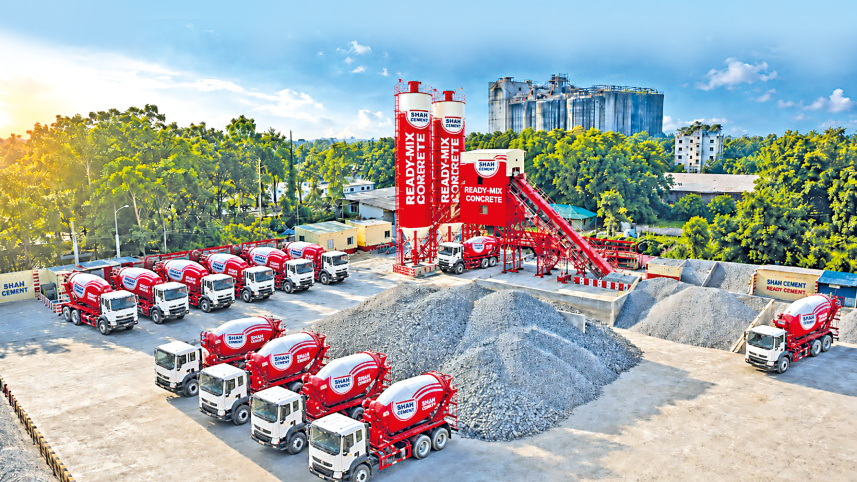
Across the Asia Pacific region, a construction boom is reshaping the global landscape. Driven by massive development projects in nations like China, India, Singapore, and Thailand, the region has become the dominant force in the global Ready-Mix Concrete (RMC) market. Bangladesh, as a rising economic power, is a key player in this regional surge. The transition from manual, labour-intensive site-mixing to high-tech, industrialised concrete is no longer just a choice; it is a necessity for the nation’s ambitious growth.
A Growing Legacy of Precision

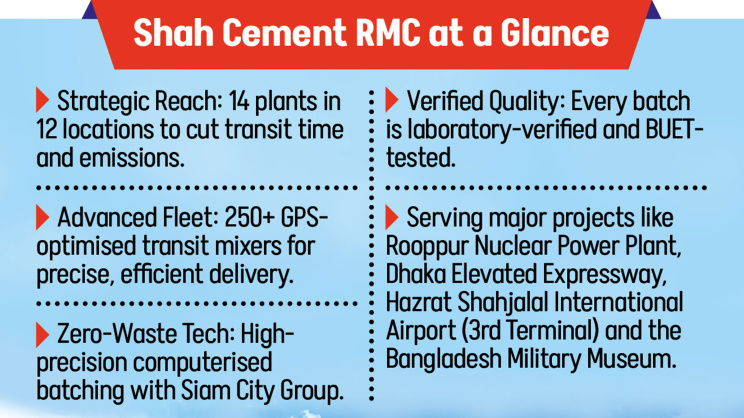
The history of Ready-Mix Concrete in Bangladesh is relatively recent but marked by rapid acceleration. While the technology was first introduced to the country in 1993, it began to gain significant commercial momentum in 1998, primarily within the expanding urban centres of Dhaka and Chattogram. What started as a niche solution has evolved into a massive industry; today, Bangladesh boasts more than 50 companies operating over 100 RMC plants nationwide.
While the sector is competitive, some major companies such as Shah Cement Ready Mix Concrete, CROWN, Basundhara Ready Mix Concrete, NDE Ready Mix Concrete, etc., are major companies play a pivotal role in shaping the market and meeting the rigorous demands of modern engineering. According a report of Shah Cement RMC is individually leading the industry with 21% market share.
For decades, the standard construction site in Bangladesh was synonymous with environmental strain. Open cement bags, exposed aggregate heaps, and the constant drone of on-site mixers were the hallmarks of urban development. These traditional methods, however, come at a high cost: significant material wastage, noise pollution, and the release of fine dust particles into the city’s air. Shah Cement RMC is fundamentally changing this landscape. By moving production away from the crowded streets and into controlled, computerised facilities, the company is a primary contributor to the clean construction initiative. This process eliminates the guesswork. Since mixing happens in an enclosed environment, it eliminates the dust and noise that typically plague surrounding communities. When the transit mixers arrive at a site, the concrete is ready to pour. It’s cleaner, quieter, and more efficient.
Zero-Waste Philosophy
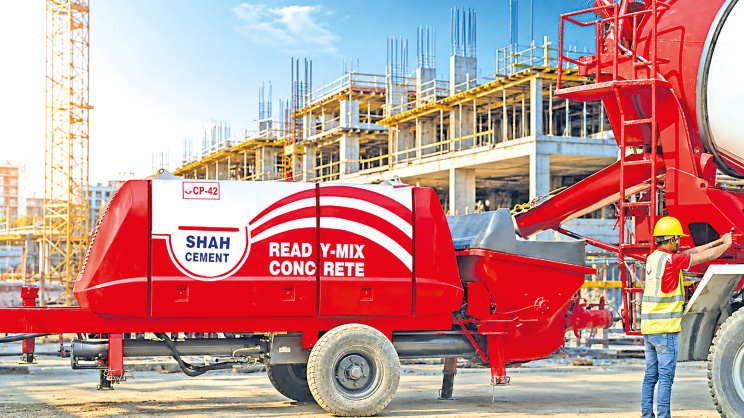
Sustainability in construction begins with the efficient use of raw materials. Traditional site-mixed concrete is often prone to over-ordering or inaccurate mixing ratios, leading to surplus material that cannot be reused and eventually ends up as environmental waste. Shah Cement RMC has tackled this through a zero-waste production model. Experienced engineers conduct pre-visit site assessments to calculate the exact volume and grade required for every specific pour.
Once the data is set, a computerised batching system developed in partnership with Thailand’s Siam City Group takes over. Cement, water, and aggregates are measured via high-precision load cells. There are no manual scoops or visual estimations. Every gram is accounted for, ensuring that what the plant produces is exactly what the structure demands. This level of technical accuracy, independently verified by BUET, ensures that material disposal is virtually eliminated for the end consumer.
Logistics as a Green Strategy
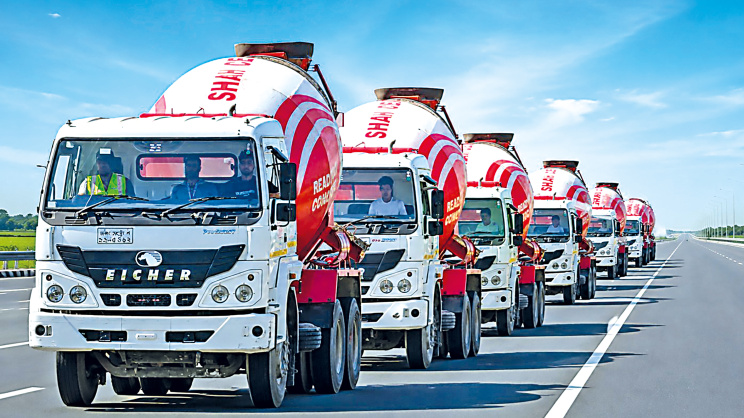
While a massive fleet of over 250 transit mixers and 50 pumps is an impressive industrial feat, Shah Cement RMC views its logistics through the lens of carbon reduction. In a city like Dhaka, where traffic can turn a short trip into a long ordeal, transit time is a sustainability challenge. To tackle this, Shah Cement opted for a geographic solution. By operating 14 plants across 12 strategic locations in and around the capital, they have built a network designed for proximity. The strategy is to be as close to the construction site as possible. Besides, shorter delivery distances mean less fuel consumption, fewer emissions, and a smaller overall environmental footprint for every cubic meter of concrete delivered.
The transition toward Ready-Mix Concrete marks a defining moment in Bangladesh’s construction industry. It represents a fundamental shift from the bucket-and-shovel era toward a future defined by industrialised precision and structural accountability. As the nation aligns itself with global sustainable development goals, the adoption of RMC is no longer just a logistical choice; it is a commitment to building smarter, safer, and more responsible.
 For all latest news, follow The Daily Star's Google News channel.
Comments