


Electric bike Evolution
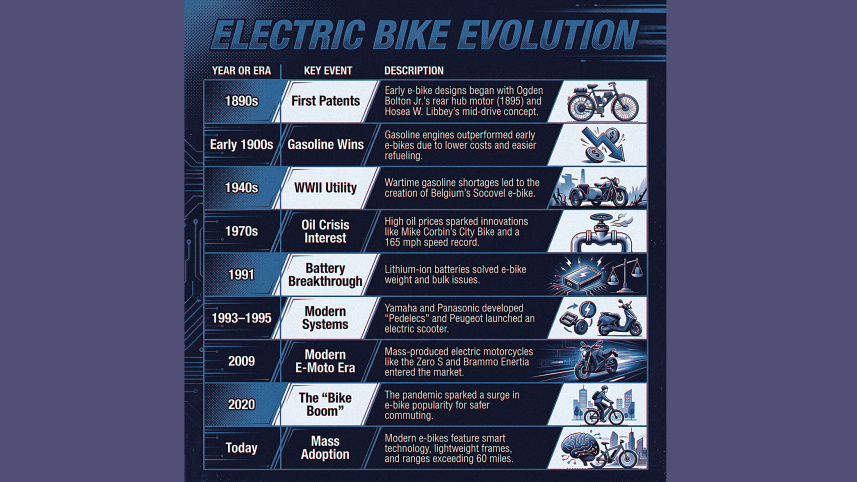
Early beginnings (late 1800s – early 1900s)
Electric bicycles and motorcycles go back to the late 19th century. One of the earliest known designs came in 1895 by Ogden Bolton Jr.. His idea used a battery-powered motor placed in the rear wheel (hub motor). It did not even have pedals, which shows that early designs were more like motorcycles than bicycles.

In 1897, Hosea W. Libbey introduced the concept of two motors placed near the crank. This is similar to what we now call a mid-drive system. These two ideas—hub motors and mid-drive motors—are still the main systems used today.
During this time, electric vehicles were actually seen as a strong option. But battery technology was very weak. Lead-acid batteries were heavy, slow, and had very limited range. Because of this, electric bikes could not compete for long.
Decline during petrol dominance (1900s – 1970s)
As petrol engines improved, electric bikes and motorcycles quickly fell behind. Petrol bikes were faster, could travel longer distances, and could be refuelled quickly. This made them more practical.
Electric bikes did not disappear completely, but they stayed in very limited use. They were sometimes used during fuel shortages or for short-distance travel. However, they were not widely adopted because batteries were too heavy, the range was very low, and speed was limited.
For many decades, electric two-wheelers remained a small and almost forgotten part of the transport industry.
Revival attempts and early improvements (1970s – 1980s)
The oil crisis in the 1970s brought attention back to electric vehicles. People started looking for alternatives to petrol. Some companies and engineers began experimenting again with electric bikes. Around this time better battery types like nickel-cadmium were introduced. Japanese companies like Panasonic and Sanyo started working on electric bicycles
However, even with these improvements, electric bikes were still not practical for most users. They were expensive and still had limited performance.
Lithium-ion and pedelec system (1990s – 2000s)
A big breakthrough came in the 1990s with the development of lithium-ion batteries. These batteries were lighter, more powerful, and lasted longer. This made electric bikes much more practical.
During this time, the pedelec (pedal electric cycle) became popular. In this system, the motor helps only when the rider pedals. Companies like Yamaha and Panasonic played a big role in developing this technology. For example, Peugeot Scoot’Elec (mid-1990s), Early electric bikes with better speed and features like regenerative braking
Even then, adoption was still slow because Prices were high and charging systems were not widely available
Modern electric bike industry begins (2009 – 2019)
The real modern phase of electric motorcycles started around 2009. New companies focused only on electric vehicles. Zero Motorcycles produced high-performance electric bikes Battery technology improved quickly during this period. Electric motorcycles became faster and more reliable.
A major moment came in 2019 with the launch of the Harley-Davidson LiveWire. This showed that even traditional motorcycle companies were moving toward electric. At the same time, companies like Energica Motor Company pushed performance further, especially in racing.
Recent growth and current trends (2020 – present)
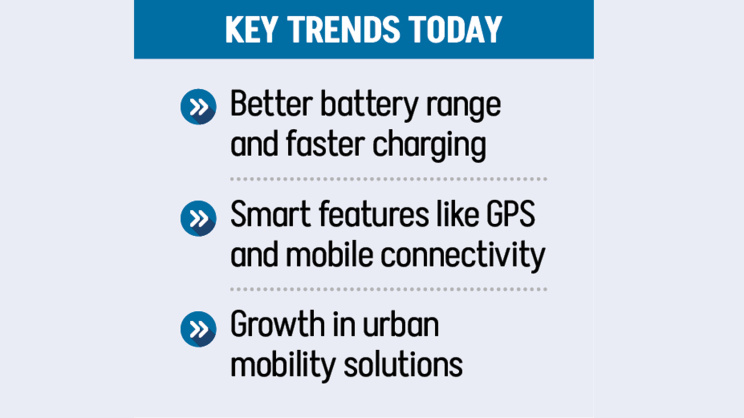
Electric bikes have grown very fast in recent years. The COVID-19 pandemic also increased demand, as people looked for safer and cheaper ways to travel. Today, electric two-wheelers include , E-bikes for daily commuting , Electric scooters for city use, High-performance electric motorcycles. example- Energica Ego+ – very powerful, high-speed electric motorcycle, Kawasaki Ninja e-1 – designed for everyday city riding
 For all latest news, follow The Daily Star's Google News channel.
 The market is expected to keep growing strongly. For example, Europe is projected to sell around 10 million e-bikes per year by 2030.
Comments