


EV Debate: Numbers behind the noise

The argument around electric vehicles tends to collapse into something overly simple: clean versus dirty, future versus past. In Bangladesh, the conversation around EVs is heating up. Transport contributes about 15% of national CO₂ emissions, and Dhaka remains one of the most polluted cities globally. The numbers tell a more complicated story.
How the extraction differs

Lithium mining, which underpins modern EV batteries, is resource-intensive and linked to water stress and land disruption. According to the International Energy Agency, the environmental cost is measurable, particularly in arid regions. Oil extraction, meanwhile, comes with its own well-documented issues—spills, methane leakage, and long-term ecosystem damage. As such, the difference is structural. Oil has to be extracted and burned continuously. Battery materials are mined once and, at least in theory, can be recovered and reused.
Battery lifespan and disposal
Most modern EV batteries are designed to last between 8 and 15 years, with gradual degradation rather than sudden failure. Recycling systems are developing worldwide, with lithium, cobalt, and nickel recovery already underway. Some markets are scaling this effort quickly. By 2024, China had 156 licensed lithium-ion recyclers with an annual capacity of 423.3 million tons, alongside 71 lead-acid recyclers handling 1.47 billion tons per year. Lithium battery recycling generated roughly $31 billion, lead added $59 billion, and the market is projected to exceed $139 billion by 2030.
Emissions
Here, the gap becomes clearer, though not absolute. Data from the International Council on Clean Transportation (ICCT) shows a mid-size gasoline car producing about 35.5 metric tons of CO₂ over 150,000 km, with diesel at roughly 33 tons and hybrids at 26.7 tons. A standard EV, running on a typical grid, lands around 17.5 tons, dropping to 11.5 tons when powered by renewable energy. Additionally, EV production emits 8.0 tons CO₂ versus 5.5 tons for combustion cars, typically offset after about 20,000 km.
The key variable
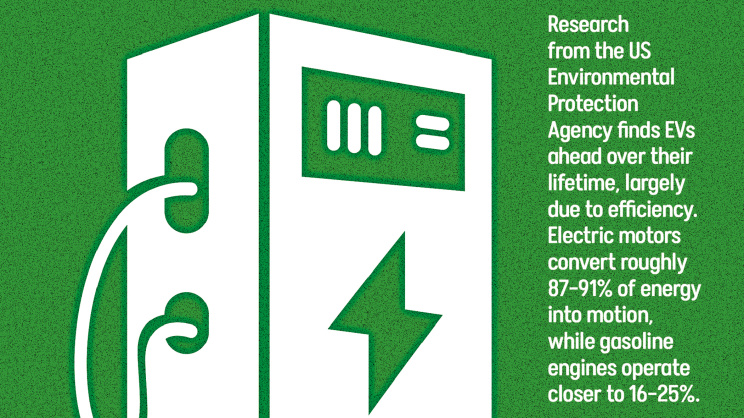
In Bangladesh, the grid still leans heavily on fossil fuels, which narrows the environmental advantage of EVs. Even so, research from the US Environmental Protection Agency finds EVs ahead over their lifetime, largely due to efficiency. Electric motors convert roughly 87–91% of energy into motion, while gasoline engines operate closer to 16–25%. Local conditions complicate the picture further. Congestion can increase fuel consumption by up to 40%, a scenario where electric drivetrains operate more efficiently.
That said, EVs are not clean in an absolute sense. Tire and brake wear still produce particulate matter, including PM10 and PM2.5. Because EVs tend to be heavier, they can generate more tyre dust. Regenerative braking helps cut brake dust, but non-exhaust emissions remain part of the equation.
The economic argument
Fuel costs in Bangladesh now hover around 140 taka per litre, while charging through networks like CrackPlatoon costs about 18.97 taka per kWh. A typical gasoline car in Dhaka traffic averages around 10–12 km per litre, which translates to roughly 11 to 14 taka per kilometre in fuel cost alone. On the other hand, most EVs consume around 0.15 to 0.20 kWh per kilometre, depending on size and driving conditions. That results in an energy cost of approximately 2.8 to 3.8 taka per kilometre.
Even under inefficient conditions, an EV costs less than one-third as much per kilometre to run compared to a petrol vehicle. The difference becomes more pronounced in Dhaka’s stop-start traffic, where combustion engines waste fuel idling, while EVs consume almost no energy when stationary.
The bottom line
Charging infrastructure is limited, though expanding. CrackPlatoon operates 37 stations nationwide and plans to reach 100, but for now, range anxiety remains a factor, even as global EV ranges stretch to 400–500 kilometres per charge. Furthermore, import duties on EVs stand at a staggering 89.32%, among the highest globally. Registration fees are no better: 171,000 taka for an EV compared to just 25,000 taka for a small petrol car.
The final picture is neither clean nor dirty. EVs offer lower lifetime emissions and significantly lower running costs, but they are not a complete fix. Their impact depends less on the vehicles themselves and more on how electricity is produced, how infrastructure develops, and how policy evolves.
 For all latest news, follow The Daily Star's Google News channel.
Comments