


‘Mini Russia’ on the Padma

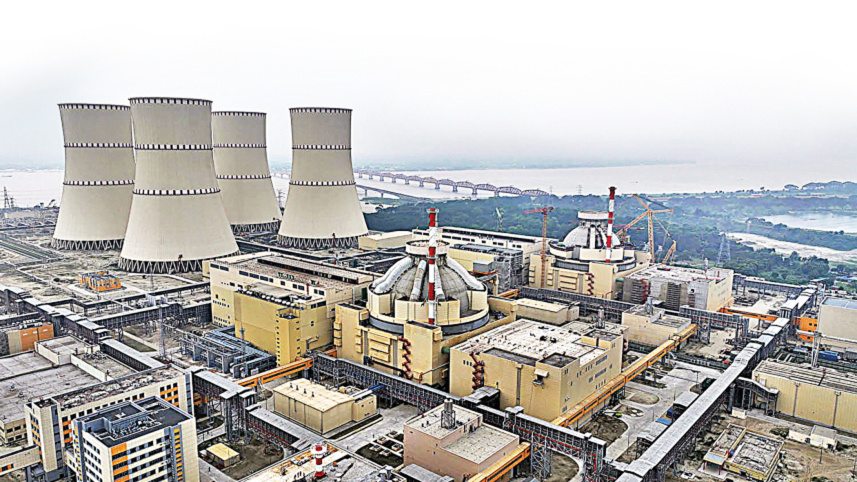
From tea stalls under blue tarpaulin shades to posh cafés serving salted caramel frostinos, Ruppur’s Green City has transformed a sleepy village into a cosmopolitan enclave. Here, nuclear ambition meets everyday life, and a bazar has become a microcosm of cultural fusion.
A teenage fruit vendor, carrying off a sharp nape undercut with effortless swagger, was bargaining fluently in Russian with one of his regulars, a couple from Moscow, as I stood nearby with a smug grin, taking in the local vibe of Green City by the Padma in Ishwardi’s Ruppur.

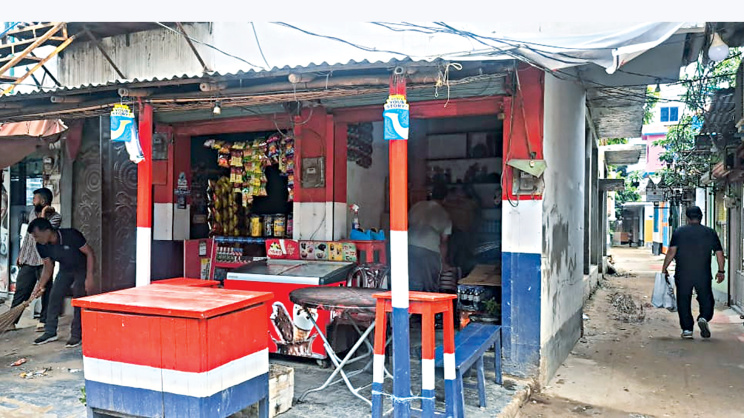
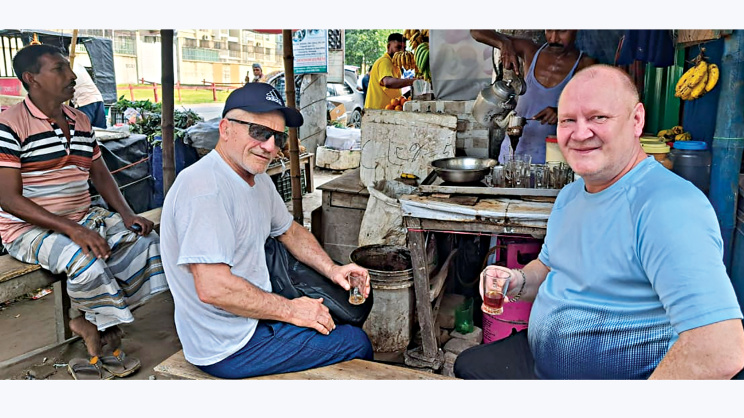
To my surprise, this was no rare spectacle. The haphazard tea tongs, fruit and vegetable stalls propped on bamboo poles beneath thick blue plastic shades looked like any deshi bazar. The only twist: seated on a roadside stool was a Russian nuclear engineer, six years into his posting, laughing at jokes delivered in Russian by the tea maker.
This is a place where modern towers rise beside a bazar that still beats to Bangladeshi rhythms.
In what locals fondly call “Mini Russia”, the bazar hums with scenes of foreigners sipping tea, bargaining in Russian, and joking easily with vendors, drivers and tea makers. Handshakes, backslaps and laughter ripple through the crowd with genuine ease. Opposite Ruppur Green City, this roadside marketplace has evolved into a 360-degree hub for expatriates, a microcosm of cultural exchange.
Ruppur Green City is a sprawling residential complex in Diyar Sahapur, Ishwardi, built to house around 5,000 foreign nationals -- mostly Russians, Belarusians and Ukrainians -- alongside Bangladeshi workers, officials and specialists associated with the Rooppur Nuclear Power Plant. The spelling difference -- Ruppur for the township, Rooppur for the project -- is purely bureaucratic.
About 160 kilometres northwest of Dhaka, the Rooppur Nuclear Power Plant rises behind the bazar -- a VVER-1200 Generation III+ pressurised water reactor, successor to the VVER-1000. With advanced safety features and higher efficiency standards, it stands as a symbol of Bangladesh’s nuclear ambition.
FROM JUNGLE TO COSMOPOLITAN ENCLAVE
What was once a snake-ridden jungle and an unknown, sleepy village is now inseparably linked to the plant, as much a lively social hub as a commercial one.
Posh coffee shops and cafés serve salted caramel frostinos and frappes. Baristas craft lattes, cappuccinos and flat whites with flair, while bakeries tempt customers with sweet and savoury Russian pastries. Uzbek-style grills smoke beside superstores stacked with everything from lime-sparkling water to pistachio spread.
Together, these indulgences and everyday exchanges make the bazar a true microcosm of cultural fusion -- where East and West meet over tea, coffee and conversation, catering to both local and foreign workers stationed at the nuclear township.
ENCOUNTERS AND INHERITANCE
I spent a lovely afternoon there, soaking in the Ishwardi sun, immersing myself in the positive ambience and etching the canvas of camaraderie in my mind.
The marketplace, dirty and littered with trash, is alive with beautiful Russian children darting between stalls, a young man buying antique coins from a gypsy wanderer, and the air thick with spices, smoked fish, Uzbek kebabs and naans.
I was duped by a gypsy, a man in a red turban who claimed to be a disciple of Lalon Shah. He laid out a handful of coins, insisting they were relics from the East India Company. His story was embroidered with journeys -- Kolkata, Ajmer, and every corner of Bangladesh -- woven with the swagger of a seasoned wanderer.
He spoke with conviction, his voice carrying the weight of folklore, and for a moment I believed I was holding history in my palm. In truth, they were nothing but junk. Yet the theatre of it all -- the turban, the mystic references, the promise of travel -- was irresistible.
The bazar thrives on such encounters, half commerce, half performance. He was not just selling coins; he was selling a story, and I was caught in it. Even in being cheated, I felt part of the rhythm of the marketplace, stitched into its endless exchange of goods, illusions and tales.
The gypsy’s wandering tales carried me back to the summers of Bheramara -- the smell of mango groves heavy in the air, cousins diving into the pond, the whistle of trains echoing across the bridge.
I realised I was just a bridge away from Bheramara, my baba’s village. I wanted to touch down in Bheramara for baba’s sake, to taste again his favourite pera mishti, soft and grainy, wrapped in brown paper from the local sweet shop.
Crossing the Lalon Shah Bridge, with the Hardinge Bridge standing beside it -- old but still majestic -- I felt the weight of my father’s words: we are home once we cross the Hardinge Bridge. That line has always been a marker, a threshold between the bustle of travel and the calm of belonging.
 For all latest news, follow The Daily Star's Google News channel.
 And in that moment, I realised the bazar was not just about coins or coconuts. It was about connections. A gypsy’s tale could pull me across rivers, back to baba’s village, back to the nostalgic certainty of home.
MORNING MARKET RHYTHMS
The morning cast a different light on the bazar stretch. At 6:00am, I went in search of a cup of strong black tea and found Litton, a local vendor selling fruits and green coconuts. He had opened his shack early to catch tired workers returning from night shifts.
Looking around his shed, I was thrilled to spot herbs -- dill, celery, Thai basil and spring onions. Not that Dhaka’s superstores do not stock these, but here they were grown locally, on open land behind the project.
“When they first came here, they found nothing that catered to their food habits except potatoes. Slowly they started bringing seeds, planting their vegetables and herbs of choice, and now we have a thriving marketplace that reminds the expatriates of home,” Litton explained carefully.
“We are bazar vendors, selling grocery items. So, when a customer asks for kar-TOSH-ka, we cannot ignore them. They come in large numbers. To keep our economy running, we quickly learnt their language and sold sacks of potatoes they were looking for,” he added.
Litton, however, explained that big superstores are owned by outsiders from various places in Bangladesh, while locals stick to selling perishable items like vegetables and fruits.
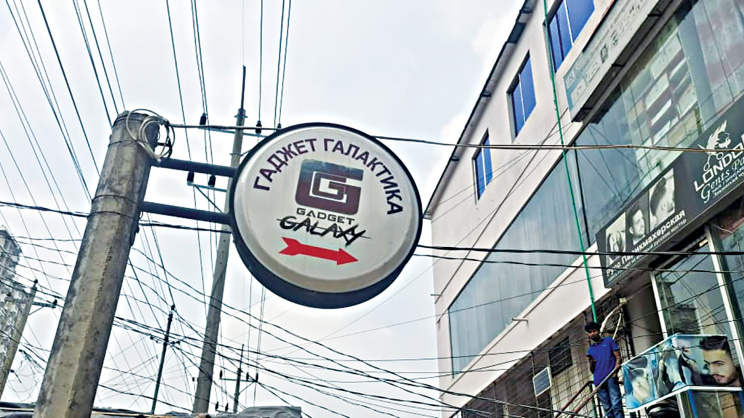
Amjad Hossain is not a local here. He came from Dhaka to open his business. Many have settled here from Dhaka, Pabna and Rajshahi to cash in on the thriving economy.
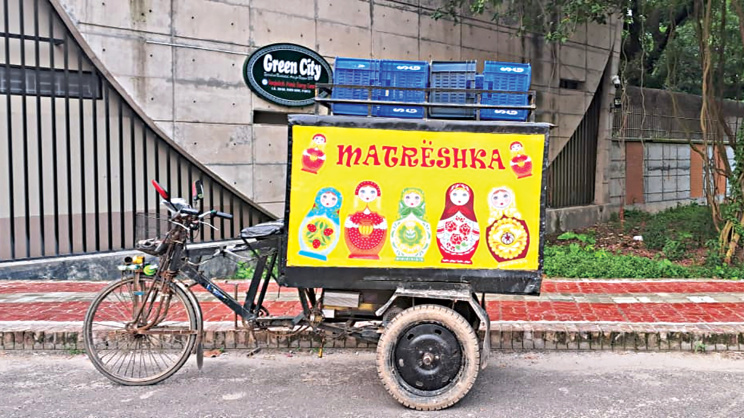
“Shopkeepers quickly adapted, stocking shelves with imported goods, everything favourite to expatriates: canned drinks, sardines, beef bacon, rye bread, chocolates, cigarettes, salmon to cheese, things that you find in any Gulshan, Banani superstores. Interpreters hover nearby, bridging the language gap between local vendors and Russian buyers, turning everyday transactions into small lessons in cross-cultural communication,” said Amjad, owner of a popular superstore and bakery named Matriksha.
Matriksha is popular for freshly baked breads -- white, brown, seeded, cheesy, savoury and sweet. He has a large baking system behind his superstore, and his loaves, fresh from the oven, sell like hot cakes.
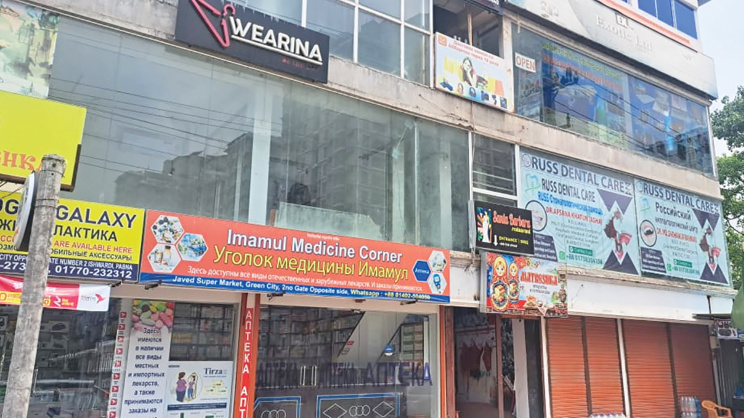
The bazar is not just about groceries. Tailors advertise their ability to stitch uniforms to Russian specifications, while cafés experiment with menus blending Bangladeshi staples with Slavic flavours. A few stalls even sell Cyrillic-labelled products, brought in through Dhaka’s import networks, giving the market an almost embassy-like feel.
For locals, it is a chance to earn and to learn. Many shopkeepers have picked up basic Russian phrases, proudly displaying handwritten signs in both Bangla and Russian.
“There is no difference between a nuclear engineer, a driver of fuel tankers or me. They are friendly, disciplined, and hardworking -- but like us, not without faults,” Hossain said.
The sheer scale of the project has created nearly thirty thousand jobs, spurring rapid economic growth in Pabna and neighbouring districts. Hotels, resorts and shopping centres have sprung up, reshaping the local economy and lifestyle.
COLOUR AND CHALLENGE IN GREEN CITY
I heard Green City carries a darker undertone -- mental fatigue, the psychological toll of working far from home. While locals extend their hospitality to foreigners, the Russians who came this far with the promise of technological progress and energy independence are extremely adaptable, but not without the human challenges that accompany such mega-projects.
But what I saw was colour and liveliness, an effort to make life vibrant.
I was lucky enough to visit on their national day, when an electrifying concert was held. They danced to folk numbers in the traditional Khorovod, holding hands in circles, and to trendy Russian pop beats -- arms swinging, waving in the ecstasy of celebrating their motherland.
In many ways, Green City Ruppur embodies Bangladesh’s nuclear ambition and stands as a symbol of transformation -- urban growth, international collaboration and modernisation.
Comments