


Churchill's views on alien life revealed
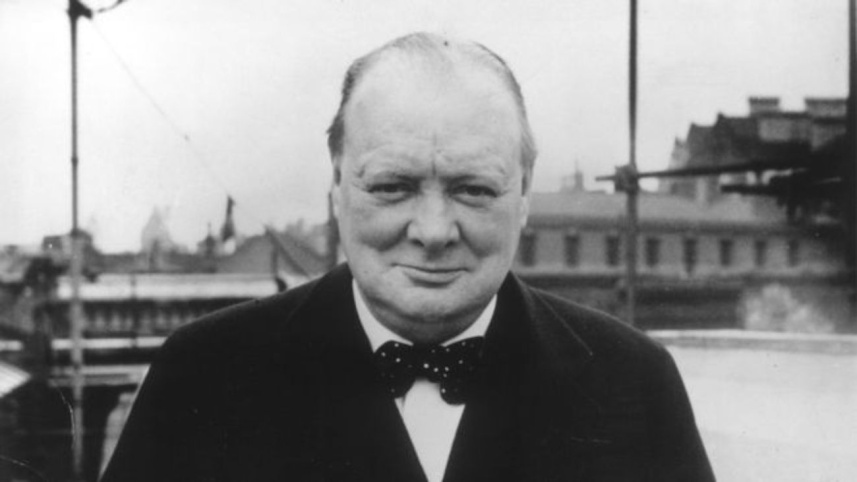
War correspondent, statesman, astronomer. Stargazing may not be what Winston Churchill is best remembered for, but a treatise he wrote on extraterrestrial life has revealed his scientific acumen six decades later.
Between ruling Britain and helping the Allies win World War II, the British Bulldog was among the first to theorise about other regions of the Universe in which conditions may be conducive to harbouring life, it has been revealed.

Excerpts from his essay "Are We Alone in the Universe?" were brought to light Wednesday in the science journal Nature.
"I am not sufficiently conceited to think that my sun is the only one with a family of planets," Churchill wrote in the document which astrophysicist Mario Livio laid hands upon last year at the US National Churchill Museum in Fulton, Missouri.
There must be many other planets, he concluded, of "the right size to keep... water and possibly an atmosphere", and "at the proper distance from their parent sun to maintain a suitable temperature."
This later became known as a star's "habitable zone".
To qualify, a planet has to orbit its star at a distance far enough so that water does not evaporate in the solar heat, and near enough that it does not freeze beyond the rays' reach.
Water is considered an essential requirement for life, however primitive.
Churchill first drafted the paper in 1939, when Europe was on the brink of war, and revised it in the late 1950s while visiting his publisher in a village in the south of France, said Livio. As far as could be determined, the work has never been published or subjected to scientific or academic scrutiny.
 For all latest news, follow The Daily Star's Google News channel.
Comments