


'Minefield' EU meet begins
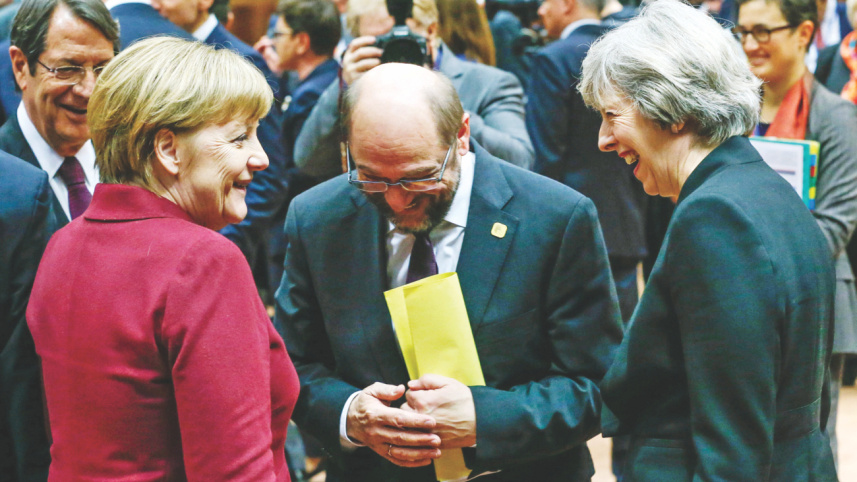
European Union leaders grappled with Russia and Brexit at a "minefield" summit in Brussels yesterday at the end of one of the most turbulent years in the bloc's history.
The 28 leaders are dealing with the migration crisis, sanctions against Moscow over the wars in Ukraine and Syria, and a troublesome pact with Kiev that the Netherlands threatens to veto.

British Prime Minister Theresa May will later be left out in the cold while the other 27 have dinner without her in a bid to present a united front over how they handle Britain's departure.
May however dismissed any suggestion that it amounted to a snub and called for as "smooth and orderly a process as possible".
"It is right that the other leaders prepare for those negotiations as we have been preparing," said May, who has promised to trigger the two-year divorce process by the end of March.
The one-day summit, cut back from the usual two days, wraps up an 'annus horribilis' for the bloc that has seen it face a wave of eurosceptic populism including the shock Brexit referendum vote in June.
"We are treading on a minefield, there are so many issues on the agenda that still can go wrong," warned a senior EU official.
The fate of civilians in Aleppo as Syrian and Russian forces drive out rebels is also on the agenda, although EU leaders will stop short of threatening any new sanctions against Moscow.
Meanwhile, Greek Prime Minister Alexis Tsipras yesterday called for a "breakthrough without blackmail" in a row over the eurozone's decision to suspend debt relief over a pension spending hike by Athens.
The eurozone announced the surprise decision on Wednesday, in response to leftist premier Tsipras mooting plans to implement a one-off payout to 1.6 million low-income pensioners, along with a sales tax break for islands sheltering thousands of migrants.
Debt relief measures were agreed by eurozone ministers on December 5 in the face of criticism by the International Monetary Fund that they fell well short of what was necessary to get Greece back on its feet.
 For all latest news, follow The Daily Star's Google News channel.
Comments