


Russia mishandled situation: EU court
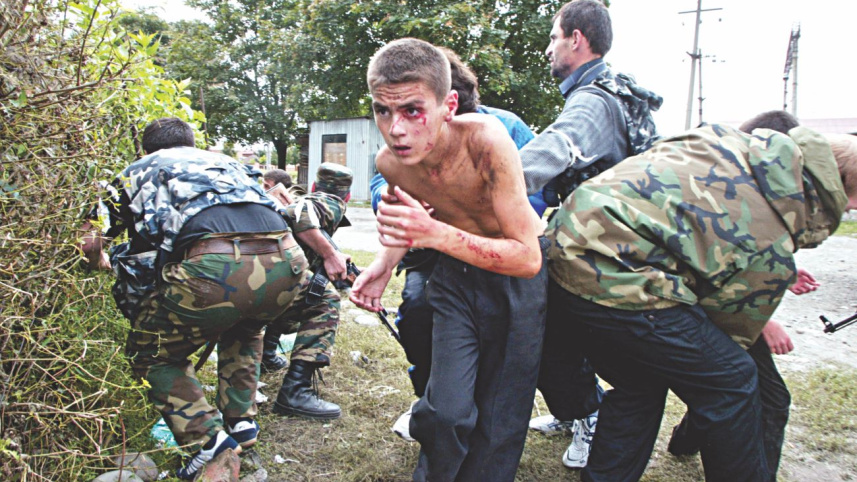
The European Court of Human Rights yesterday ruled there were "serious failings" in Russia's handling of the Beslan school siege by Chechen rebels in 2004 in which over 330 people were killed, many of them children.
The court said although Russian authorities had information that an attack was being planned on a school in North Ossetia, they failed to do enough to disrupt the plot and had not sufficiently protected the hostages.

Russia reacted furiously to the judgement, saying it was "absolutely unacceptable".
The school was stormed on September 1, 2004 by militants demanding the withdrawal of Russian troops from the war-torn republic of Chechnya.
The attackers herded 1,100 people including 800 children into a gymnasium and rigged the building with explosives.
After three days of fruitless negotiations, explosions in the school prompted Russian security forces to storm the gymnasium.
A total of 184 children were among the 334 dead as the siege came to a bloody end.
Russian authorities argue they took the best course of action faced with armed extremists, but many of the survivors and their relatives believe the security services were to blame for the firefight.
The court found that through its actions, the Russian state had violated Article 2 of the European Convention of Human Rights, which guarantees a right to life.
There was an additional violation in the use of "lethal force by security forces".
The claimants in the case say the authorities were primarily seeking to eliminate the attackers with little care taken to avoid deaths of hostages.
Their lawyers have particularly criticised the lack of in-depth autopsies on the bodies of 116 victims found burned in the gymnasium.
The massacre was one of a string of brutal attacks Russia suffered in the 1990s and 2000s stemming mainly from an insurgency in Chechnya that morphed from a separatist rebellion into an Islamist campaign.
Russian and international experts describe Beslan as a political shock for Russia comparable to the September 11, 2001 attacks in the United States and say it marked a turning point for the Kremlin's policy in the Caucasus.
There were two separatist wars in Chechnya in the 1990s and 2000s, but violence in the region has largely been suppressed under the iron-fisted rule of strongman leader Ramzan Kadyrov.
However, the overwhelmingly Muslim Russian North Caucasus has emerged as one of the major sources of foreign jihadists fighting in Syria and Iraq.
 For all latest news, follow The Daily Star's Google News channel.
Comments