


Sale of US arms fuelling wars in ME
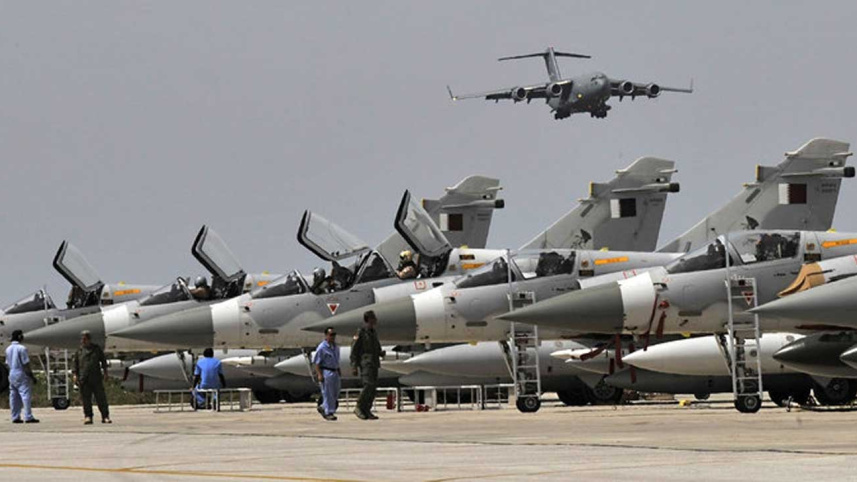
To wage war in Yemen, Saudi Arabia is using F-15 fighter jets bought from Boeing. Pilots from the United Arab Emirates are flying Lockheed Martin's F-16 to bomb both Yemen and Syria. Soon, the Emirates are expected to complete a deal with General Atomics for a fleet of Predator drones to run spying missions in their neighborhood.
As the Middle East descends into proxy wars, sectarian conflicts and battles against terrorist networks, countries in the region that have stockpiled American military hardware are now actually using it and wanting more. The result is a boom for American defense contractors looking for foreign business in an era of shrinking Pentagon budgets — but also the prospect of a dangerous new arms race in a region where the map of alliances has been sharply redrawn.
 For all latest news, follow The Daily Star's Google News channel.
 Last week, defense industry officials told Congress that they were expecting within days a request from Arab allies fighting the Islamic State — Saudi Arabia, the Emirates, Qatar, Bahrain, Jordan and Egypt — to buy thousands of American-made missiles, bombs and other weapons, replenishing an arsenal that has been depleted over the past year.
The United States has long put restrictions on the types of weapons that American defense firms can sell to Arab nations, meant to ensure that Israel keeps a military advantage against its traditional adversaries in the region. But because Israel and the Arab states are now in a de facto alliance against Iran, the Obama administration has been far more willing to allow the sale of advanced weapons in the Persian Gulf, with few public objections from Israel.
Industry analysts and Middle East experts say that the region's turmoil, and the determination of the wealthy Sunni nations to battle Shia Iran for regional supremacy, will lead to a surge in new orders for the defense industry's latest, most high-tech hardware.
Saudi Arabia spent more than $80 billion on weaponry last year — the most ever, and more than either France or Britain — and has become the world's fourth-largest defense market, according to figures released last week by the Stockholm International Peace Research Institute, which tracks global military spending. The Emirates spent nearly $23 billion last year, more than three times what they spent in 2006.
Qatar, another gulf country with bulging coffers and a desire to assert its influence around the Middle East, is on a shopping spree.
Last year, Qatar signed an $11 billion deal with the Pentagon to purchase Apache attack helicopters and Patriot and Javelin air-defense systems. Now the tiny nation is hoping to make a large purchase of Boeing F-15 fighters to replace its aging fleet of French Mirage jets.
American defense firms are following the money. Boeing opened an office in Doha, Qatar, in 2011, and Lockheed Martin set up an office there this year. Lockheed created a division in 2013 devoted solely to foreign military sales.
American intelligence agencies believe that the proxy wars in the Middle East could last for years. And with the balance of power in the Middle East in flux, several defense analysts said that could change. Russia is a major arms supplier to Iran, and a decision by President Vladimir V Putin to sell an advanced air defense system to Iran could increase demand for the F-35, which is likely to have the ability to penetrate Russian-made defenses.
At the same time, giving the gulf states the ability to strike Iran at a time of their choosing might be the last thing the United States wants. There are already questions about how judicious Washington's allies are in using American weaponry.
Comments