


Ukraine doninates G7 meet
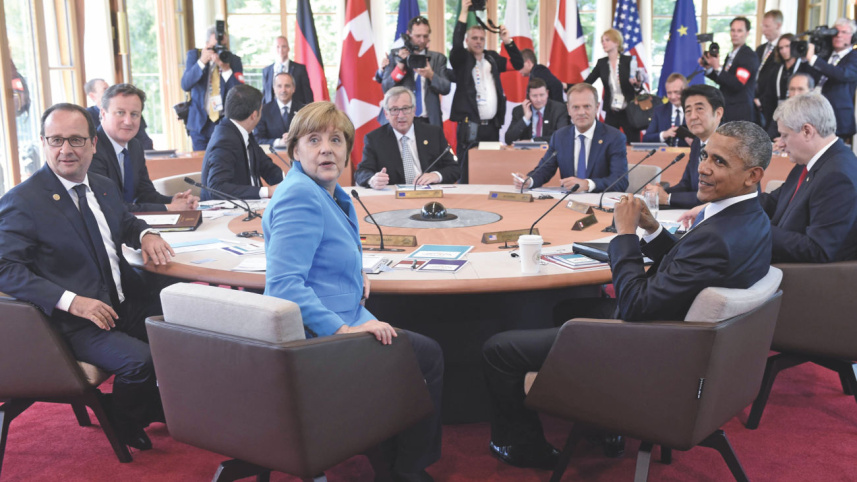
Leaders from the Group of Seven (G7) industrial nations backed a tough line towards Moscow at the start of a summit in the Bavarian Alps, with US President Barack Obama urging the gathering to stand up to Russian aggression in Ukraine.
Host Angela Merkel greeted Obama in the idyllic Alpine village of Kruen under blue skies, surrounded by locals in traditional dress, drinking beer and eating white sausage and pretzels.

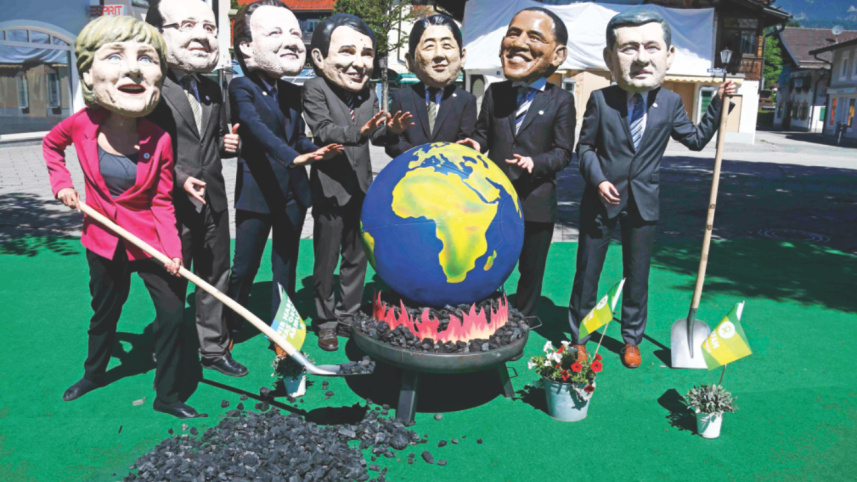
The German chancellor was hoping to secure commitments from her G7 guests to tackle global warming ahead of a major United Nations climate summit in Paris in December. The German agenda also foresees discussions on global health issues, from Ebola to antibiotics and tropical diseases.
But the crises in Ukraine and Greece seemed likely to overshadow the discussions at Schloss Elmau, a luxury Alpine hotel near the Austrian border.
European Commission President Jean-Claude Juncker, speaking before the start of the summit, voiced exasperation with Greek Prime Minister Alexis Tsipras, who has dismissed the latest aid-for-reform proposal from international creditors as "absurd".
Athens is running out of cash and will default on its debt, a move that could end up pushing it out of the euro zone, if it fails to reach a deal with its European partners and the International Monetary Fund (IMF) in the coming weeks.
Juncker reaffirmed that a so-called "Grexit" was not an option being considered, but said this did not mean he could "pull a rabbit out of a hat" to prevent it.
Obama said leaders would discuss the global economy, trade partnerships and "standing up to Russian aggression in Ukraine", as well as threats from violent extremism and climate change.
Both he and Merkel highlighted the importance of the German-American relationship, damaged in recent years by revelations of US spying in Germany, including the bugging of the chancellor's mobile phone.
British Prime Minister David Cameron and European Council President Donald Tusk both said they hoped the G7 would present a united front on sanctions towards Russia.
EU leaders agreed in March that sanctions imposed over Russia's intervention in Ukraine would stay until the Minsk ceasefire agreement was fully implemented, effectively extending them to the end of the year, but a formal decision has yet to be taken.
Italian Prime Minister Matteo Renzi is known to be sceptical about sanctions and left-wing politicians in Germany have also called for them to be removed.
European monitors have blamed a recent upsurge in violence in eastern Ukraine on Russian-backed separatists. Russian President Vladimir Putin was frozen out of what used to be the G8 after Moscow's annexation of Crimea last year.
In addition to climate and health issues, the leaders of Britain, Canada, France, Germany, Italy, Japan, the United States and European Union were due to discuss Islamist militant threats from groups such as Islamic State and Boko Haram. The leaders of Nigeria, Tunisia and Iraq were to join them later as part of an "outreach" group of non-G7 countries.
 For all latest news, follow The Daily Star's Google News channel.
Comments